Before going to shopping malls or agents to buy plywood, it is so convenient to sit at home and access the Internet and find out. However, buying plywood online often has a lot of questions from customers. Fomex would like to summarize the commonly asked questions of buyers so that everyone can refer to before choosing to buy for the appropriate plywood type. So Fomex would like to introduce 13 FAQs when buying plywood and answer
10 FAQs when buying plywood and answer
1. When was plywood invented? Who invented it?
Plywood was introduced into the United States in 1865 and industrial production started shortly after. In 1928, the first standard-sized 4 ft by 8 ft (1.2 m by 2.4 m) plywood sheets were introduced in the United States for use as a general building material. (Wiki)
2. How is plywood made?
The construction process begins with felling trees. When logs are collected, they are debarked and cut into a very thin veneer. This is an intensive process that results in either a single continuous sheet or pre-measured sheets that will make the arrangement process easier. After the sheets are dried, they are arranged and bonded using the appropriate adhesives. Once the bonding is finished, the plywood is stamped and graded according to a number of different factors, including the grain and density.
3. What is plywood used for?
Plywood is an extremely versatile product, and it can be used in a wide variety of applications, based on various factors like reinforcing layers and decorative surfacing. Because of its strength and affordability, it is often used in both interior and exterior construction applications, ranging from things like formwork to internal paneling. Application is based on four types of plywood design, which include: structural, exterior, interior, and marine.
4. Can plywood be recycled?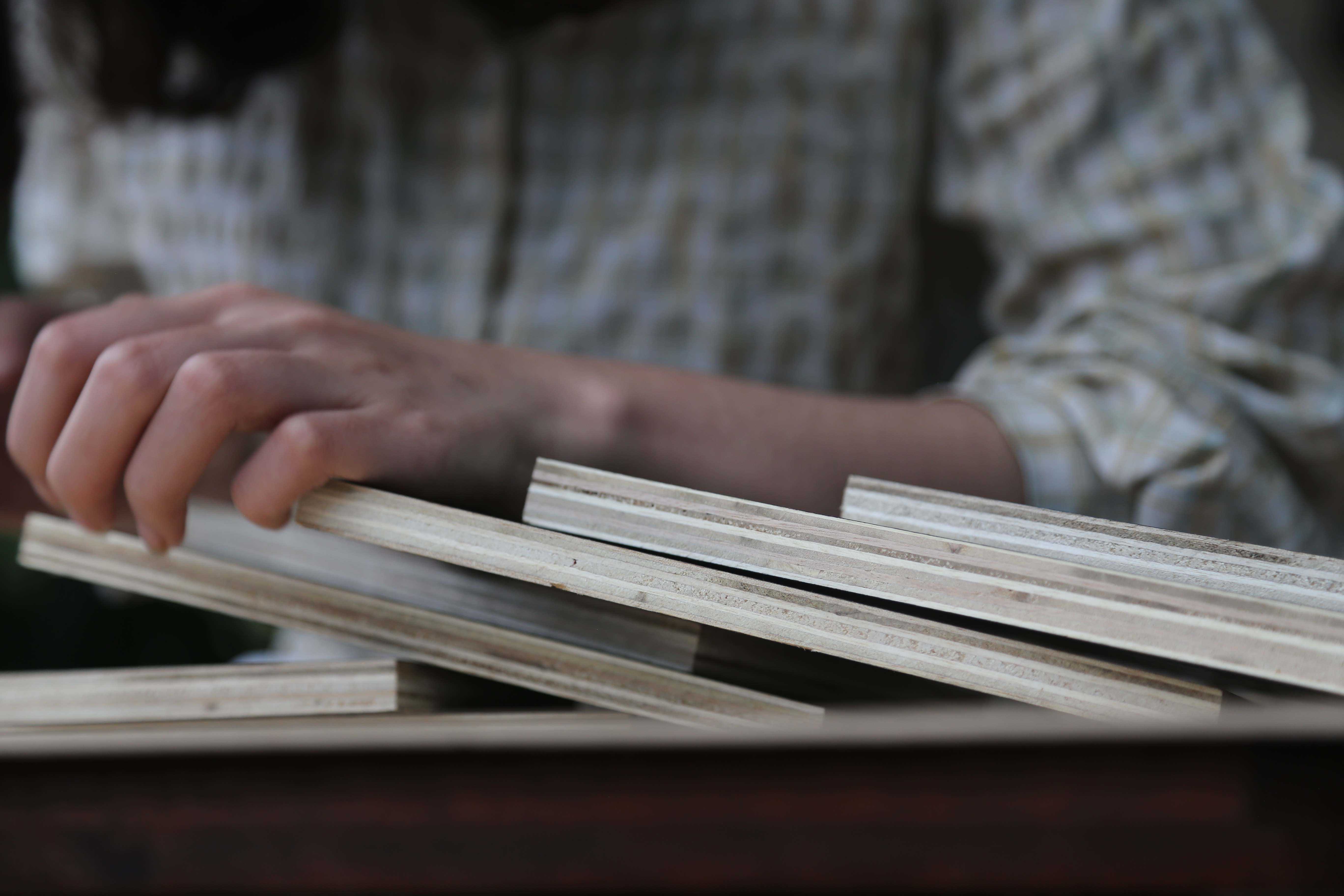
The way in which plywood is recycled largely depends on the type used. Untreated, unstained, and unpainted plywoods are often converted into woodwaste. This can later be turned into compost or mulch. The wood may also be used for animal bedding, landscaping, and raw soil improvement. Solid pieces of plywood may be repurposed by end-users to establish a distressed aesthetic in the desired variety of furniture.
5. What happens if plywood gets wet?
Most varieties of plywood will shrug off rudimentary water damage, and stronger varieties are better equipped to manage extended water damage and Film faced plywood is one example. Like most types of wood, even if it is treated against water damage, extended exposure to moisture will start to wear and damage the wood. Untreated pieces will not hold out as well, and warping and rotting will begin much quicker as time goes on.
5. Can plywood be bent?
Although plywood can be bent, it has to be of a specialized variety, as most other types of plywood will splinter and break if they are bent. The best variety of plywood available for bending has to be close-grained so that the surface does not separate with bending. Close-grained hardwood faces are ideal, which include plywoods that are made from mahogany, poplar, and birch.
6. Can plywood be stained?

Sources: DTLAW law firm
Plywood is a very easy material to stain because of its efficient construction. Because of how affordable the plywood is, it can also be ideal for all types of practice projects. Staining plywood will require special gel stains, though preconditioning the wood will allow you to use just about any other wood stain. The right care will allow the wood to have a single uniform color as desired.
7. Can plywood be sanded and polished?
Plywood can both be sanded and polished. Like any other wood, however, it is important to use the appropriate equipment to ensure that the finish appears as desired. It is recommended for individuals to start with 80-grit sandpaper to get the basic surface down before moving on to finer grits to get a smoother and more vibrant polish on the wood.
8. How thick is plywood?
Plywood thicknesses vary according to what the pieces are being used for. If the plywood is being used a support, it needs to be thicker and sturdier than if it is being used as a veneer. Normal plywood thicknesses may vary from an eighth of an inch to as much as one and a quarter of an inch. Specialized types of plywood may have even more variety when it comes to their thicknesses.
9. What kind of plywood is best for flooring?
Interior plywood is one of the most advantageous when used for indoor flooring. Because this type of plywood is only moderately sealed against water damage, it is highly recommended for end-users to apply this flooring system to rooms that do not come in contact with moisture often. For bathrooms and kitchens, exterior plywood is better designed to resist water damage.
10. What kind of plywood is best for roofing?
Radiant barrier plywood is most often used for roofing. This variety of plywood is designed to be very durable in the face of both physical wear and rain damage. Roofers often favor using plywood because of its ease of installation and natural strength, though more durable options may be necessary in areas that are prone to frequent thunderstorms.
Above there are FAQs when buying plywood: Hope the information that Fomex is useful to you and thanks to you for your time.
Best regards,
Fomex Greenwood