
Customs rejection is one of the most costly risks in international plywood trade. Even when product quality is acceptable, documentation errors or regulatory mismatches can result in shipment delays, penalties, or refusal of entry. This article explains how plywood customs clearance works, the most common reasons shipments are rejected, and how importers can reduce compliance risk.
How Customs Clearance Works for Plywood
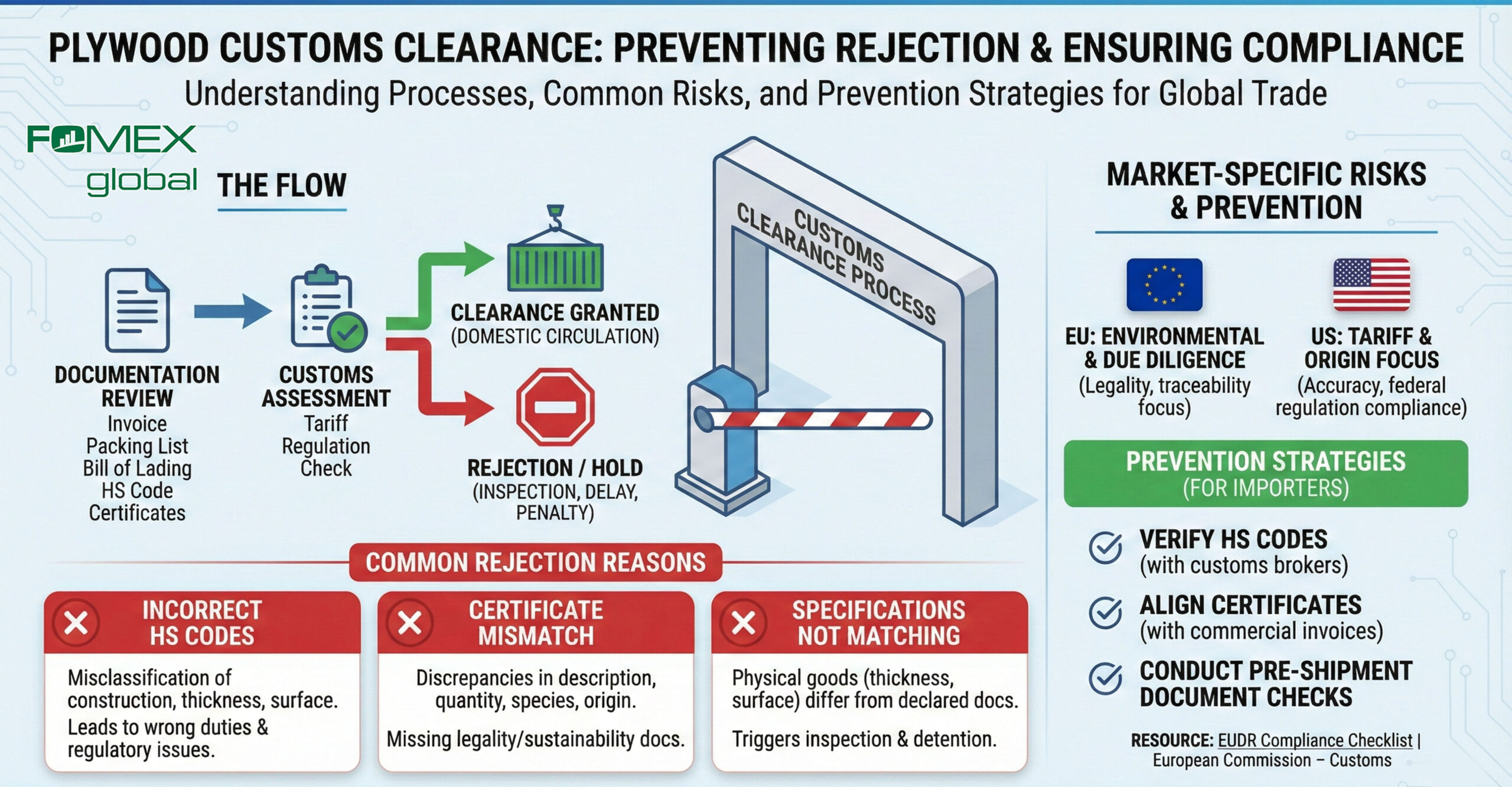
Customs clearance for plywood involves verifying that imported goods comply with tariff classification, product description, and regulatory requirements of the destination market. Authorities assess shipment documentation before releasing cargo for domestic circulation.
For plywood, clearance typically includes review of the commercial invoice, packing list, bill of lading, HS code declaration, and supporting certificates related to origin, legality, and environmental compliance. Any inconsistency between documents or between declared information and the
physical shipment may trigger inspection, delay, or rejection.
Common Reasons for Plywood Shipment Rejection
Incorrect HS Codes
Incorrect or inconsistent HS code classification is one of the most frequent causes of customs rejection. Plywood HS codes vary depending on construction, thickness, surface treatment, and intended use. Misclassification can lead to incorrect duty assessment or regulatory treatment, prompting customs authorities to hold or reject the shipment until discrepancies are resolved.
Certificate Mismatch
Certificate mismatches occur when information on certificates does not align with commercial documents or declared specifications. This includes discrepancies in product description, quantity, wood species, or country of origin. For regulated markets, missing or inconsistent legality and sustainability documentation significantly increases the risk of rejection.
Specifications Not Matching Documents
Customs authorities may inspect shipments to verify that physical goods match declared specifications. Differences in thickness, surface type, or panel construction can raise compliance concerns. Even minor inconsistencies may result in shipment detention while authorities assess whether misdeclaration has occurred.
Market-Specific Risks for Plywood Importers
Compliance requirements differ by market, increasing complexity for importers sourcing plywood internationally. In the European Union, customs clearance is closely linked to environmental and due diligence regulations. Documentation related to legality and traceability must be consistent and verifiable. In the United States, customs authorities focus on tariff classification accuracy, origin declaration, and compliance with federal import regulations. Inconsistent paperwork may trigger audits or extended inspections.
How Importers Can Prevent Customs Issues
Preventing customs rejection starts with structured export preparation rather than reactive problem solving at destination. Importers should ensure that all documents accurately reflect product specifications and regulatory requirements. Key preventive measures include verifying HS codes with customs brokers, aligning certificates with commercial invoices, and conducting pre-shipment document checks. Importers preparing for EU market entry may find this resource helpful:
EUDR Compliance Checklist for Plywood Importers
Official guidance on customs procedures is also available from the
European Commission – Customs
Avoid Customs Risks with FOMEX GLOBAL Export Support
Customs compliance requires experience, accuracy, and coordination between
exporters and importers. FOMEX GLOBAL supports buyers with structured
documentation, export-ready specifications, and compliance-focused processes
to reduce customs-related risks.
Email: qc@fomexgroup.vn
☎ +84 877 034 666