by Admin Admin No Comments

Plywood Damage at Sea: Causes, Prevention and Best Practices

International shipping is one of the riskiest stages in the plywood supply chain. Edge crush, warping, mould and stains can turn a profitable shipment into a loss. This guide explains why plywood gets damaged inside containers and how correct stuffing, lashing and moisture control can dramatically reduce claims.

Common Types of Shipping Damage to Plywood

Plywood can suffer several types of damage between factory and destination warehouse. Understanding these patterns is the first step to preventing them.

  • Edge crush and corner damage: Crushed, chipped or broken edges and corners caused by impact, shifting inside the container or rough forklift handling.
  • Warping and bowing: Panels that arrive curved instead of flat, making them difficult to use for formwork, furniture or flooring applications.
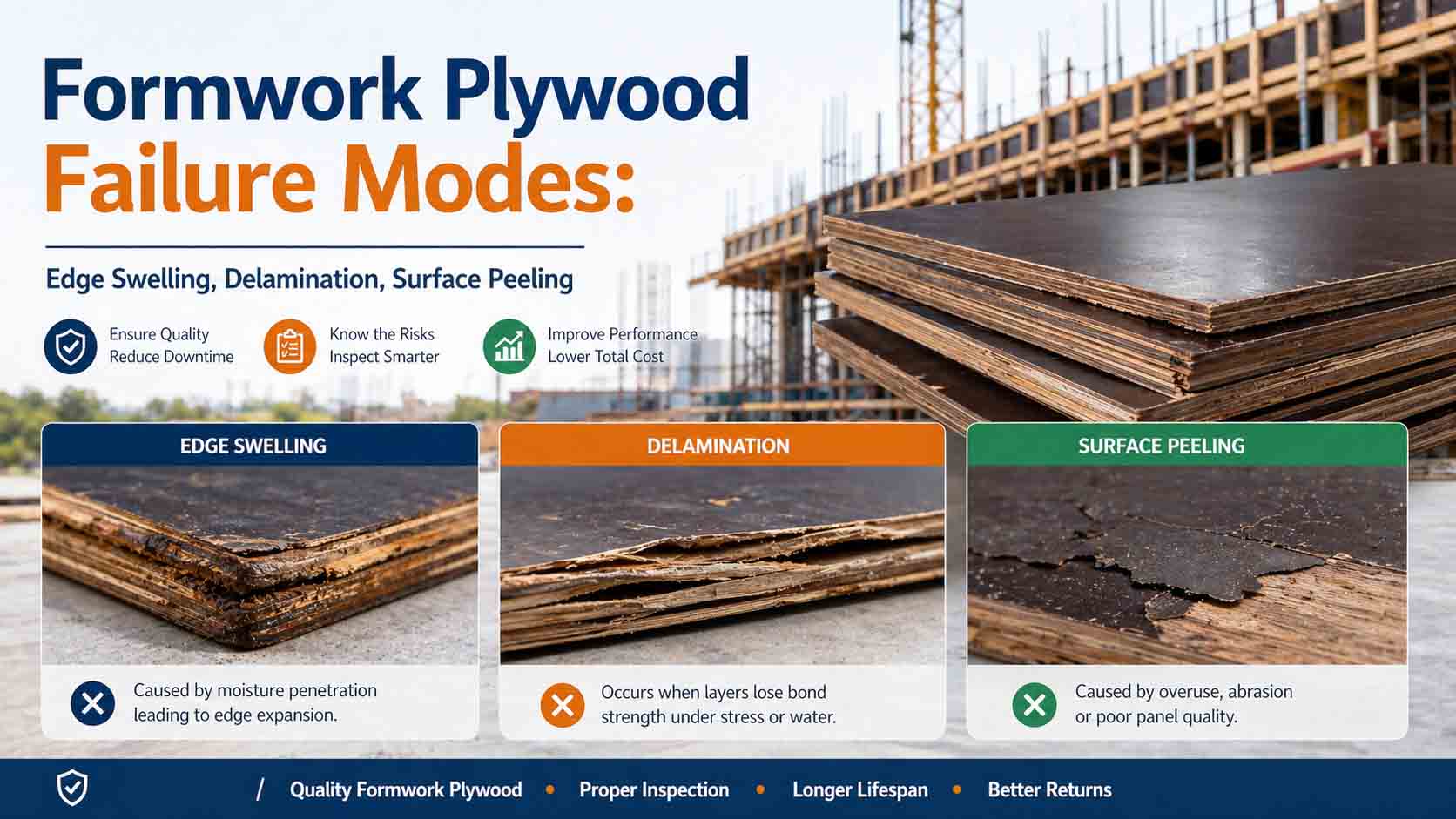
  • Delamination: Veneers separating at the edges or within the panel, often linked to moisture and mechanical stress during transit.
  • Mould and fungal growth: Black or white spots, fuzzy patches or odours caused by high humidity and poor ventilation.
  • Stains and rust marks: Discoloration from contact with wet steel, container walls, or contaminated packing materials.

Many of these issues can be traced back to how plywood is packed, loaded, secured and protected from moisture before the container doors are closed.

Root Causes Inside the Container

Even when the product quality at the factory is good, poor container practices can destroy value in transit. The main root causes are related to stuffing, lashing, load distribution and blocking.

Poor Stuffing and Lashing Practices

If bundles are not tightly packed or secured, they can move during transport. Ship motion, braking and cornering on trucks and cranes create forces that crush corners, damage edges and deform panels. Leaving gaps between stacks or failing to lock them against the container walls invites movement.

Overloading and Uneven Weight Distribution

Concentrating too much weight in one area can cause bundles at the bottom to crush and deform under the load. Uneven distribution also increases the stress on container floors and handling equipment, raising the risk of damage during lifting and transport.

Insufficient Dunnage and Blocking

Without proper dunnage, blocks and bracing, bundles can slide or tilt during ocean swell or road vibration. Simple details like wooden blocks, friction mats, and cross-bracing with timber or straps can make the difference between a stable load and a container full of damaged panels.

Moisture-Related Damage

Moisture is one of the biggest threats to plywood during international transport. It can come from the panels themselves, the air, the container or external conditions.

Condensation (“Container Rain”) and Humidity Changes

When warm, humid air inside the container cools during the voyage, moisture condenses on the steel roof and walls and drips onto the cargo. This “container rain” can wet plywood surfaces and edges, leading to stains, mould and swelling, especially if airflow is poor and panels stay wet for long periods.

High Moisture Content Before Loading

If plywood is loaded with moisture content above recommended levels, the panels can continue to release moisture inside the closed container. Combined with temperature changes at sea, this creates an ideal environment for condensation and mould growth. Proper drying and conditioning before loading is essential.

Lack of Desiccants and Ventilation

Without desiccant bags or appropriate liners, the container has no system to absorb excess moisture. On long voyages or routes with big temperature swings, this significantly increases the risk of humidity-related damage.

Best Practices for Container Stuffing and Lashing

Good stuffing and lashing discipline can reduce mechanical damage dramatically. The priority is to treat each container as a structural system, not just “space to fill”.

Pallets vs Loose Loading

Palletized loading provides better forklift handling and consistent spacing but can reduce the number of panels per container and add cost. Loose loading (bundles directly on the floor) can maximise volume but requires very careful stacking and blocking to prevent movement.

The best choice depends on product type, destination handling equipment and claim history. For high-value or high-risk shipments, pallets may be worth the extra cost for better protection and easier unloading.

Using Belts, Blocks and Corner Protectors

Straps or belts should be used to lock bundles together and anchor them to lashing points. Wooden blocks and braces at the front, back and sides prevent sliding, while corner protectors spread strap pressure and protect edges from crushing. These small details significantly reduce the risk of impact damage during transit.

Stacking Patterns to Minimise Movement

Plywood bundles should be stacked in a way that locks them together—no big gaps, “loose” stacks or unstable columns. Heavy bundles should go at the bottom, with lighter ones on top. Mixed sizes must be arranged so that they do not create unsupported overhangs that can break during movement.

Moisture Control Strategies for Plywood

Managing moisture is as important as mechanical protection. A few proactive steps can slash the risk of warping, mould and stains.

Pre-Loading Moisture Checks

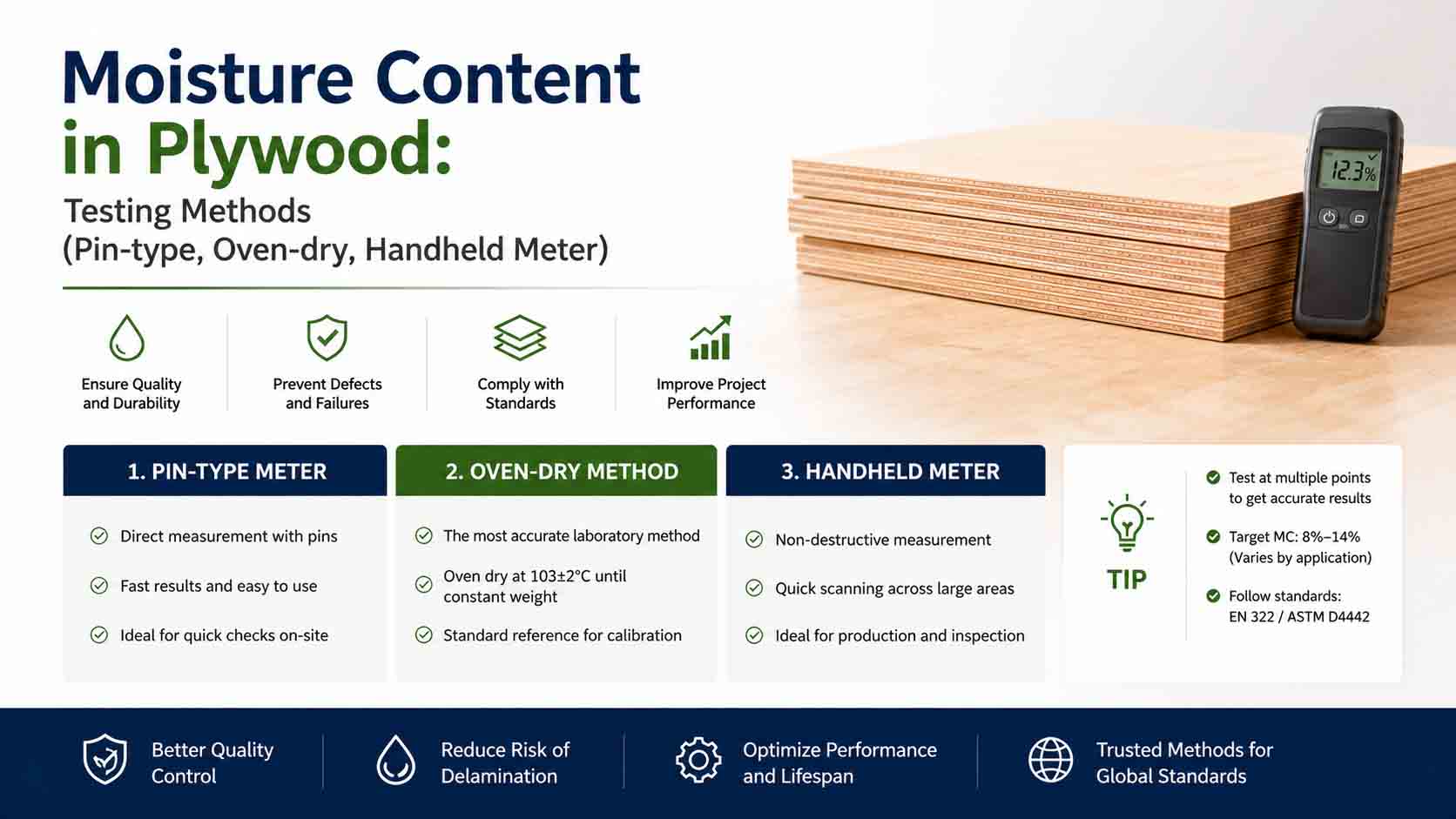
Plywood should be checked for moisture content before packing. If moisture is above agreed levels, panels should be dried or conditioned before shipment. Recording these measurements in a pre-shipment report helps in case of later claims.

Desiccant Bags and Container Liners

Desiccant bags placed along container walls and on top of the cargo absorb excess moisture in the air. In higher-risk routes, container liners or roof liners can provide an extra barrier between condensation and the panels, reducing “container rain” contact.

Storage Conditions at Origin and Destination

Containers should be stuffed in dry, covered areas, with panels that have not been exposed to direct rain. At destination, bundles should be unloaded promptly and stored off the ground, under cover, with enough airflow to avoid trapped humidity.

How FOMEX GLOBAL Manages Packing & Loading

A strong supplier treats packing and loading as part of quality, not an afterthought. Standard packing specifications, labelling and supervised loading minimise risk before the container leaves the yard.

  • Standard packing specs: Defined bundle sizes, protective wrapping, corner boards and strapping patterns for each product line.
  • Clear labelling: Bundle labels with product name, grade, size, thickness, quantity and production batch for easy inspection and stock management.
  • QC during loading: Visual checks for damage, correct stacking pattern and lashing before doors are sealed.
  • Photo and documentation reports: Loading photos and packing lists shared with buyers to provide transparency and support in case of claims.

Need a Lower-Risk Packing & Loading Plan?

FOMEX GLOBAL can work with your logistics team to define packing specs, loading methods and moisture control measures tailored to your routes and claim history.

Contact FOMEX Logistics Team →

Email: qc@fomexgroup.vn
☎ WhatsApp: +84 877 034 666

FAQs

Why does plywood warp after ocean shipping?

Warping is usually caused by uneven moisture exposure and stress during transport. One side of the panel absorbs more moisture or dries faster than the other, leading to tension differences and curvature. High initial moisture content, condensation and poor storage at destination all contribute.

How can I prevent mould and stains on plywood panels?

Keep moisture content within specification before loading, use desiccants or liners on riskier routes, and ensure containers are clean and dry. At destination, unload quickly and store bundles in a ventilated, covered area, away from direct contact with wet floors or walls.

Are pallets better than loose loading for plywood?

Pallets usually provide better protection and easier handling, reducing edge and corner damage. However, they take space and add cost. For high-value or sensitive products, pallets are often the safer choice; for commodity grades with strong packing, loose loading can

by Admin Admin No Comments

Why Plywood Shipments Get Rejected at Customs – and How to Avoid It

Customs rejections are one of the most expensive problems in international plywood sourcing. This guide breaks down the real reasons plywood shipments get rejected at customs—documentation mistakes, compliance gaps, spec mismatches, and phytosanitary issues—and shows how importers can build a “customs-safe” shipment process.

Why Plywood Shipments Get Rejected at Customs

The Real Cost of a Rejected Plywood Shipment

A rejected shipment rarely ends at “customs says no.” It typically triggers port delays, storage charges, demurrage/detention fees, re-export costs, and emergency rebooking—often exceeding the original profit margin on the container.

Just as damaging is reputation risk. When a buyer’s warehouse runs out of stock due to a blocked container, the importer may lose shelf space, contractor accounts, or long-term supply contracts—even if the problem was caused by a paperwork detail.

That’s why importers should treat customs clearance as a system: correct documents, correct specs, correct markings, and correct packaging—every shipment, every time.

Documentation-Related Rejection Reasons

Missing or Incorrect Commercial Invoice & Packing List

The most common reason for customs delays is basic document inconsistency: invoice data doesn’t match the packing list, container number is wrong, quantities don’t reconcile, or product descriptions are vague. Even small mismatches can trigger inspection or additional paperwork requests.

Wrong HS Code or Product Description

Misclassification (HS code) or unclear descriptions (e.g., not specifying film-faced plywood vs. commercial plywood, glue type, or intended use) can lead to incorrect duties, compliance checks, and rejection risk. Always align HS code and description with your broker’s guidance and the supplier’s spec sheet.

Incomplete Certificates (FSC, CARB-P2, CE, EUDR/EUTR Links)

Some markets or customers require proof of origin, chain-of-custody, or emissions compliance. If documents are missing, expired, not traceable to a shipment/batch, or inconsistent with the invoice description, customs may hold the cargo while verifying legitimacy.

Compliance and Certification Issues

Missing Certificates or Invalid Copies

A certificate file that looks “correct” is not always acceptable. Customs and buyers may check certificate number validity, scope, name matching (company/site), dates, and product coverage. If any element fails verification, clearance can be delayed or denied.

Formaldehyde Emission Standards Not Met

For interior-grade plywood, formaldehyde emissions can be a compliance hotspot. If the destination market requires low-emission standards (e.g., CARB-P2 / E0 / E1) and test reports are missing or the goods fail testing, the shipment may be rejected or forced into costly corrective action.

Non-Compliant Labelling and Markings

Incorrect marking (bundle labels, pallet marks, product stamping), missing language elements, or non-compliant CE/standard references can trigger inspection. Buyers may also reject goods if labeling doesn’t match the spec sheet and contract terms.

Quality and Specification Mismatches

Spec Sheet vs. Actual Product Delivered

Customs and end buyers increasingly treat the spec sheet as a “truth document.” If the shipment arrives with different face/back grade, different film, different core composition, or different glue class than what was declared, it can trigger disputes and inspections.

Moisture Content, Thickness, or Face Defects Outside Tolerance

Common claim triggers include thickness out of tolerance, excessive warping, delamination, or surface defects beyond agreed grade. Even if customs clears the shipment, the buyer may reject the container commercially, creating the same cost impact as a customs rejection.

Mismatch Type Typical Root Cause Prevention Method
Thickness / tolerance mismatch Unclear tolerance on PO; weak final inspection Confirm tolerance in writing; measure during PSI
Wrong grade / appearance Grade standards not aligned by market Reference sample + photo defect guide + acceptance criteria
Glue / performance mismatch Supplier substitutes spec due to shortage Pre-production confirmation + batch traceability
Packing/marking mismatch No packing SOP; last-minute changes Packing spec sheet + loading supervision + photo report

Fumigation and Phytosanitary Problems

ISPM-15 Requirements for Pallets

If your shipment includes wooden pallets or wood packaging material, many destinations require ISPM-15 compliant treatment and marking. Missing marks, unclear marks, or the wrong pallet type can trigger inspection and delays.

Incorrect or Missing Fumigation Certificate

Some routes and destinations require fumigation or phytosanitary documentation depending on packaging and cargo type. If the certificate is missing, mismatched (dates, container number, consignee), or issued incorrectly, customs can hold or reject the shipment.

Contamination or Pest Findings

Dust, bark residue, live insects, or visible contamination inside the container can trigger quarantine actions. Clean packing areas, proper wrapping, and correct pallet sourcing reduce this risk significantly.

How to Build a “Customs-Safe” Plywood Shipment

The most reliable method is to build a repeatable checklist that combines compliance, quality control, and documentation discipline—before the container leaves the factory.

Pre-Shipment Checklist (Importer + Supplier)

Category What to Check Proof / Output
Documents Invoice, packing list, BL draft, COO, insurance (if any) Final PDF set aligned with container details
Compliance FSC-COC / emissions / CE (as required by market & customer) Valid certificates + traceable shipment reference
Quality Thickness, moisture, face/back grade, delamination, warping PSI report + photos + measurement logs
Packing Bundle protection, corner guards, strapping, labels Packing photos + packing spec confirmation
Phytosanitary ISPM-15 pallets, fumigation requirements if applicable ISPM-15 marks + fumigation certificate (if needed)

Work With a Supplier That Controls QC + Documentation

The fastest clearance outcomes usually happen when the supplier has a controlled supply chain, pre-shipment inspection routines, and transparent, traceable documentation—because customs questions can be answered quickly with evidence.

In the FOMEX ecosystem, the workflow is designed to reduce buyer risk through requirement analysis, technical specification & compliance confirmation, production coordination & QC control, documentation export preparation, delivery/logistics coordination, and post-shipment support.

FOMEX Global highlights dedicated QC and inspection before shipment, plus transparent documentation and traceable origin, to help international buyers avoid compliance surprises.

Read More

Want a Customs-Safe Document Pack for Your Next Shipment?

FOMEX GLOBAL supports importers with application-based specs, pre-shipment inspection coordination, and export documentation preparation to reduce customs risk and stabilize supply.

Contact FOMEX Team →

Email: qc@fomexgroup.vn
☎ WhatsApp: +84 877 034 666

FAQs

What documents are essential for plywood customs clearance?

Most shipments need a commercial invoice, packing list, bill of lading (or airway bill), and any required certificates requested by the destination country or your end customer (for example origin, emissions, or chain-of-custody documents). Always confirm exact requirements with your customs broker for your route and HS code.

Can missing FSC certificates cause shipment rejection?

Yes—if FSC documentation is required by your customer contract, government procurement rules, or your compliance program. Even when customs does not require FSC, buyers may reject the shipment commercially if the promised certificate is missing or cannot be verified.

How do I ensure my plywood shipment meets formaldehyde regulations?

Specify the emissions standard clearly on the PO and spec sheet, request valid test reports/certificates tied to your product and batch, and use pre-shipment inspection to confirm labeling and documentation match the goods. For high-risk destinations, discuss additional third-party testing with your broker and customer.

Who is responsible if customs rejects the shipment?

Responsibility depends on contract terms (Incoterms), purchase agreement, and which party prepared documentation. In practice, importers reduce risk by aligning responsibilities in writing and working with suppliers who can provide complete, accurate documents and verifiable QC records.

by Admin Admin No Comments

Plywood Thickness Guide for Global Buyers

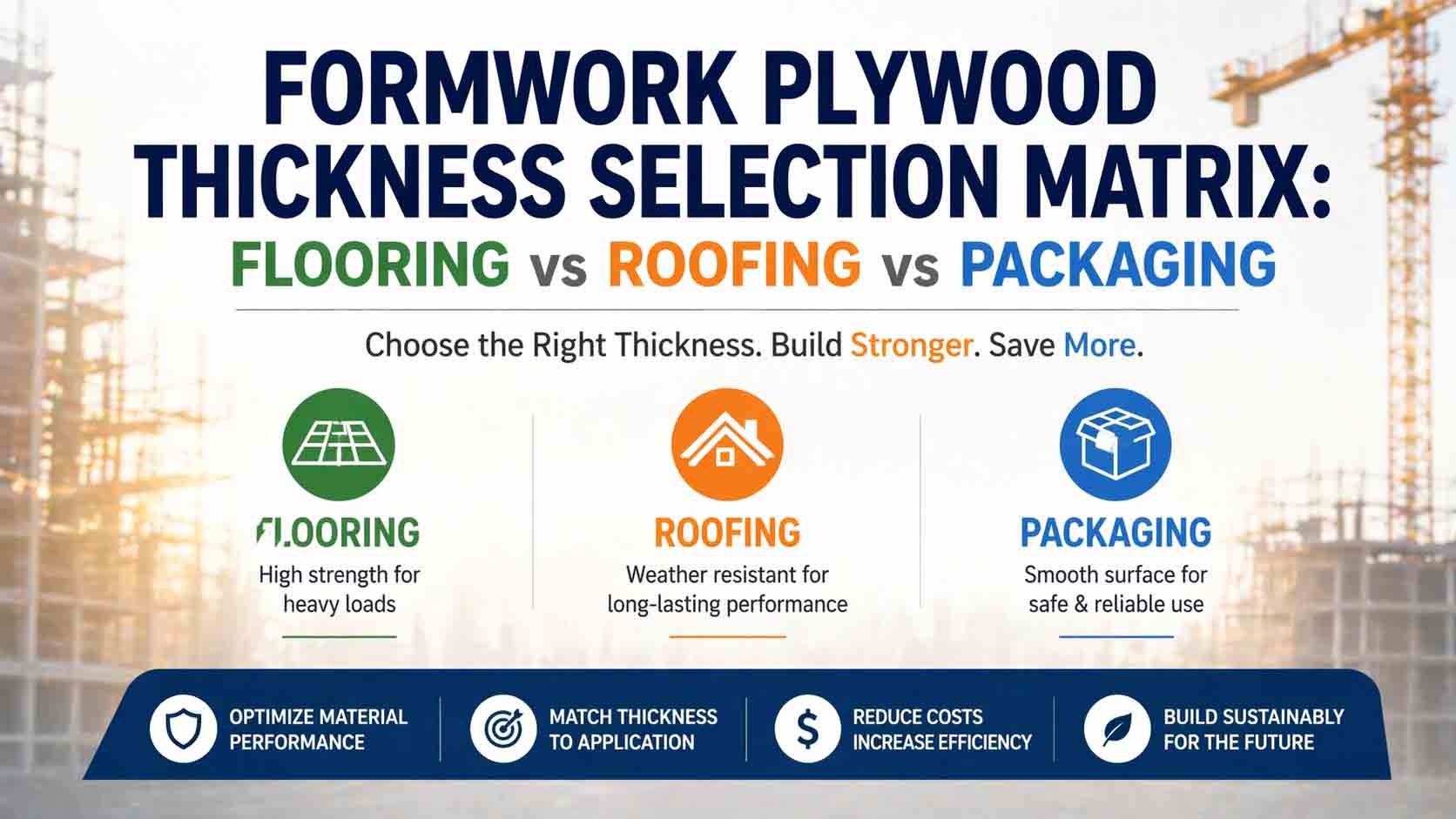
Selecting the right plywood thickness is one of the most important decisions for global buyers. The correct panel thickness protects performance and safety, avoids complaints, and optimizes shipping cost and pricing. This practical guide helps importers choose thickness by application: concrete formwork, scaffolding, flooring, furniture and packaging.

Plywood Thickness Guide for Global Buyers

Why Thickness Selection Is Critical for Importers

For international buyers, plywood thickness influences performance on site, safety margins and the risk of product complaints. Panels that are too thin may deflect, fail or not meet local expectations, while panels that are too thick increase cost without real benefit.

Thickness also affects shipping cost and container optimization. Heavier panels reduce the number of sheets that can be loaded per container weight limit, while thinner panels may hit the full volume before reaching weight limits. Balancing thickness and density is essential for cost-efficient logistics.

Finally, each market has its own “standard” expectations. A thickness that is normal in one country may be considered under- or over-specified in another. Matching local market preferences helps importers avoid disputes, price pressure and return claims.

Thickness by Major Application Group

Instead of choosing thickness randomly, buyers should start from the intended application. The same size panel can behave very differently in concrete formwork compared with furniture or packaging.

Concrete Formwork and Scaffolding

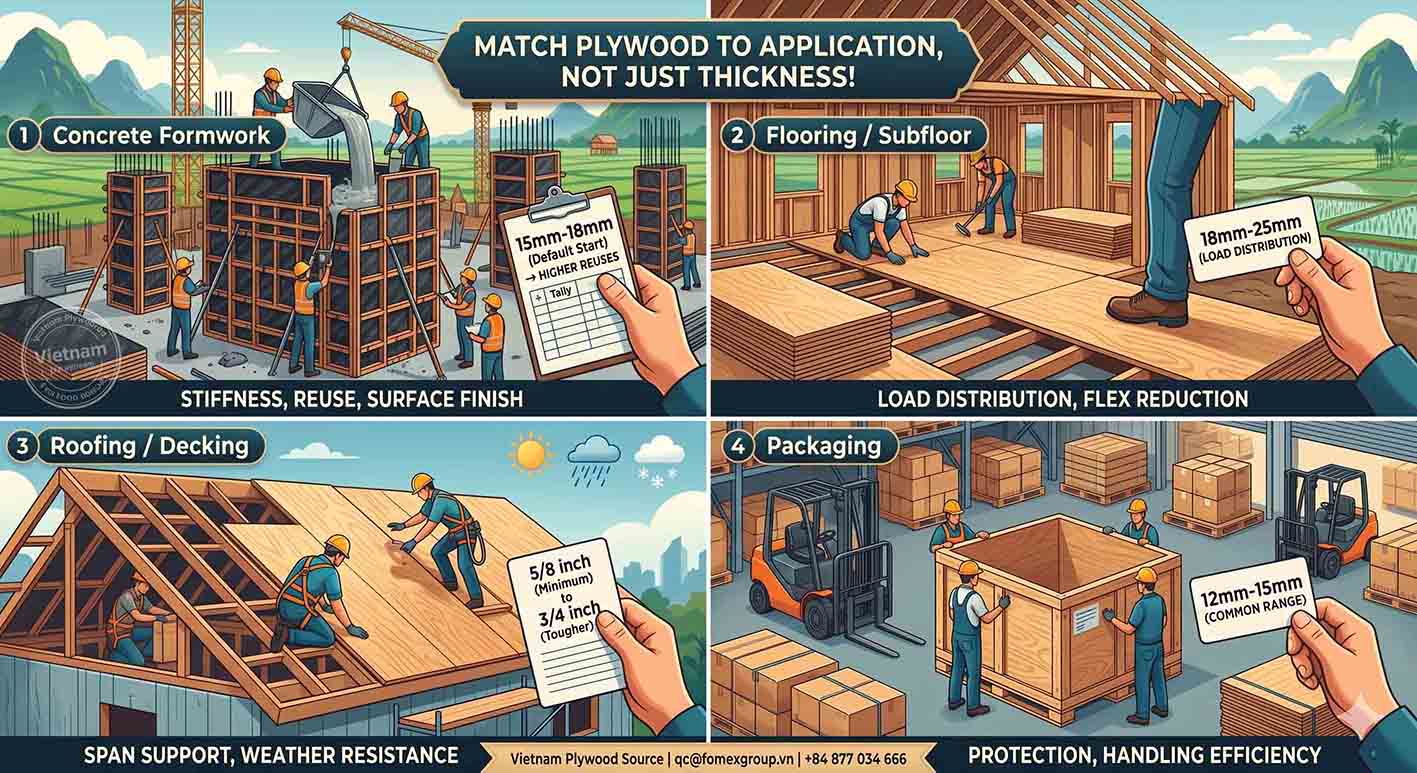
Concrete formwork and scaffolding require structural performance under load. Typical thickness ranges are:

  • Slab, wall and column formwork: 15–21 mm for general use, up to 25 mm for heavy loads or long spans.
  • Beam and girder formwork: 18–25 mm, depending on depth, span and vibration.
  • Scaffolding decks and platforms: 18–21 mm for standard spans, thicker where span is larger or live loads are high.

For these applications, thickness must be coordinated with support spacing, concrete pressure and local safety codes. Choosing too thin a panel increases deflection and accident risk; too thick can make handling difficult and unnecessarily expensive.

Flooring and Anti-Slip Panels

Flooring and anti-slip panels (e.g. truck floors, container floors, platforms, scaffold decks) need stiffness, impact resistance and good screw-holding capacity. Common thickness ranges include:

  • Truck and trailer floors: typically 18–28 mm depending on axle load and support spacing.
  • Warehouse platforms and stages: 18–21 mm for moderate spans, 21–25 mm for heavier loads.
  • Anti-slip panels for scaffolding: 18–21 mm with wiremesh or hexagonal faces for better grip.

For these products, buyers should consider both live loads and expected wear. Thicker panels usually offer longer service life but must still fit weight and design constraints.

Furniture and Interior Panels

Furniture and interior use focuses more on stability, appearance and compatibility with hardware than on heavy structural loads. Typical thickness ranges:

  • Cabinet carcasses and shelves: 15–18 mm.
  • Doors and door skins: 3–6 mm for skins, 18–40 mm for door cores depending on design.
  • Partitions and wall panels: 9–18 mm, depending on span between studs.
  • Drawers and small components: 6–12 mm.

In this segment, thickness needs to align with hinges, screws and fittings. Too thin, and fasteners fail; too thick, and the furniture becomes heavy and over-engineered for its target price segment.

Packaging and Pallets

Packaging and pallet applications are very cost-sensitive, and buyers often ask for the thinnest possible panel that still performs. Typical guidelines:

  • Light-duty boxes and crates: 4–9 mm.
  • Medium-duty export crates: 9–15 mm, depending on weight and stacking.
  • Pallet decks and runners: 9–18 mm, guided by load and forklift handling.

Thin panels are acceptable for light or disposable packaging, but heavy-duty crates and reusable pallets need greater thickness and stronger cores to prevent breakage during transport and handling.

Regional Standards and Common Practices

Thickness expectations vary by region, driven by building codes, historical practice and end-user preferences. Understanding these patterns helps importers specify the right product for each market.

  • Europe (EU): Often uses metric thicknesses with relatively strict tolerance. For structural and formwork applications, 18–21 mm is common, with strong focus on safety and deflection limits.
  • United States: Nominal imperial thicknesses (e.g. 3/4″) are common in some segments, but metric panels are widely used in imports. There is a wide spectrum from commodity to high-spec projects.
  • Middle East: Many buyers focus on high reuse and cost efficiency in hot climates. 18–21 mm is common for formwork, often with higher performance requirements in film and glue.
  • Asia-Pacific: Markets are very diverse. Some buyers favour thinner, more economical panels for competitive pricing, while others follow stricter specs tied to Japanese, Korean or Australian standards.

Local codes and norms can dictate minimum thickness for specific uses (e.g. scaffolding or structural flooring). Importers should always verify local regulations and not rely only on supplier suggestions.

Thickness vs Cost, Weight and Shipping

Thickness choices have a direct impact on cost, weight and logistics. Thicker panels use more wood, increase price per sheet and add weight per cubic metre, which can limit how much you can load into a container.

From a logistics point of view:

  • Heavier panels: Reach container weight limit earlier, potentially leaving unused volume.
  • Thinner panels: May reach full volume before hitting the weight limit, improving panel count per container but limiting performance.

The trade-off for importers is to find a thickness that:

  • Meets performance and safety requirements for the application.
  • Aligns with market expectations and selling price.
  • Optimizes container loading to keep cost per panel competitive.

How FOMEX GLOBAL Customizes Thickness for Global Buyers

A flexible supplier can help global buyers balance all of these factors by offering both standard and customized thickness options. FOMEX GLOBAL’s approach is to start from the application and destination market, then fine-tune thickness and construction to match.

Typical support includes:

  • Standard size and thickness range: Common formwork, flooring, furniture and packing configurations ready for regular orders.
  • Custom thickness and special orders: Tailored solutions for specific systems, codes or customer brands.
  • Consistency across repeated shipments: Stable thickness, tolerance and mechanical performance so importers can build long-term portfolios with predictable quality.

Need Help Defining the Right Thickness by Application?

FOMEX GLOBAL engineers can recommend thickness structures for formwork, flooring, furniture and packaging based on your target market and cost targets.

Contact FOMEX →

Email: qc@fomexgroup.vn
☎ WhatsApp: +84 877 034 666

FAQs

What plywood thickness is best for export packaging?

For light-duty export packaging, 4–9 mm is often sufficient. For heavier crates and loads that will be stacked or handled by forklift, 9–15 mm is more appropriate. The choice depends on product weight, stacking height and handling method.

Do buyers in Europe prefer different thicknesses than buyers in the Middle East?

Yes. European buyers often expect stricter structural performance and may specify 18–21 mm for many formwork and flooring uses. In the Middle East, buyers also use 18–21 mm but tend to demand higher reuse and robustness due to hot climates and intensive usage patterns.

How does thickness affect container loading?

Thicker panels weigh more, which can cause the container to reach its weight limit sooner, reducing the total sheet count per container. Thinner panels allow more sheets to be loaded, but may not meet performance needs. Importers should calculate cost per sheet and cost per m² delivered, not just container cost.

Can I order mixed thicknesses in one container?

In many cases, mixed thickness loading is possible and can be an efficient way to supply multiple product lines or applications in one shipment. Buyers should discuss the exact mix, stacking pattern and labelling with the supplier to ensure safe loading and smooth warehousing on arrival.

by Admin Admin No Comments

Phenolic Film Faced Plywood for Formwork: More Uses, Better Finish

Phenolic film faced plywood is engineered to deliver higher reuse cycles, cleaner concrete finishes and stronger moisture resistance compared with standard melamine film boards. This guide explains how phenolic film works in concrete formwork, where it delivers the most value, and how to use it correctly to maximise panel life.

What Is Phenolic Film Faced Plywood?

Phenolic film faced plywood is a structural plywood panel coated on one or both sides with a resin-impregnated phenolic film. The core veneers are bonded with exterior-grade glue and pressed under high temperature and pressure so that the film becomes a tough, durable surface layer suitable for repeated concrete pours.

The phenolic film itself is a kraft paper saturated with phenolic resin and cured to form a hard, chemically resistant coating. This coating protects the wood underneath from water, cement paste and abrasion during concrete placement, stripping and cleaning.

Compared with melamine or paper films, phenolic film offers a higher level of durability:

  • Phenolic film: High hardness, excellent abrasion resistance, very good water and chemical resistance.
  • Melamine film: Good surface quality but lower wear and moisture resistance than phenolic.
  • Paper or basic overlay: Suitable for light-duty use with limited reuse potential.

Key Advantages of Phenolic Film for Concrete Formwork

Upgrading from standard melamine to phenolic film changes how the panel behaves across multiple pours. The main benefits include superior resistance to water, chemicals and abrasion, and more consistent concrete surfaces over time.

Water and Chemical Resistance

Phenolic film creates a dense, non-porous surface that resists water penetration and alkaline attack from cement paste. This helps protect the glue line and core veneers against swelling and breakdown, especially in repeated wet–dry cycles or on sites with aggressive cleaning routines.

Abrasion Resistance and Surface Hardness

The cured phenolic layer has greater hardness and abrasion resistance than typical melamine films. It withstands contact with vibrators, tools and cleaning equipment better, slowing down surface wear and helping the panel retain its smoothness for more reuse cycles.

Better Concrete Finish and Fewer Patch Repairs

Because phenolic film maintains a smoother, more uniform surface over time, the concrete finish remains more consistent from pour to pour. This reduces patching, grinding and cosmetic repair work, especially on exposed surfaces where appearance matters.

Phenolic vs Melamine: Technical Comparison

A practical way to understand the benefit is to compare film types in terms of durability, typical reuse range and common applications.

Film Type Surface Durability Typical Reuse Cycles* Typical Applications
Paper / basic overlay Low – suitable for light-duty work ≈ 1–3 uses Small foundations, one-off jobs, temporary works
Melamine film Medium – decent finish, moderate wear resistance ≈ 4–8 uses (with proper handling) General building formwork, short to mid-term projects
Phenolic film High – excellent wear and moisture resistance ≈ 10–20 uses (with proper handling) High-rise, infrastructure, high-reuse formwork systems

*Actual reuse cycles will depend on glue system, core quality, concrete pressure, release agents, stripping methods, storage and climate.

Phenolic film also works well with proper edge sealing. When panel edges and cut edges are sealed correctly, the phenolic surface and sealed edges together form an effective barrier, reducing water uptake and extending panel life across multiple pours.

Impact on Reuse Cycles and Cost

The main reason contractors upgrade to phenolic film faced plywood is to increase reuse cycles and reduce total cost per use. The table below shows a simplified comparison between a melamine film panel and a phenolic film panel over a series of pours.

Panel Type Typical Reuse Range Estimated Cost per Use
Melamine film faced plywood 140 ≈ 6–8 uses (assume 7)
Phenolic film faced plywood 180 ≈ 12–18 uses (assume 15)

While the phenolic panel costs more per sheet, its lower cost per use and longer life usually reduce the total expense of formwork over 10–15 pours. Fewer panel replacements also mean less downtime, fewer emergency purchases, and a lower risk of surface defects that lead to rework.

On projects with many repetitive pours or on long-duration jobs, these savings can be significant, especially when labour, crane time and finishing work are included in the calculation.

Best Practices When Using Phenolic Film Faced Plywood

To get the full benefit of phenolic film, panels must be handled, treated and stored correctly. The following best practices help maximise reuse cycles and maintain surface quality.

Proper Edge Sealing and Cut Edge Treatment

Even with a robust phenolic surface, water can penetrate through unsealed edges and cuts. All panel edges should be factory-sealed, and any cut edges must be sealed on site using compatible paint or edge sealant. This reduces swelling, delamination and early failure at the edges.

Use Compatible Form Release Agents

Only use release agents that are compatible with phenolic film. Harsh or solvent-based products can soften or damage the film surface. Apply a thin, even layer and avoid pooling, which can mark the concrete or interfere with bond performance at edges and joints.

Cleaning and Storage Guidelines

After stripping, clean concrete residues with soft tools rather than sharp metal scrapers that can gouge the film. Allow panels to dry and store them flat on level supports, protected from standing water and direct weather. Good cleaning and storage practices are essential for achieving the upper end of the expected reuse range.

Where FOMEX GREENWOOD Phenolic Film Panels Fit Best

Phenolic film faced plywood from FOMEX GREENWOOD is designed for contractors and importers who need reliable performance in demanding concrete formwork applications. It is especially well suited to high-reuse formwork systems, core walls, main slabs, beams and columns in multi-storey projects.

These panels are typically produced in common formwork sizes and thicknesses suitable for most systems and can be matched to specific project requirements in terms of glue system, core composition and expected reuse cycles. They perform strongly in hot, humid and high-rainfall climates where moisture and temperature cycles are severe.

Need Help Selecting the Right Phenolic Film Panel?

FOMEX GREENWOOD engineers can recommend phenolic film faced plywood specifications based on your formwork system, project drawings and reuse targets.

Contact FOMEX Engineers →

Email: qc@fomexgroup.vn
☎ WhatsApp: +84 877 034 666

FAQs

Is phenolic film worth the extra cost?

For projects with multiple pours or where surface quality and reliability matter, phenolic film is usually worth the additional investment. Its higher reuse potential, lower cost per use, and reduced need for patching and panel replacement often result in lower total project cost compared with cheaper melamine film options.

How many more reuse cycles can I expect from phenolic film?

While exact numbers depend on glue, core quality and jobsite practices, phenolic film faced plywood can often deliver roughly double the reuse cycles of comparable melamine film panels when handled correctly. In many cases, this means moving from 6–8 uses to 12–18 uses or more.

Can phenolic film faced plywood be used for both walls and slabs?

Yes. Phenolic film faced plywood is suitable for walls, columns, slabs and beams, as long as the panel thickness and support spacing are chosen correctly for each application. Using the same panel type across different formwork zones can simplify logistics and inventory management.

How do I avoid damaging the phenolic surface?

Avoid using sharp metal tools directly on the film, use appropriate release agents, do not drag panels across rough surfaces, and store them flat and dry. Sealing cut edges and cleaning gently after each pour are key steps to protect the phenolic surface and maintain high reuse counts.

by Admin Admin No Comments

Fomexer’s first working day in the new year of Tan Suu 2021

We have officially entered the new year of Tan Suu 2021 – the year that everyone looks forward to with a lot of hope for better things
Fomex has returned to work with a spirit of excitement and enthusiasm, always ready to accompany and serve our beloved customers.

Open a new bottle of wine to welcome a new beginning

Wine glass to welcome the new year

Luckiy money symbol for luck

Fomex has returned to work with a spirit of excitement and enthusiasm, always ready to accompany and serve our beloved customers.
On the occasion of the New Year’s Day, Fomex would like to wish you and your loved ones a wonderful year

Happy New Year! 2021


by Admin Admin No Comments

South Korean container lines join forces in regional alliance

South Korean container lines join forces in regional alliance
Five South Korean liner operators will codeshare on services to Southeast Asia in Q2 2021, after acceding to a request by the Ministry of Oceans and Fisheries (MOF).

Tentatively called the K-Alliance, the codesharing arrangement was signed on 23 December 2020, between the ministry, HMM, SM Line Corporation, Pan Ocean, Sinokor Merchant Marine, and the latter’s subsidiary, Heung-A Line. Read more

by Admin Admin No Comments

Tips for Peaking shipping season 2020 from the experts

In the world of freight, as usual, “Peak season”  is one of the most things importers always a concern. There’re many speculations about what peak season, but definitely this will happen and importers need to be prepared. Below are tips for Peaking shipping season from the experts that may useful for you.

When is Peak Shipping Season happen?

shipping-updates-for-peak-seasonAugust to October is historically shipping time annually. At the end of the year, holiday shopping propelling consumer demand higher. By 2020, the “Container Shortage” problem happen so seriously. Viewed from different angles, Read more

by Admin Admin No Comments

Relevant Problems in Fumigation of Plywood

Relevant Problems in Fumigation of Plywood

What’s Fumigation ?

Related: What is fumigation in Exports and Imports?

Fumigation is a pesticide treatment using poisonous gases to kill pests and insects within the wood. Solid timber and logs probably have harmful living pests and insects inside. These pests (wood borers, dry wood termites, etc) are harmful and will damage plants or ecosystems in importing countries. It’s necessary for importing countries to stop the invasion of these harmful pests and insects. Read more