by Admin Admin No Comments

Plywood Price News: Cost Drivers Buyers Should Watch Closely

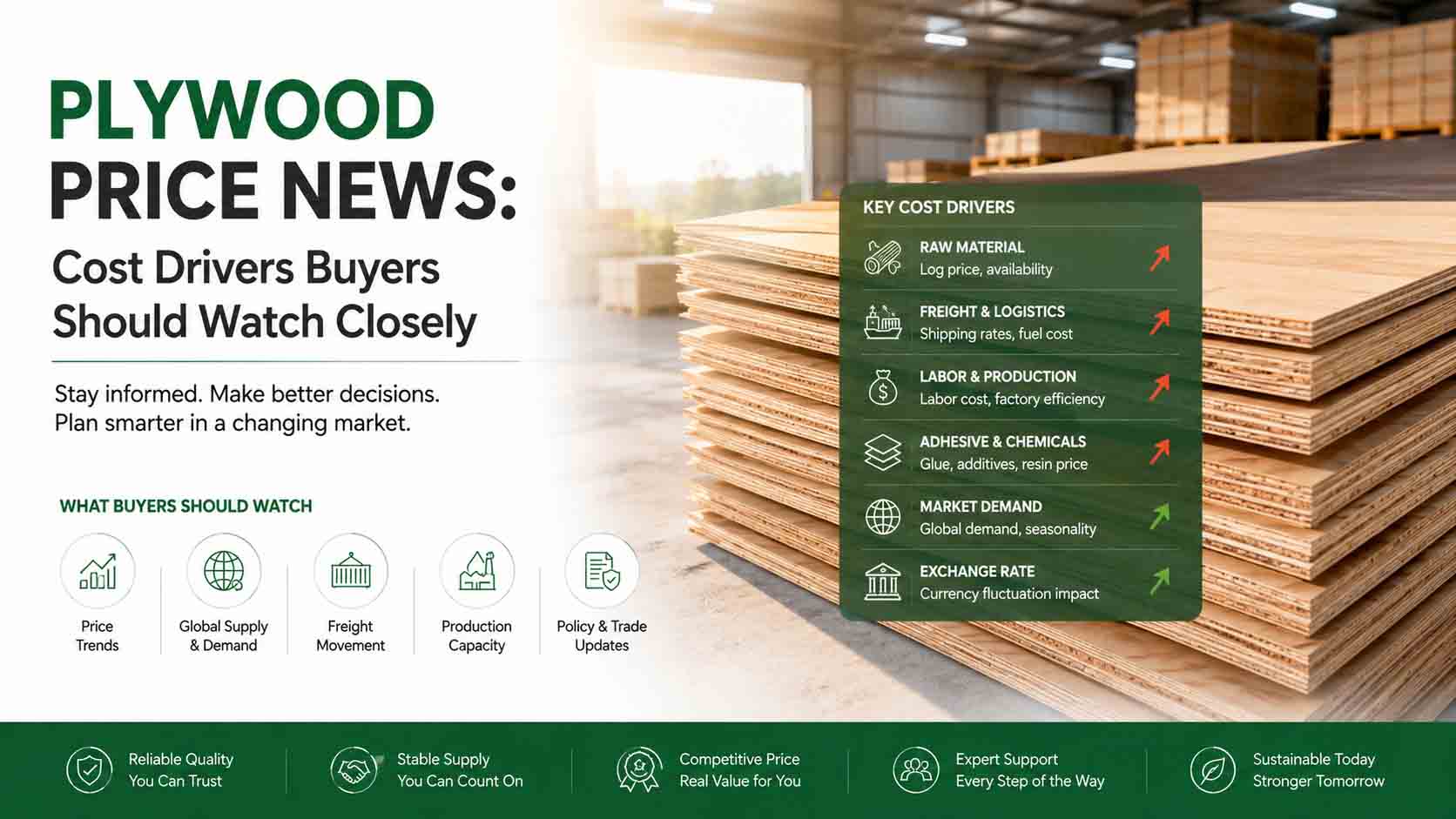
For importers and procurement teams, following plywood price news is useful, but headline movement alone rarely explains why quotations change. A price increase may come from raw material pressure, glue costs, labor shifts, packaging changes, or freight conditions, and each driver affects sourcing decisions in a different way.

That is why buyers need a clearer framework for reading the market. This guide breaks down the main cost drivers in plywood pricing and shows how to turn general market updates into more practical supplier conversations, better quote analysis, and smarter buying decisions.

Context and Buyer Problem

Many buyers receive frequent updates about rising costs, factory pressure, or export market changes. The challenge is that these updates often stay too broad to support a real procurement decision. A supplier may mention higher raw material costs, while another refers to logistics pressure, and a third adjusts price without explaining the change clearly.

Why price movement is easy to misread

Not all cost changes affect the product in the same way. Some changes raise the base manufacturing cost, while others affect only timing, packaging, or shipment planning. That is why plywood prices news should be read as a sourcing signal, not as a complete explanation on its own.

What buyers should do next

Instead of reacting only to the final quoted number, buyers should ask what part of the cost structure actually changed. This helps separate a temporary negotiation point from a more structural pricing shift that may affect future orders as well.

Key Evaluation Criteria

To understand plywood pricing properly, buyers should break the quotation into a few major cost blocks. This makes supplier comparison more useful and reduces confusion when market conditions change quickly.

Raw material cost

Raw material is one of the most visible cost drivers because veneer quality, log availability, species selection, and core construction all affect the finished board. A change in raw material supply can influence not only price but also panel consistency, grade positioning, and what type of product the supplier is able to offer at a given level.

Glue and chemical inputs

Glue cost matters more than many buyers expect because bonding is central to panel performance. If adhesive inputs move, the effect may appear directly in pricing or indirectly in how suppliers position different product grades. Buyers tracking comparisons such as birch plywood cost or cdx plywood cost should remember that panel category and bond system can shape cost differently.

Labor and factory operations

Labor does not only mean wages on the production floor. It also includes grading, repair, calibration, handling, QC, packing, and overall factory discipline. This is important because buyers sometimes compare factory prices too directly with downstream project references such as labor cost to install plywood subfloor per square foot, even though manufacturing labor and installation labor belong to different parts of the value chain.

Logistics and shipment conditions

Freight, inland transport, packaging, container availability, and loading efficiency can all affect total cost. In export plywood, logistics pressure may not change the board itself, but it can still change landed cost enough to alter supplier preference or order timing.

Why cross-product comparisons can mislead

Some buyers watch adjacent market references such as glue laminated beams prices to understand broader wood-product cost movement. That can be useful for general context, but it should not replace product-specific plywood analysis. Different engineered wood products carry different structures, applications, and cost logic.

Evidence and Documentation

Price discussion becomes more useful when the supplier can explain the quotation with enough structure to support review. Buyers do not need full cost disclosure, but they do need enough clarity to understand what is changing and why.

What buyers should request

  • Product specification sheet that clearly defines the quoted panel.
  • Commercial quotation with product description, thickness, grade, and order basis.
  • Clarification on whether the recent price movement is tied to raw material, glue, labor, or logistics.
  • Packaging and shipping terms that may affect total landed cost.
  • Validity period for the quotation, especially when market conditions are shifting.

What buyers should check inside the quote

The first question is whether the same product is being compared across suppliers and across different quote dates. A price movement is hard to interpret if the core build, face grade, glue system, or shipment terms changed at the same time. Buyers should confirm that the product definition stayed stable before deciding whether the new number is truly higher or simply different.

What this means in practice

When a supplier says costs increased, buyers should ask which part of the cost stack moved and whether the change is temporary or likely to continue. That makes the sourcing conversation more practical and often leads to better negotiation on specification, timing, or order structure.

Decision Framework

A simple decision framework helps procurement teams turn market updates into sourcing action instead of reacting to every headline. The goal is to connect price movement with real buying impact.

Step 1: Confirm the exact product

Start with the quoted panel itself. Make sure thickness, face quality, glue system, and intended use are clearly defined before reviewing the price change.

Step 2: Identify the cost driver

Ask whether the movement is coming mainly from raw material, glue, labor, or logistics. If the supplier cannot explain the change clearly, the buyer should review more carefully before making a comparison.

Step 3: Separate temporary pressure from structural change

Some cost changes affect one shipment cycle, while others influence the supplier’s pricing position over a longer period. This distinction matters because it affects whether buyers should negotiate timing, adjust specification, or reconsider supplier mix.

Step 4: Decide based on total sourcing value

  • Proceed when the product definition is stable and the price movement is commercially understandable.
  • Clarify when the supplier explanation is partly useful but the cost driver is still vague.
  • Pause when the quote changes materially and the supplier cannot explain whether the reason is product-related or logistics-related.

FAQ About Plywood Price Drivers

What affects plywood pricing the most?

Raw materials, glue inputs, labor, and logistics are usually the main drivers. The impact of each one depends on the product type, order timing, and shipment terms.

Why does plywood price news not always match my quotation?

Because general market news reflects broad movement, while your quote depends on a specific product build, factory situation, and export condition. The same market trend can affect different suppliers in different ways.

Should buyers compare birch plywood cost and CDX plywood cost directly?

Only with care. Those panels often serve different applications and may carry different grade and bond expectations, so direct comparison can be misleading without a clear use-case context.

Do logistics costs matter as much as production cost?

In some cases, yes. Even when factory pricing is stable, freight, packaging, and loading conditions can change the total landed cost enough to affect the buying decision.

What should a buyer ask first when a supplier raises price?

Ask what changed in the cost structure and whether the quoted product remains exactly the same. That one question often clarifies whether the issue is market movement or quote inconsistency.

Additional Resources for Buyers

Buyers comparing panel categories and sourcing options can review the available range here:
Plywood Products from Vietnam

This article is most useful when paired with a clear product review, because pricing signals are easier to interpret when the specification is already well defined.

Request Product and Specification Support

For buyers following plywood price news, the most useful sourcing conversations start when price changes are linked to product definition, cost drivers, and shipment reality. Use the contact page to request product and specification support for your next sourcing review.

Request Product Support

Email: qc@fomexgroup.vn | WhatsApp: +84 877 034 666


by Admin Admin No Comments

The Science of Boiling Tests (8h-72h): Lab Methods & Field Reality

For buyers, plywood durability is often reduced to one simple question: did the panel pass a boiling test or not. In real sourcing, that is not enough. A boiling result can be useful, but it only becomes meaningful when the buyer understands what was tested, how it was tested, and what the result can realistically say about field performance.

This matters because lab language can sound more definitive than it really is. An 8-hour or 72-hour boiling reference may suggest strong moisture resistance, yet the buying decision still depends on panel construction, bond quality, handling conditions, and intended use. This guide explains how to read boiling tests as a procurement tool rather than as a marketing shortcut.

Context and Buyer Problem

Boiling tests are usually discussed when buyers need a faster way to assess bond performance under severe moisture exposure. In plywood trade, they are often used to support claims around exterior bonding, water resistance, or structural reliability in demanding environments. The problem is that many buyers receive a test claim without enough context to judge whether the result is relevant to the actual application.

What the test is really trying to show

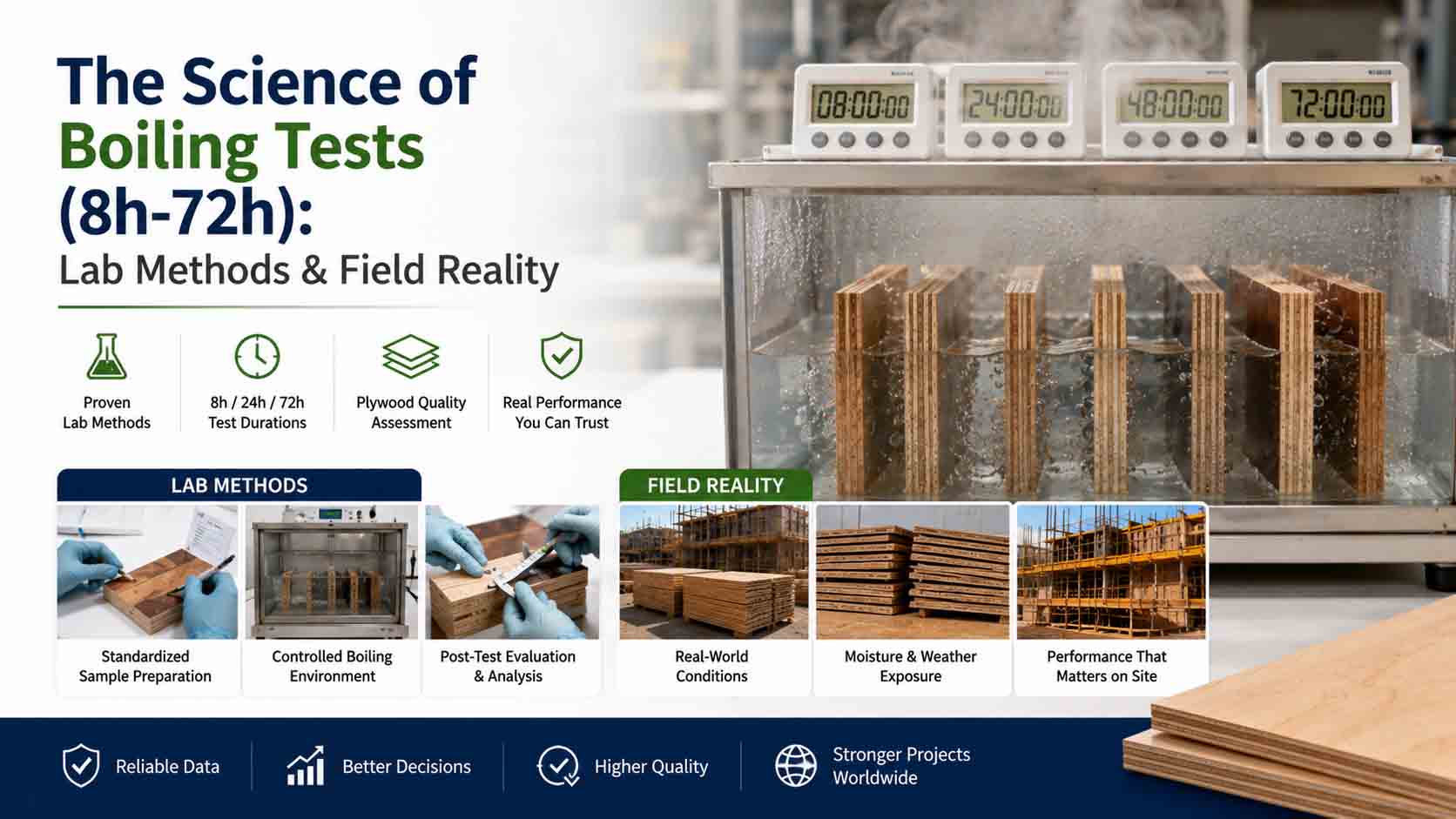
At a basic level, a boiling test is designed to stress the glue line and the interface between veneer layers under harsh wet-heat conditions. The purpose is not to simulate every real project environment exactly. The purpose is to create an accelerated condition that helps reveal weak bonding, unstable construction, or early separation risk more quickly than normal service exposure would.

What buyers should do next

Buyers should treat boiling test language as the start of a technical discussion, not the end of it. Before accepting a claim about plywood durability, they should ask what protocol was used, how the sample was prepared, and whether the tested panel actually matches the product being quoted.

Key Evaluation Criteria

A boiling test result is only useful when buyers understand the variables behind it. Two panels can both be described as “boil resistant” while performing differently in production, storage, and project use.

What buyers need to examine in the test itself

First, check the exposure duration. An 8-hour test and a 72-hour test do not represent the same stress level, so the results should never be treated as interchangeable. Second, review the sample condition before testing. Veneer species, thickness build-up, moisture condition, glue system, and pressing quality all influence the outcome. Third, look at how failure is described. A simple “pass” statement is less useful than a report that explains whether the panel showed delamination, bond-line weakness, veneer rupture, or only minor edge change.

Why field reality is different from lab reality

Boiling tests focus on bond survival under extreme wet heat, but field use adds other factors. Panels may face repeated drying cycles, site damage, poor storage, aggressive handling, edge impact, or uneven support. A panel can perform well in a controlled boiling test and still disappoint on site if the core build is inconsistent or the handling environment is rough. This is why plywood durability should be reviewed as a system result, not as a single test outcome.

Where buyers often misread the result

One common mistake is assuming a longer boiling duration automatically means the product is right for every use. Another is comparing test claims across suppliers without confirming that the method, sample type, and evaluation criteria were aligned. Buyers should also avoid comparing plywood results too loosely with unrelated material conversations such as mdf furniture durability, because MDF and plywood respond to moisture exposure in fundamentally different ways and are usually specified for different service conditions.

Evidence and Documentation

If boiling-test claims affect a procurement decision, the buyer should request more than a verbal statement or a line on a brochure. The report and supporting details matter because they determine whether the result is comparable and commercially useful.

What documentation buyers should request

  • Test report identifying the tested product clearly, including panel description and thickness.
  • Test duration and method summary, especially whether the reference is 8h, 24h, 48h, or 72h.
  • Date of testing and sample identification, so the result can be linked to an actual production batch or representative construction.
  • Observation notes describing failure mode, not only a pass/fail conclusion.
  • Any accompanying information on glue type, bond class, or intended application where relevant to the order.

How buyers should read the file set

The first question is whether the tested sample is commercially relevant. A lab result has limited value if the quoted product uses a different core build, different veneer composition, or a different production configuration. The second question is whether the result is decision-grade or only promotional. A strong technical file usually explains what was tested and what happened during or after exposure. A weak file relies on short claims without enough detail to support comparison.

What to ask when the report looks incomplete

If the report does not show the panel build clearly, buyers should ask whether the tested sample matches the offered product exactly. If the result only says “waterproof” or “boil proof,” they should ask how that conclusion was evaluated. If the test is old, they should ask whether the current production construction is unchanged. These follow-up questions often reveal whether the supplier is discussing real product evidence or only broad positioning.

Decision Framework

For procurement teams, the most practical approach is to use boiling tests as one layer of technical screening. They are useful, but they should sit beside application fit, supplier consistency, and product construction review.

Step 1: Start with the actual use case

Define whether the plywood is intended for concrete formwork, exterior exposure, transport packaging, industrial use, or another demanding condition. This helps the buyer decide how much weight a boiling test should carry in the final evaluation.

Step 2: Match the claim to the report

If the supplier makes a plywood durability claim, ask what exact test supports it. Then check whether the report reflects the same panel type, thickness, and construction being quoted.

Step 3: Compare test severity and result quality

Do not compare 8-hour and 72-hour results as if they show the same level of resistance. Also, do not compare a detailed technical report with a vague marketing statement as if both offer the same level of proof.

Step 4: Add field-risk judgment

Even a strong lab result should be reviewed alongside likely site conditions. If the project involves hard handling, repeated wet-dry cycling, edge damage, or prolonged storage exposure, the buyer should evaluate whether the panel build and supplier quality control are strong enough to support real performance.

Step 5: Make the buying decision on total evidence

  • Proceed when the test method is clear, the sample matches the quoted panel, and the result supports the intended use.
  • Clarify when the result looks positive but the report lacks enough detail to confirm comparability.
  • Pause when the supplier relies on broad durability claims without method transparency or product match.

FAQ About Boiling Tests and Plywood Durability

Does passing a boiling test mean the plywood is waterproof in every situation?

No. It means the panel performed under a defined test condition. Real service life still depends on construction, edge protection, handling, storage, and the actual environment of use.

Is a 72-hour boiling test always better than an 8-hour test?

It is more severe, but that does not automatically make it more relevant to every buying decision. The useful question is whether the test level matches the project requirement and whether the sample truly represents the product being offered.

What is the most important thing to check in a boiling test report?

The most important point is whether the tested sample matches the quoted product. After that, buyers should look at the method, exposure duration, and the way failure or performance was described.

Can buyers use boiling tests alone to compare suppliers?

No. They should be used together with panel construction review, intended application, consistency of production, and overall document quality.

Why do some panels perform well in the lab but poorly in the field?

Because field conditions introduce more variables than a controlled test. Handling damage, storage exposure, support conditions, and repeated use can all change the outcome.

Additional Resources for Buyers

Buyers reviewing plywood categories and application-fit options can explore the available product range here:
Plywood Products from Vietnam

This topic is most useful when paired with a broader specification review, especially for projects where moisture resistance, bond reliability, and field handling all matter to the buying decision.

Request Product and Specification Support

For buyers evaluating plywood durability, boiling tests are most useful when they are read together with product construction and intended use. If your team needs support reviewing technical claims, product positioning, or specification fit, use the contact page to start a sourcing discussion.

Request Product Support

Explore product categories: https://www.fomexgreenwood.com/products/

by admin admin No Comments

CARB-P2 & E0/E1 Plywood: Safe Choices for Interior Applications

CARB-P2 is a U.S. standard regulating formaldehyde emissions in wood products to ≤0.05 ppm, protecting indoor air quality. E0/E1 are EU standards with limits at ≤0.05 ppm (E0) and ≤0.10 ppm (E1). FOMEX GREENWOOD plywood meets both CARB-P2 and E0/E1, ensuring low-emission, safe, and durable panels for furniture and interior applications.

  •  CARB-P2 limit: ≤0.05 ppm formaldehyde
  •  E0/E1 limits: E0 ≤0.05 ppm | E1 ≤0.10 ppm
  •  Certified by FSC®, CARB, and ISO 9001:2015
  •  Exported to 30+ countries worldwide

See Low-Emission Plywood Products

The meaning of CARB-P2 Certification.

The California Air Resources Board has issued a regulation known as the CARB Phase 2 (CARB-P2) regulation which provides one of the limiting global on-air formdehyde emission rates in composite wood panels. This standard guarantees the safety of the indoor environments especially on furniture and cabinetry.

To plywood consumers, CARB-P2 implies that the products are tested, verified, and passed to be at lower levels of emissions than 0.05ppm. CARB-P2 is a necessary document to do due diligence by many international purchasers in importing to the U.S. market and the EU market.

Checking the Compliance of CARB-P2.

  • Request Certificates – The supplier should always be requested to provide CARB-P2 or EPA TSCA Title VI test reports.
  • Check Labels – Every panel should have a CARB/EPA compliance label, which tells of the class of emissions.
  • Confirm with Third Parties – Authenticate using accredited laboratories or independent inspections.
  • Compare with E0/E1 – Equals emission data with EU requirements (E0 0.05 ppm, E1 0.10 ppm) out of precaution.

FOMEX GREENWOOD Low-Emission Plywood Specs

Product Core Thickness Size (mm) Glue Certifications Emission Class
Furniture Plywood Acacia / Eucalyptus / Mixed Hardwood 3–35mm 1220×2440 / custom E0 / CARB-P2 / WBP FSC®, CARB-P2, ISO 9001 E0 / E1 / P2
Commercial Plywood Acacia / Styrax / Poplar/ Mixed Hardwood 4–30mm 910×1820 / 1220×2440 / custom E1 / WBP FSC®, CE, CARB E1 / P2

Case Study: Birch Plywood Customer of the U.S. preferred Birch Plywood in a Healthy Home.

A customer of the U.S., in 2024, used Birch plywood of FOMEX GREENWOOD to finish an interior housing project. The material was certified as CARB-P2 and E0, thus making the house extremely low in emission, thus making the family live in a safe and healthy environment. The plywood pinned to the board was a great idea as Birch plywood was recognized to be durable, beautiful and safe to the indoor air of the house and so this project was recommended to all health-conscious people who have their homes.

birch

Frequently Asked Questions

What is the method of testing plywood to compliance with CARB-P2?

Panels are examined in the certified laboratories with chamber methods where formaldehyde emissions are tested under the controlled conditions. It should have below 0.05 ppm as results before being considered CARB-P2 certified.

What is the E0/E1 vs. CARB-P2 plywood?

E0/E1 are European standards of which E0 is the toughest (≤0.05 ppm). The U.S. standard is CARB-P2 which is also established at 0.05 ppm or less. The combination of both types of plywood guarantees the quality of both worldwide and indoor air safety.

Is CARB-P2 plywood suitable in VOC-sensitive environment?

Yes. CARB-P2 and E0 plywood releases minimal volatile organic compounds (VOCs) and will be suitable across the bedrooms, schools, and hospitals, among other VOC-sensitive areas.

Contact Us: qc@fomexgroup.vn · ☎ +84 877 034 666📌 Related Reading:

by admin admin No Comments

Veneer Drying For Plywood Sheets

Drying Veneers will make the size of the wood stable, free from pests, easy storage, and the finishing and processing process of the plywood sheets will also achieve higher quality. Good veneer drying practice is essential for making good quality plywood sheets. In particular, the drying of veneers will reduce its weight, thereby reducing transportation costs.

Problems with Wet Veneers

The over amount of moisture in the veneer can affect the spread of glue on the veneer surface of plywood sheets. Wrong material can cause blister, glue penetration, glue peeling, etc.

High moisture veneer is not suitable for hot-press process of plywood manufacturing. It will prolong the hot press time and discount the quality of wood panels.

There are two popular veneer drying methods: air-drying and forced drying.

1. Air-drying

Air-drying is a natural way of drying veneers. The sun provides energy (heat) for the evaporation of water in the veneers.

Using the air-drying method, veneers can be dried to a moisture content of 12 – 20% depending on weather conditions. The drying time can vary greatly from 10-30 days. This depends on the species and the size of the veneers.

2. Forced drying

Veneers, before being used for making plywood sheets or for some other use … it is usually dried to the required moisture content. In order to achieve this goal quickly and accurately, the veneers are dried in a kiln. Unlike the drying process, the temperature, relative humidity, and air circulation in the kiln are controlled during the drying process.

The temperature in the drying process can be up to 100 degrees Celsius. However, drying with high temperature is not common because it is difficult to limit defects that araise in the drying process.

 Advantages And Disadvantages Of Two Method

1. Air-dying

Compared to drying by forced drying, air-drying requires little investment and no energy costs. However, air-drying has the following disadvantages:

  • Long drying time.
  • Veneers cannot be dried to moisture below 12%. Lower humidity is often required for products exported to countries with mild climates.
  • Need a large area for stacking and drying.

2. Forced drying

The advantages of drying wood by forced drying method:

  • The drying process is controlled, and defects are limited
  • Achieve lower humidity compared to air-drying
  • The drying time is shorter than that of air-drying
  • The kiln is used for many different types of wood
  • Achieve the exact humidity required
  • The veneers fungus pests are destroyed during the drying process

Disadvantages of wood drying by forced drying:

  • Requires bigger investment than air-drying
  • Required cost for energy
  • It is required that the operator must have skills in oven operation and maintenance.

Currently, most factories in developed countries are usually natural methods (air-drying) to dry in order to save energy costs.

Understanding these limitations, FOMEX’s factories have invested in machinery and equipment for forced drying. We aim to have a long-term business strategy, ensuring stable quality in plywood sheets. We hope we can contribute to bringing Vietnam’s plywood to reach extreme quality.

Rosie

FOMEX GROUP

by Admin Admin No Comments

Why Marine Plywood? Type alternatives?

What is Marine Plywood?

Marine plywood is a well-known material when it comes to shipbuilding. Whether traveling in cabins, pontoon boats, or any other water vehicle, they are almost entirely made of Marine Plywood.

Why Marine Plywood? Marine Plywood Alternatives?Why Marine Plywood - Marine Plywood alternative.

The material has a high tolerance for moisture. Also, it doesn’t rot that quickly. So, Read more

by Admin Admin No Comments

Different types of formwork? 4 tips for choosing effective formwork

What is Formwork?

Formwork by name means “The Mold” which means it is the casing into which the casting material, usually concrete, is poured to obtain the desired structural shape. In the construction, it is similar to a mold to cast concrete members in different shapes and sizes using different types of materials such as timber, steel, aluminum, plastic, etc. Shuttering is a synonym term used for form-work. Formwork should have sufficient strength to carry the dead load and live load coming on it during casting operation and after that till concrete gets hard and gain some percentage of design strength. Read more

by Admin Admin No Comments

[UPDATE] Single form film faced Plywood to Malaysia (19/10/2020)

Film Faced Plywood has become more and more popular in both developed and developing countries because of is benefits: versatile, ease to use, can be reused several times and water resistance. Film faced plywood is often used in construction application but also good as an indoor material. Other than the traditional Film Faced Plywood, we – FOMEX GREENWOOD also supply Single form Film Faced Plywood with cheaper price and suitable for construction purposes.

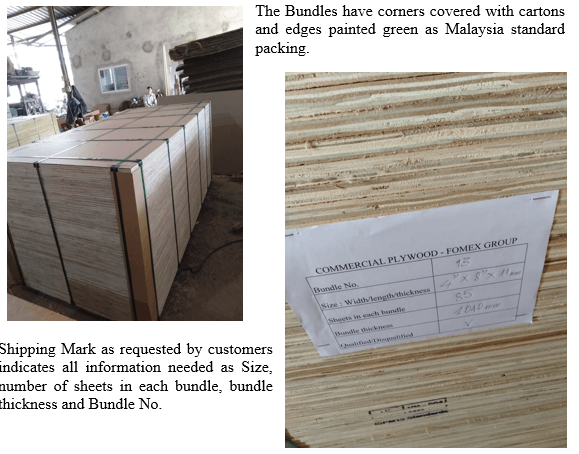
Single form FF Plywood is one of our best seller to Malaysia, suitable for this market as the price is cheap and can be resued 2-4 times. At the moment, we export this product to Malaysia every week. Here below are some photos of Single FFP consignment on board 19/10/2020 (11mm and 17mm):

Read more