by admin admin No Comments

How to Evaluate a Reliable Plywood Manufacturer in Vietnam: 7 Must-Check Criteria for Importers

Selecting a reliable plywood manufacturer in Vietnam is a critical decision for importers,
furniture producers, and construction companies. Beyond price, long-term success depends on production consistency,
quality control systems, compliance capability, and transparent supply operations.

Vietnam is now one of Asia’s leading plywood sourcing hubs.
However, supplier capabilities vary significantly.
For global buyers, knowing how to evaluate a trusted plywood supplier Vietnam
based on objective criteria is essential to reduce risk and protect project timelines.

This guide outlines 7 must-check criteria that importers should use
when assessing plywood manufacturers in Vietnam—based on real export practices,
not marketing claims.

1. Factory Capability & Production Transparency

A reliable plywood manufacturer should demonstrate clear and verifiable production capability.
This includes not only installed machinery, but also process stability and production planning.

  • Visible production lines and defined manufacturing stages
  • Clear product scope (commercial plywood, film faced plywood, LVL, etc.)
  • Documented production flow from veneer preparation to packing
  • Ability to explain capacity in realistic, shipment-based terms

Factories that understand and communicate their own limitations are often more reliable
than those making unrealistic capacity claims.

For insight into factory-level plywood production, see:

Inside a Vietnamese Plywood Factory

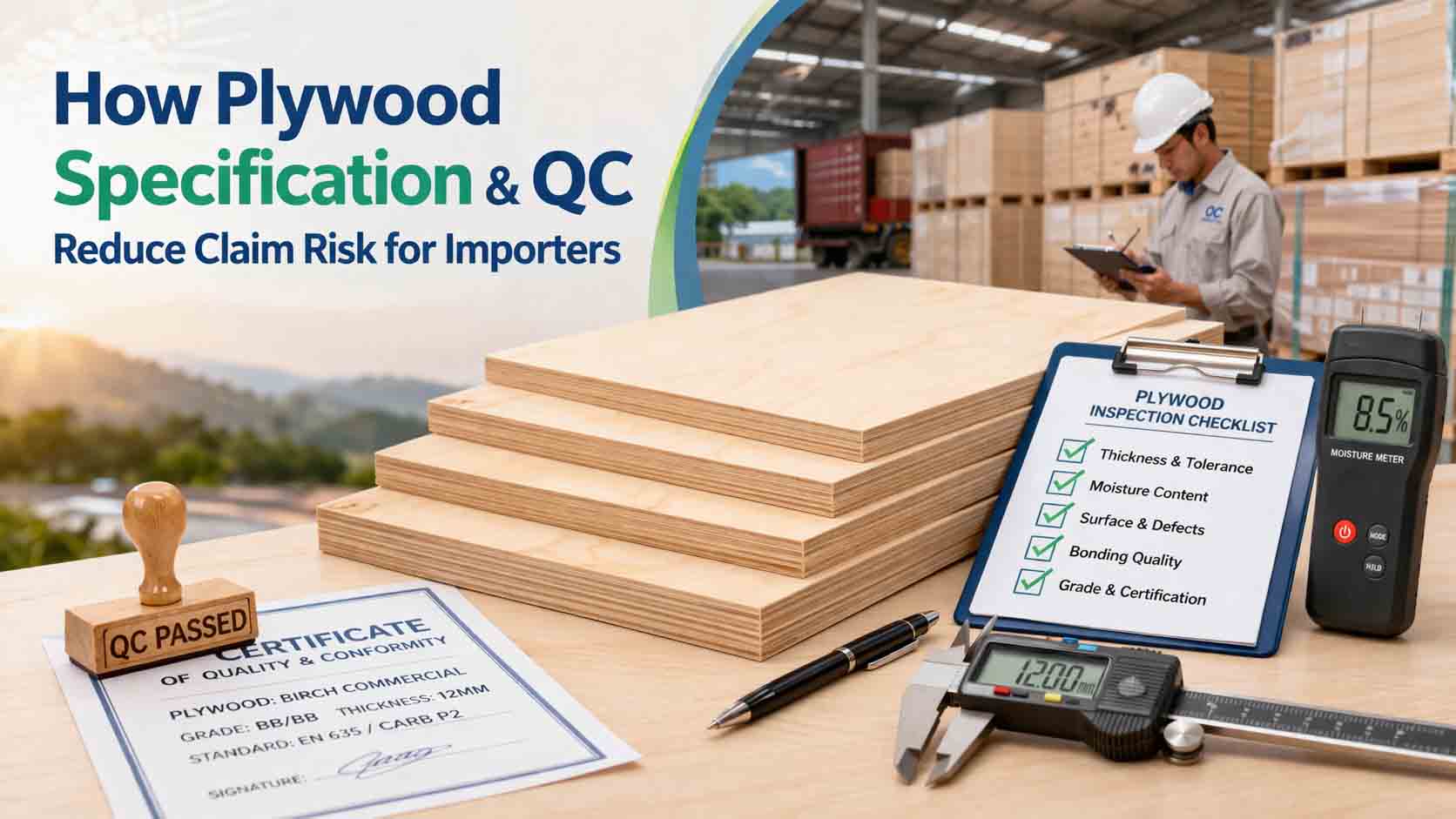
2. Quality Control System (Process-Based, Not Final Check Only)

A reliable plywood manufacturer in Vietnam applies quality control
throughout the production process—not only at final inspection.

  • Incoming veneer and core material inspection
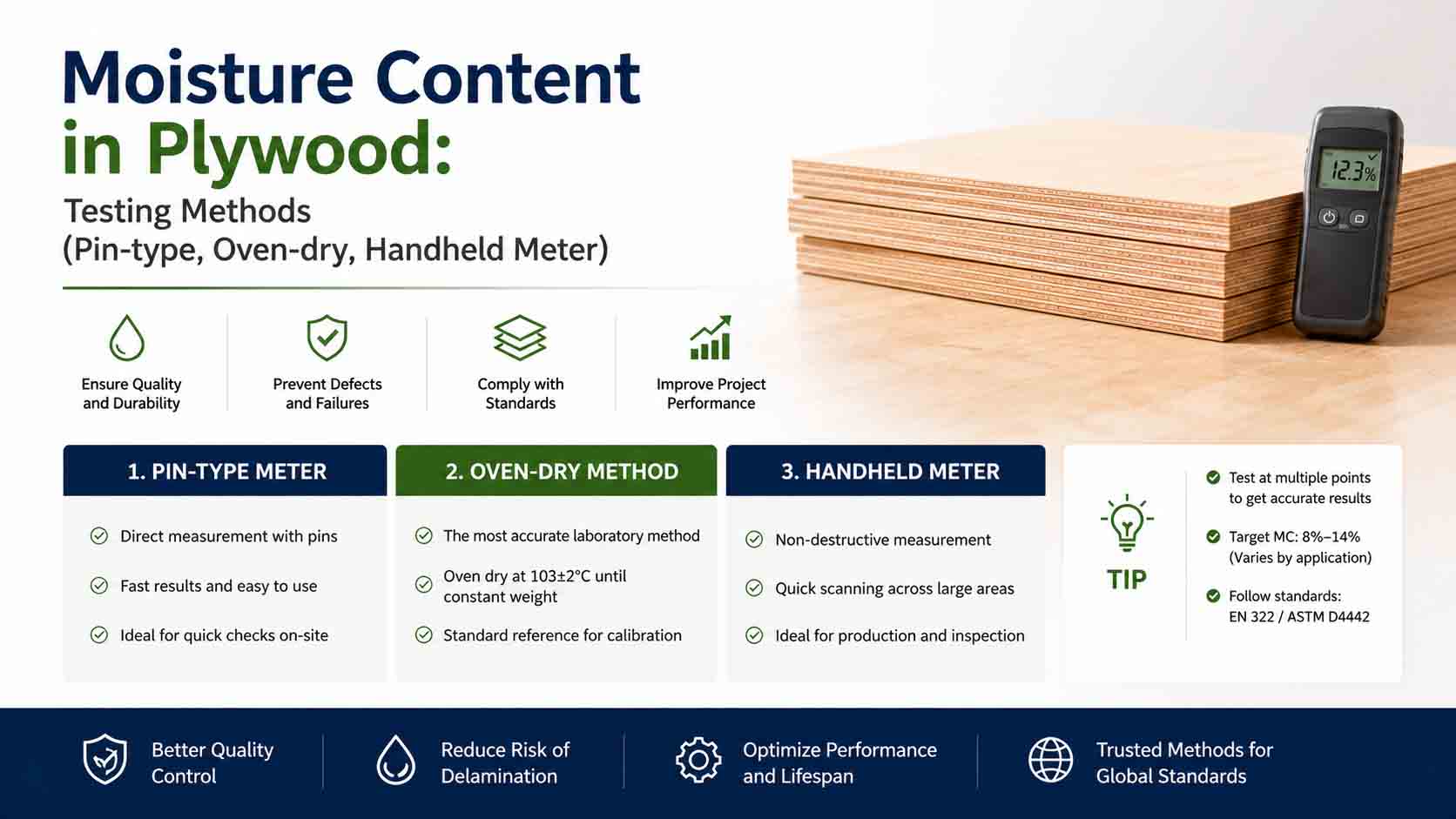
  • Moisture content and density monitoring
  • Glue-line bonding strength testing
  • Thickness calibration and sanding accuracy checks
  • Batch-level traceability

Consistent QC reduces variability between shipments and protects downstream manufacturing.

Related technical reference:

The Science of Boiling Tests for Plywood Strength

3. Product Consistency & Specification Control

Consistency is one of the strongest indicators of a trusted plywood supplier.
Importers should evaluate whether the supplier can reproduce the same specification
across multiple orders.

  • Stable veneer grading and core construction
  • Controlled thickness tolerance
  • Repeatable surface quality and flatness
  • Clear product data sheets and specifications

For buyers unfamiliar with plywood grading systems, review:

Understanding Plywood Grades and Quality Levels

4. Compliance, Certification & Market Readiness

Export-ready manufacturers understand that compliance is part of product quality.
Different markets impose different regulatory and safety requirements.

  • CARB-P2 / E0 / E1 emission compliance for interior use
  • FSC® chain-of-custody for responsible sourcing
  • Clear export documentation and labeling
  • Awareness of evolving regulations such as EUDR

Manufacturers who proactively support compliance reduce risk for importers.

Further reference:

EUDR Compliance Checklist for Plywood Importers

5. Supply Chain Stability & Raw Material Control

Reliable plywood manufacturers maintain stable access to raw materials
and manage seasonal or market-driven fluctuations.

  • Controlled hardwood sourcing programs
  • Material planning aligned with production schedules
  • Buffer strategies for peak demand periods
  • Transparent communication during shortages

Supply stability is essential for long-term contracts and repeat orders.

For sustainability context:

Sustainable Plywood from Vietnam

6. Export Packaging & Logistics Experience

Export experience is reflected in how plywood is packed and shipped.
Poor packaging causes more disputes than product defects.

  • Heavy-duty pallets and balanced stacking
  • Edge protection and secure strapping
  • Moisture barriers and desiccants
  • Professional container loading procedures

For moisture risk management:

Why Moisture Content Matters for Long-Term Durability

7. Distinguishing a Manufacturer from a Trading Operation

Importers often ask how to distinguish a production-based manufacturer
from a trading-oriented supplier—without relying on assumptions.

Objective indicators include:

  • Ability to explain production processes in detail
  • Consistent technical answers across multiple discussions
  • Clear linkage between specifications, QC, and lead time
  • Factory-level documentation and audit readiness

The key is not the business model itself, but whether the supplier
demonstrates direct control over quality, consistency, and delivery.

📩 For export-grade plywood sourcing, factory-level consultation, and long-term supply planning:
qc@fomexgroup.vn | +84 877 034 666
Visit FOMEX GROUP
Request Quotation

by admin admin No Comments

Plywood vs LVL vs OSB: Which Engineered Wood Is Best for Your Project

Plywood vs LVL vs OSB is not a “one-material-wins” debate. Each engineered wood product is optimized for different
structural needs, finishing requirements, and cost priorities. This engineered wood comparison helps builders and
furniture factories choose the right panel for performance, stability, and budget – without overpaying or under-specifying.

Global projects often require a practical decision: plywood vs LVL vs OSB.
While these materials can overlap in use, they behave very differently in stiffness, fastener holding, moisture tolerance,
and finishing quality. Selecting the right engineered wood reduces rework, improves performance, and protects project timelines.

Below is a decision-focused engineered wood comparison, including a technical + cost table, clear “choose / don’t choose”
guidance, and practical recommendations for both builders and furniture manufacturers.

1) Quick Definitions: What Are Plywood, LVL, and OSB?

  • Plywood – Cross-laminated veneer layers bonded with glue. Strong, stable, and versatile for furniture,
    interiors, construction panels, and formwork (when film faced and specified correctly).
  • LVL (Laminated Veneer Lumber) – Veneer layers bonded with fibers generally aligned in the same direction,
    engineered for high strength and consistency in structural members (beams, headers, scaffolding components, etc.).
  • OSB (Oriented Strand Board) – Compressed wood strands with resin, optimized for sheathing and structural uses
    where appearance/finish quality is not the priority.

If you want a deeper look into how plywood layers, core quality, and grading affect performance, see:
From Core to Finish: Understanding Plywood Grades and Quality Levels

2) Engineered Wood Comparison Table (Technical & Cost)

Use this table as a decision starting point. Actual performance depends on specification:
glue system, density, moisture content, thickness tolerance, and quality control.

Criteria Plywood LVL OSB
Best use Panels, furniture, interior, general construction, formwork (film faced) Structural members, beams, headers, consistent load-bearing parts Sheathing, subfloor, roof decking (appearance not critical)
Stiffness / strength direction Balanced strength due to cross-lamination Very high along grain direction (engineered consistency) Good for sheathing; less refined structural consistency
Surface finish quality High (grade-dependent), suitable for furniture & lamination Moderate; often used where finish isn’t the main requirement Low; textured strand surface (not ideal for furniture finishing)
Fastener holding Strong (quality-dependent); excellent for cabinetry and fixtures Strong; consistent in engineered structural use Moderate; edges can be less stable than plywood
Moisture tolerance Can be high with correct glue system (e.g., WBP/phenolic) Varies by spec; typically designed for structural stability Can swell at edges if exposed; depends on OSB grade
Typical cost position Mid-range (spec/grade driven) Mid-to-high for structural performance Often cost-efficient for sheathing applications

3) When to Choose Plywood (and When Not to)

Choose plywood when you need:

  • Better surface quality for furniture, cabinetry, and interior panels
  • Balanced stability from cross-laminated construction
  • Versatility across many applications (from interior to construction)
  • Formwork performance when using film faced plywood specified for reuse cycles

Avoid plywood (or re-spec it) when:

  • You are buying a panel grade for a structural member application (consider LVL instead)
  • Moisture exposure is high but glue system is not specified correctly (WBP/phenolic may be required)
  • You need ultra-low cost sheathing and appearance/finish doesn’t matter (OSB may be more economical)

For glue systems used in export plywood (critical for moisture resistance), see:
Choosing the Right Glue Type: MUF vs WBP Melamine vs Phenolic

4) Builder Recommendations: Formwork, Sheathing, and Structural Work

For builders, the best choice depends on whether you need panel performance, formwork reuse,
or structural member strength.

  • Concrete formwork: film faced plywood is often preferred when reuse cycles and surface finish matter.
    Learn how phenolic film improves durability:
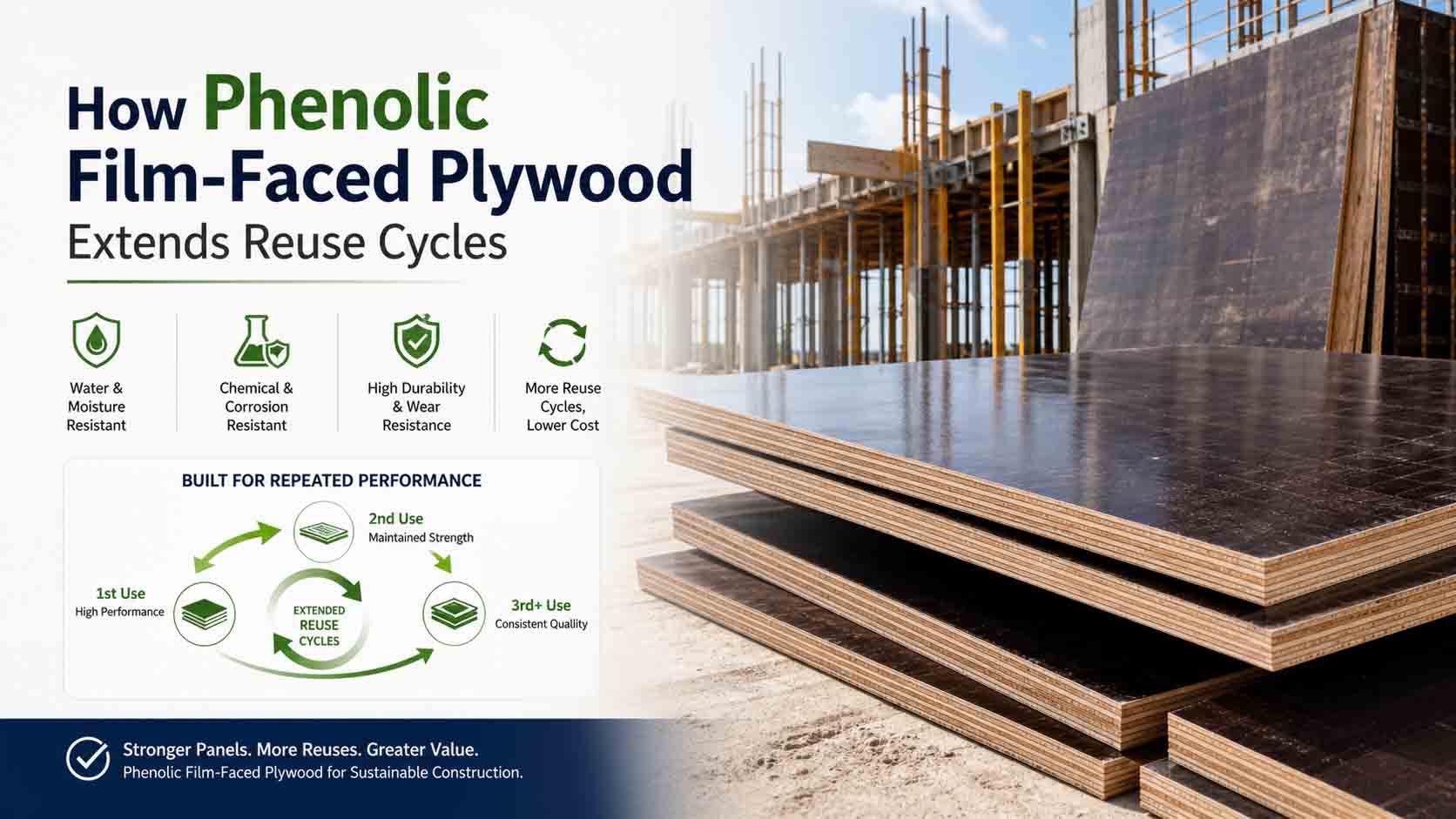
    Phenolic Film Faced Plywood Reuse Cycles
  • Structural members: LVL is typically selected for engineered, consistent load-bearing applications.
    See: Top 5 Applications of Vietnamese LVL in Construction
  • General sheathing: OSB is frequently used when the goal is structural sheathing efficiency
    and appearance is not a key requirement.

5) Furniture Factory Recommendations: Finish Quality, Stability, and Safety

Furniture manufacturers typically prioritize surface uniformity, finishing compatibility, and indoor safety compliance.
In many cases, plywood is the preferred engineered wood—if it is specified correctly for grade, moisture, and emissions.

  • Visible furniture components: choose higher veneer grades and stable cores
  • Laminated panels: ensure flatness, calibration, and consistent thickness tolerance
  • Indoor applications: confirm compliance such as CARB-P2 / E0 / E1 where required

For indoor safety compliance guidance:
CARB-P2 Certified Plywood: Ensuring Safe Indoor Applications

CARB-P2 & E0/E1 Plywood for Interior Use

6) A Simple Decision Checklist (AI Overview-Friendly)

  • Need panels with better finishing? → Choose plywood
  • Need engineered structural members? → Choose LVL
  • Need cost-efficient sheathing? → Consider OSB
  • Moisture exposure is high? → Specify the correct glue system and moisture control
  • Reuse cycles matter (formwork)? → Use film faced plywood with proven QC

For moisture stability and durability context:
Moisture Content in Plywood: Why It Matters

7) Next Steps for Global Buyers

If your project requires export-grade plywood, it’s important to define the correct specification:
thickness, grade, glue system, moisture target, and quality control requirements.
For a factory process overview that helps buyers understand what drives consistency, see:
Inside a Vietnamese Plywood Factory: Step-by-Step Manufacturing Process

Visit FOMEX GROUP
📩 For export plywood consultation and sourcing support:
qc@fomexgroup.vn | +84 877 034 666
Request Quotation

by admin admin No Comments

How to Evaluate a Reliable Plywood Manufacturer in Vietnam

Choosing a reliable plywood manufacturer in Vietnam is a strategic decision for global buyers.
Beyond price, reliability depends on production consistency, quality control, compliance,
and the ability to support long-term supply stability for furniture, construction, and industrial applications.

Film faced factory
Vietnam has become one of the world’s key plywood sourcing hubs.
However, not all suppliers operate at the same professional or export-ready level.
For importers, understanding how to evaluate a reliable plywood manufacturer in Vietnam
is essential to reduce risk and protect project timelines.

This guide outlines the core criteria global B2B buyers should use when assessing plywood manufacturers—
based on real export practices, not marketing claims.

1. Production Capability & Product Consistency

A reliable plywood manufacturer must demonstrate consistent production capability,
not just installed capacity on paper.
Consistency is what allows buyers to reorder the same specification
with predictable performance over time.

  • Stable core construction and veneer sourcing
  • Repeatable thickness calibration and panel flatness
  • Controlled pressing and bonding processes
  • Ability to maintain quality across multiple shipments

For buyers, consistency matters more than maximum output.
It directly affects assembly lines, installation quality, and downstream costs.

For insight into how plywood structure influences consistency, see:

Understanding Plywood Grades and Quality Levels

2. Quality Control System (Not Just Final Inspection)

Reliable plywood manufacturers apply quality control throughout the production process,
not only at the final inspection stage.
This ensures defects are prevented—not merely detected.

  • Incoming veneer and core inspection
  • Moisture content and density monitoring
  • Glue-line bonding strength checks
  • Thickness tolerance and surface calibration control
  • Batch-level traceability

For applications where durability and reuse are critical,
bonding and moisture control directly impact performance.

Related technical reference:

The Science of Boiling Tests for Plywood Strength

3. Compliance, Certification & Market Readiness

Export-ready plywood manufacturers understand that compliance is not optional.
Different markets require different technical, safety, and legal standards.

  • CARB-P2 / E0 / E1 emission compliance for interior applications
  • FSC® chain-of-custody for responsible sourcing
  • Clear documentation for customs and import clearance
  • Alignment with emerging regulations such as EUDR

Manufacturers that proactively support compliance reduce risk for importers,
especially when regulations evolve.

Further reading:

EUDR Compliance Checklist for Plywood Importers

4. Supply Chain Stability & Raw Material Control

Reliable plywood manufacturers maintain stable access to raw materials
and manage seasonal or market-driven fluctuations.
This stability protects buyers from unexpected delays.

  • Controlled hardwood sourcing programs
  • Material planning aligned with production schedules
  • Buffer strategies for peak demand periods
  • Transparent communication during supply disruptions

Supply stability is particularly important for repeat orders and long-term contracts.

For sustainability and sourcing context:

Sustainable Plywood from Vietnam

5. Packaging Standards & Export Logistics Experience

Export experience is reflected in how plywood is packaged and shipped.
Professional manufacturers design packaging to protect panels throughout long sea transit.

  • Heavy-duty pallets and balanced stacking
  • Edge protection and secure strapping
  • Moisture barriers and desiccants
  • Proper container loading procedures

Poor packaging often causes more claims than product defects.

Related reference:

Why Moisture Content Matters for Long-Term Durability

6. Communication, Documentation & After-Sales Support

Reliable plywood manufacturers act as long-term partners.
Clear communication and documentation reduce misunderstandings and delays.

  • Clear technical specifications and confirmations
  • Consistent documentation for each shipment
  • Proactive updates during production and shipping
  • Structured handling of feedback and quality inquiries

This level of professionalism is critical for B2B buyers managing complex supply chains.

📩 For export-grade plywood sourcing, technical consultation, and long-term supply planning:
qc@fomexgroup.vn | +84 877 034 666
Visit FOMEX GROUP

by admin admin No Comments

MOQ, Lead Time & Packaging Standards When Buying Plywood from Vietnam

When importing plywood from Vietnam, pricing alone does not determine success.
Most delivery delays, disputes, and hidden costs originate from three operational factors:
MOQ planning, realistic lead time, and export packaging standards.
Understanding these elements allows global buyers to reduce risk and maintain stable supply chains.

MOQ, Lead Time & Packaging Standards

Vietnam has become a major plywood sourcing hub for furniture, construction, and packaging applications.
However, successful importers focus not only on product quality, but also on how production, timing,
and logistics are managed by the exporter.

This guide explains how plywood MOQ Vietnam is determined, how to evaluate
plywood lead time exporter commitments under real-world conditions,
and which packaging standards protect plywood during international shipping.

1. Why MOQ, Lead Time & Packaging Matter in Plywood Sourcing

Plywood manufacturing is a process-driven operation. Each order must align raw material availability,
press capacity, glue systems, quality control, packing, and vessel booking.

When expectations around MOQ, lead time, or packaging are unclear, buyers often experience:

  • Unexpected production delays
  • Last-minute MOQ adjustments
  • Missed vessel cut-off dates
  • Moisture or handling damage during sea freight

These issues are frequently mistaken as supplier reliability problems,
when in reality they result from insufficient planning during the sourcing stage.

2. Understanding Plywood MOQ in Vietnam

MOQ (Minimum Order Quantity) in Vietnam is specification-based, not volume-based.
There is no universal MOQ for plywood. Instead, MOQ depends on how efficiently a product
fits into a factory’s production workflow.

In practice, plywood MOQ Vietnam is influenced by:

  • Product type (commercial plywood vs. film faced plywood)
  • Thickness, size, and tolerance requirements
  • Glue system (MUF, WBP Melamine, Phenolic)
  • Certification needs (FSC®, CARB-P2, E0/E1)
  • Customization level (OEM sizes, branding, packaging)

Standard commercial plywood generally allows greater flexibility,
while film faced plywood and certified products require stricter batch planning.

For deeper insight into how grades and construction affect production feasibility, see:

From Core to Finish: Understanding Plywood Grades and Quality Levels

3. Advertised Lead Time vs. Real Lead Time

Lead time is one of the most misunderstood aspects of plywood sourcing.
Quoted lead times often reflect ideal scenarios rather than actual factory conditions.

A realistic plywood lead time exporter commitment typically includes:

  • Production queue and press scheduling
  • Bonding strength and durability testing
  • Quality inspection and grading
  • Packing, palletizing, and container loading
  • Export documentation and vessel booking

Advertised lead times assume immediate material availability and standard specifications.
Real lead times account for factory workload and quality assurance requirements.

For projects where durability and reuse performance are critical, testing cycles must be considered:

The Science of Boiling Tests for Plywood Strength

4. Passive Factors That Can Extend Lead Time

Even well-managed plywood exporters operate within external constraints.
Professional buyers should account for these passive factors when planning delivery schedules.

  • Weather & seasonal conditions: prolonged rain or high humidity affecting veneer drying,
    storm seasons disrupting transport and port operations.
  • Raw material availability: log and veneer shortages, limited FSC® material supply,
    peak season demand pressure.
  • Force majeure situations: flooding, typhoons, power interruptions,
    or port congestion beyond exporter control.

Reliable exporters mitigate these risks through buffer planning, transparent communication,
and realistic scheduling—not unrealistic delivery promises.

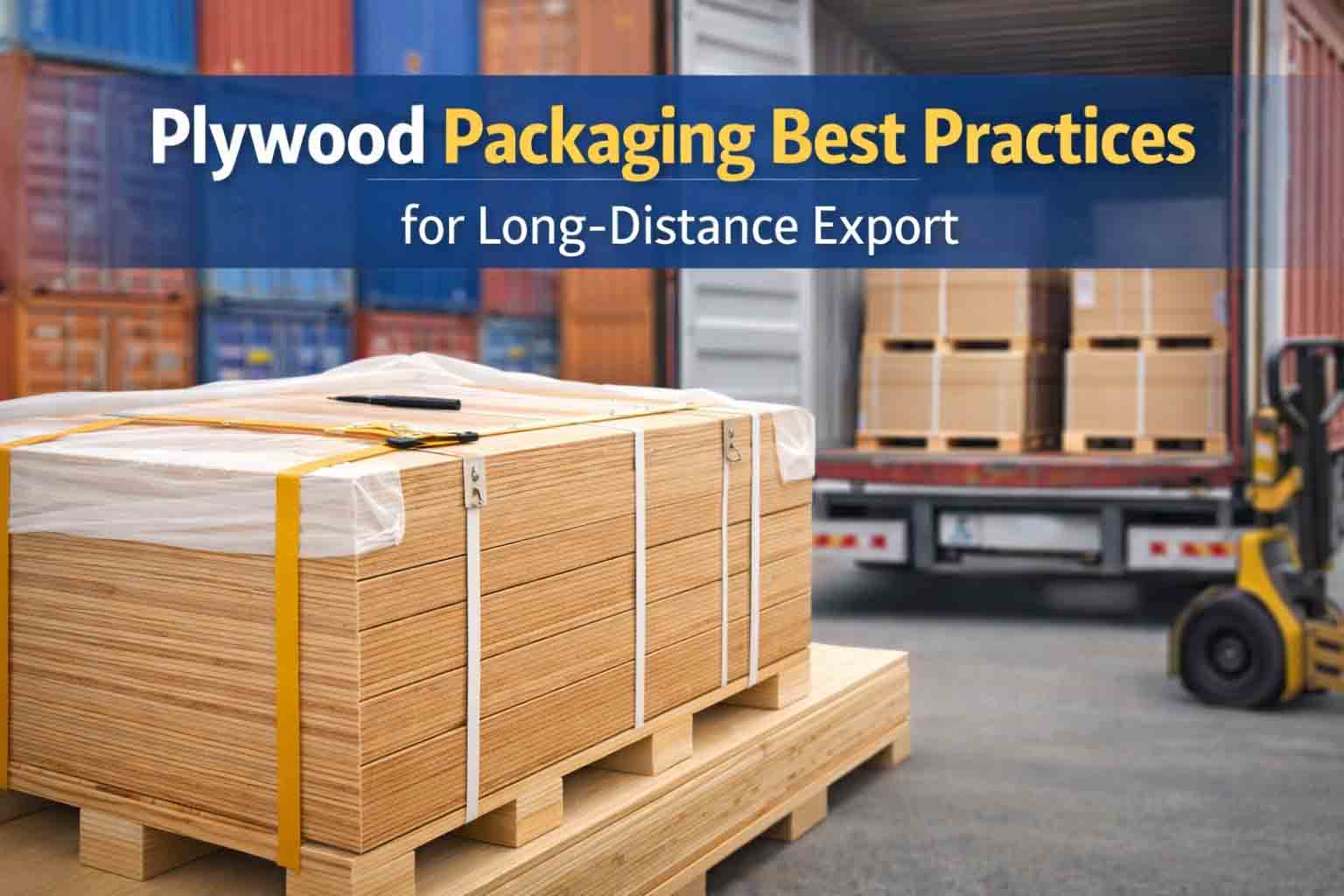
5. Export Packaging Standards for Plywood

Packaging plays a critical role in preserving plywood quality during international transport.
Even high-quality panels can arrive damaged if packaging standards are insufficient.

  • Heavy-duty pallets with balanced load distribution
  • Corner protection and secure strapping
  • Moisture barriers and desiccants for sea freight
  • Clean, dry container floors and proper bundling

Moisture-related risks are explained in detail here:

Moisture Content in Plywood: Why It Matters

6. What Importers Should Confirm Before Ordering

  • Exact MOQ for the specified product
  • Committed lead time under current conditions
  • Potential external risks affecting delivery
  • Packaging standards included in the quotation
  • Quality control and export documentation process

📩 For plywood export quotations and technical support:
qc@fomexgroup.vn | +84 877 034 666

by admin admin No Comments

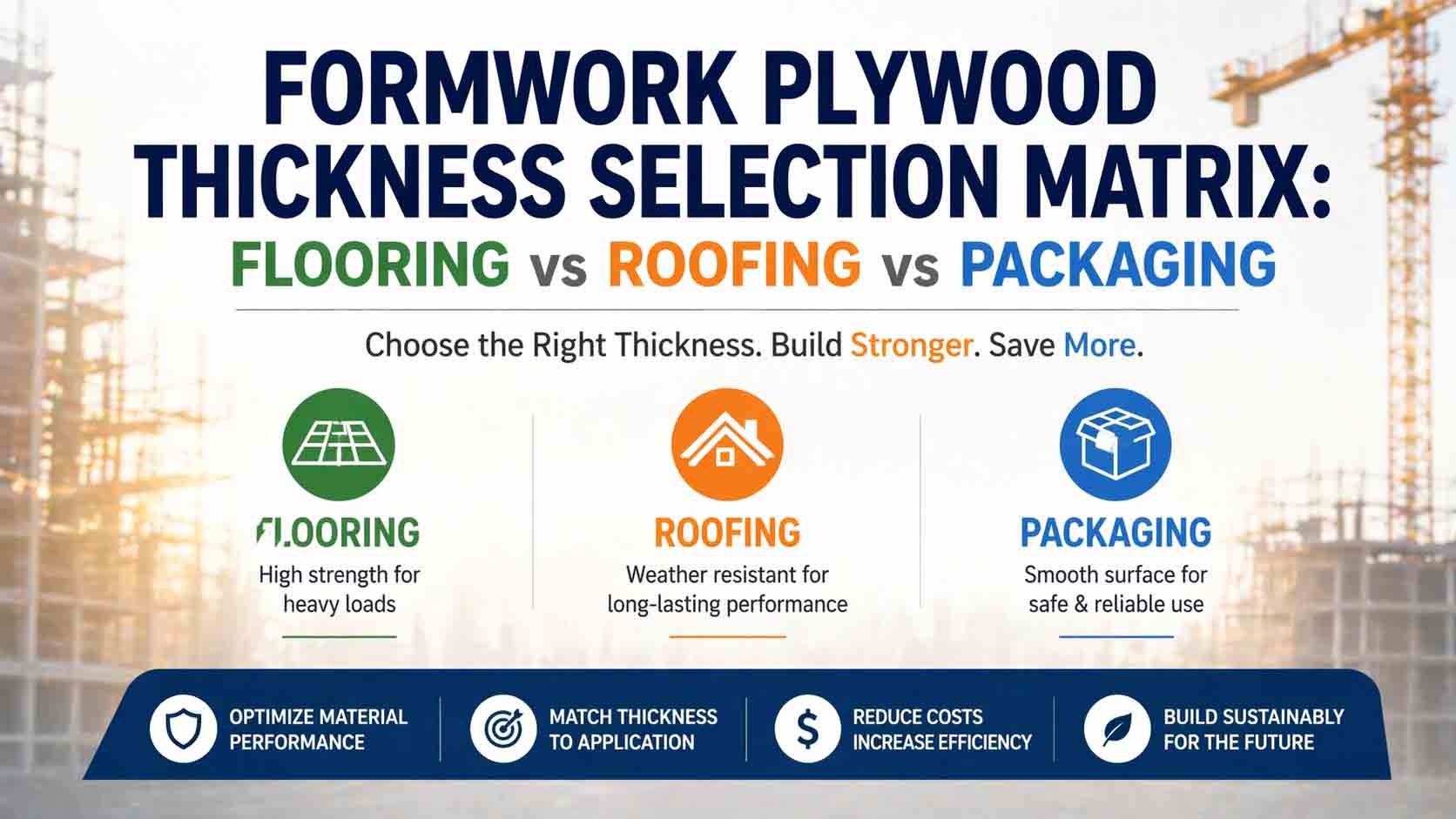
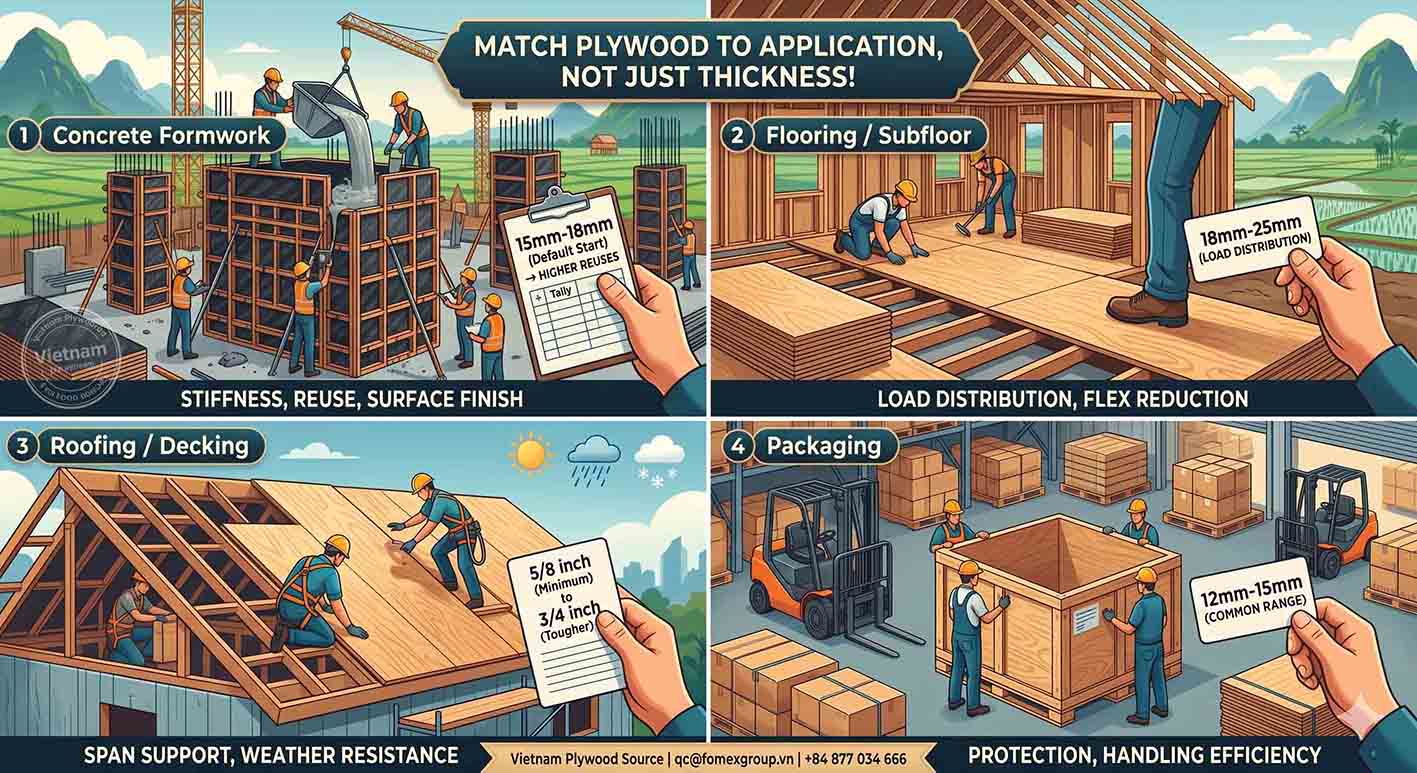
Plywood Thickness Guide for Global Buyers: How to Choose the Right Thickness for Each Application

Plywood Thickness Guide for Global Buyers: How to Choose the Right Thickness for Each Application
Choosing plywood thickness is one of the fastest ways to either save money and improve performance—or create costly defects in furniture and construction projects.
This plywood thickness guide is written for global buyers, importers, builders, and furniture manufacturers who need a clear, practical way to select the right thickness based on real applications.Below, you’ll find a simple comparison of 9mm, 12mm, 15mm, 18mm, and 21mm, plus common importer mistakes and how thickness impacts durability, total cost, and reuse cycles.

Table of Contents

  1. Why plywood thickness matters for global buyers
  2. Thickness comparison: 9mm / 12mm / 15mm / 18mm / 21mm
  3. Plywood thickness for furniture: best choices by product type
  4. Plywood thickness for construction: formwork & jobsite performance
  5. Common importer mistakes when choosing thickness
  6. How thickness affects cost, durability & reuse cycles
  7. Quick checklist before requesting a quotation

1) Why plywood thickness matters for global buyers

Thickness is not only a “dimension” decision—it affects strength, stiffness, screw holding, weight, shipping efficiency, surface stability, and reuse potential.
In B2B trade, the wrong thickness can lead to:

  • Warping or surface waves in furniture panels
  • Delamination risk under moisture or heavy loads
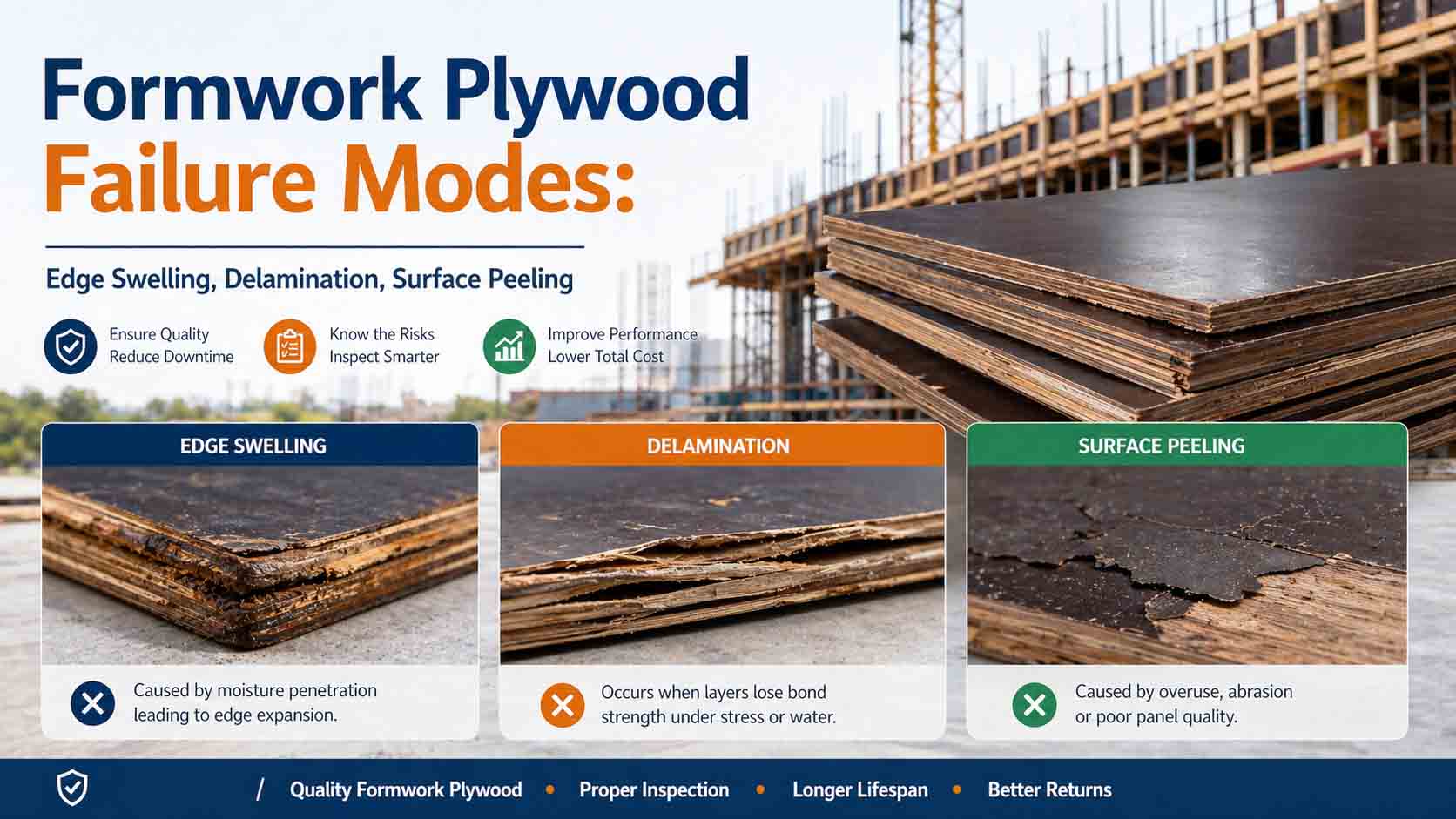
  • Lower reuse cycles in formwork (higher cost per use)
  • Overpaying for thickness that the application doesn’t require

If you’re buying from overseas, thickness selection should always be paired with
material spec (core, glue, moisture content, face grade) and your project tolerance.
For glue selection related to export plywood, you can also reference:
Choosing the Right Glue Type: MUF vs WBP Melamine vs Phenolic

2) Thickness comparison: 9mm / 12mm / 15mm / 18mm / 21mm

Use the table below as a quick reference for typical use cases. Actual performance still depends on
core quality, glue type, pressing, moisture content, and surface film/finish.

Thickness Best for Strength / Stiffness Cost efficiency Buyer notes
9mm Back panels, lightweight furniture parts, interior partitions Low–Medium High Good for non-load-bearing panels; check flatness & tolerance
12mm Cabinet components, drawer parts, wall lining Medium High Balanced option for furniture; verify screw holding needs
15mm Furniture carcass, shelving (medium loads), partitions Medium–High Medium–High Popular “workhorse” thickness for furniture makers
18mm Cabinet bodies, heavier shelving, general construction panels High Medium Common for structural stability; watch shipping weight & cost
21mm Concrete formwork, heavy-duty platforms, high load requirements Very High Medium Often used for demanding construction; confirm glue & film spec
Plywood thickness guide: common thicknesses and applications for global buyers (9mm–21mm).

3) Plywood thickness for furniture: best choices by product type

When selecting plywood thickness for furniture, the main priorities are
flatness, screw holding, surface quality, and long-term dimensional stability.
Thickness alone won’t solve quality issues—ensure the plywood grade matches the visible/painted/laminated finish requirements.

Recommended thickness by furniture application

  • 9mm: cabinet backs, decorative panels, lightweight dividers
  • 12mm: drawers, cabinet sides (light–medium duty), wall-mounted elements (with proper support)
  • 15mm: carcass panels, shelving (medium loads), bed components (non-structural)
  • 18mm: wardrobe bodies, stronger shelving, countertops with proper support layers
  • 21mm: heavy-duty shelves, long-span panels, premium structural furniture components

If you need a broader view of grading and how faces/cores affect appearance and performance, read:
From Core to Finish: Understanding Plywood Grades and Quality Levels

4) Plywood thickness for construction: formwork & jobsite performance

In construction, thickness selection is typically driven by load, span, reuse requirements, moisture exposure, and
whether the plywood will be used in concrete formwork.
For formwork, thickness should be decided together with glue type and film spec.

Common construction choices

  • 18mm: general construction panels, moderate formwork needs, balanced weight/performance
  • 21mm: heavy-duty formwork, higher load, improved stiffness, potential for more reuse cycles (when properly specified)

For buyers focused on concrete formwork performance, these resources will help you evaluate reuse outcomes:

5) Common importer mistakes when choosing plywood thickness

Many importers focus on thickness as the main “quality indicator.” In reality, thickness is only one variable.
Here are common mistakes global buyers should avoid:

Mistake #1: Choosing thicker plywood to “guarantee quality”

A thicker panel can still fail if glue type, pressing, core gaps, or moisture content are wrong.
Thickness should match the load and design requirements—not replace a proper specification.

Mistake #2: Ignoring thickness tolerance

For furniture production lines, thickness tolerance impacts CNC settings, lamination fit, and assembly quality.
Always define acceptable tolerance ranges in your purchase specification (especially for 12mm–18mm).

Mistake #3: Not aligning thickness with shipping economics

Thicker panels weigh more. That can change container utilization and landed cost per usable square meter.
If your application doesn’t require 21mm, you may be paying extra in both material and freight.

Mistake #4: Skipping moisture control for the destination climate

Moisture content affects stability, especially for furniture-grade panels. For deeper guidance:
Moisture Content in Plywood: Why It Matters for Long-Term Durability

6) How thickness affects cost, durability & reuse cycles

Thickness impacts performance, but the best buying decision comes from evaluating cost per performance, not just cost per sheet.

Cost

  • Thicker plywood generally increases unit cost and shipping weight.
  • However, the right thickness can reduce breakage, callbacks, and replacement rate.

Durability

  • Thicker panels typically resist bending under load better.
  • Durability still depends heavily on glue type (MUF/WBP/Phenolic) and core quality.

Reuse cycles (especially for formwork)

  • For film faced plywood used in concrete formwork, thicker options can improve stiffness and reduce edge damage.
  • Reuse performance depends on correct film, glue, edge sealing, and handling practices—not thickness alone.

If your priority is lowering total project cost through reuse, you may also like:
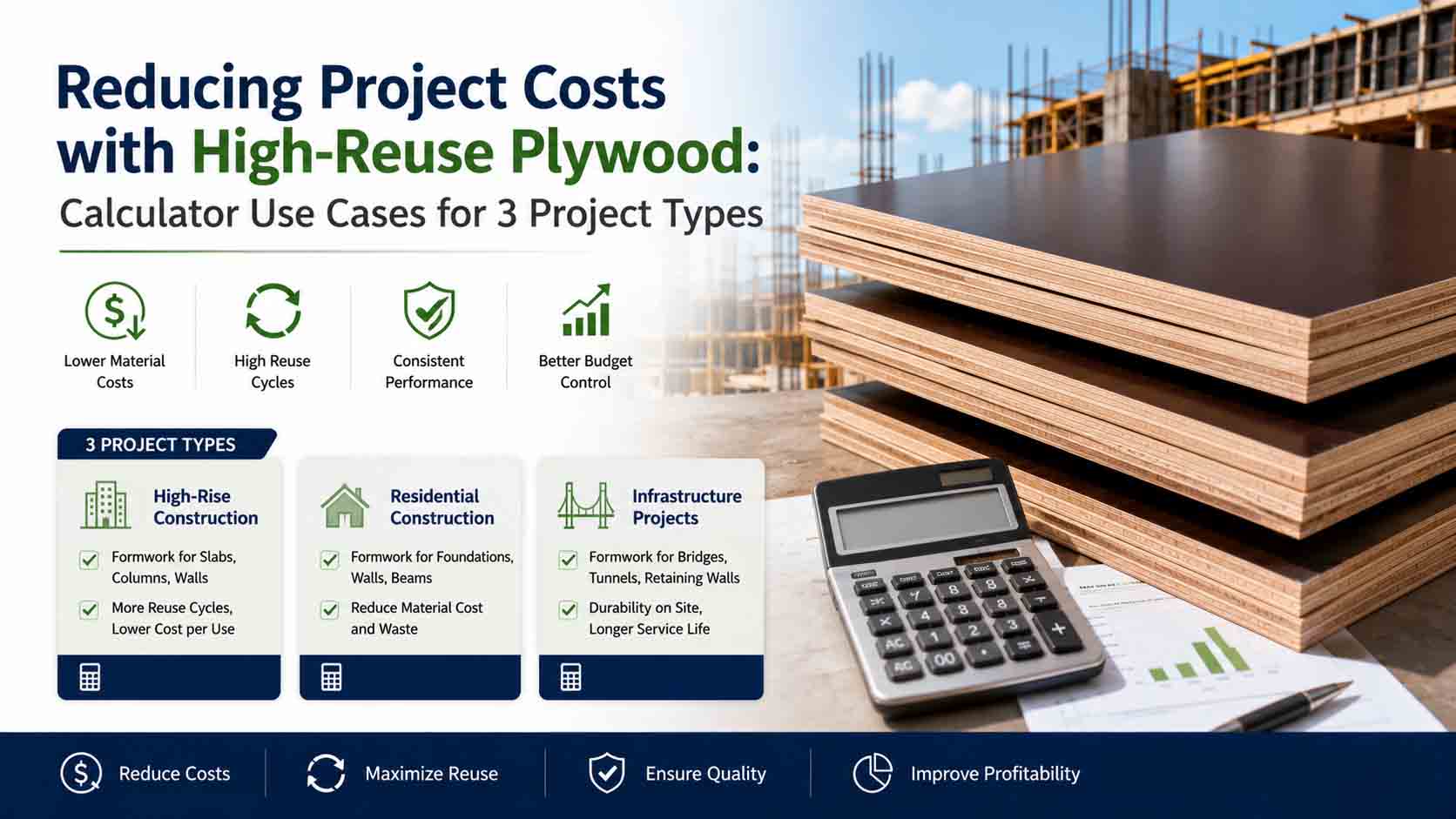
Reducing Project Costs with High-Reuse Plywood: A Practical Calculator for Builders

7) Quick checklist before requesting a quotation

Before you send an RFQ, define your thickness and the supporting specifications to avoid rework:

  • Application (furniture / formwork / general construction)
  • Thickness (9mm / 12mm / 15mm / 18mm / 21mm)
  • Glue type (MUF / WBP Melamine / Phenolic)
  • Face/Back grade and appearance requirements
  • Moisture content target for your destination
  • Thickness tolerance and QC criteria
  • Packaging and container loading preferences

Tell us your target application and thickness (9mm–21mm). We’ll recommend the right plywood specification
to optimize cost, durability, and reuse cycles for your market.

Request Quotation

For technical consultations, QC reports, and product selection:
Email: qc@fomexgroup.vn
Hotline: +84 877 034 666


by admin admin No Comments

Choosing the Right Glue Type: MUF vs WBP Melamine vs Phenolic for Export Plywood from Vietnam

MUF, WBP Melamine, and Phenolic glues differ significantly in bonding strength, waterproofing, boiling-test performance, and suitability for export applications in construction, furniture, and packaging.
For Vietnam plywood exporters and Vietnam plywood manufacturers, MUF is widely used for commercial and furniture-grade panels, WBP Melamine offers stronger moisture resistance for general construction plywood, while Phenolic glue delivers the highest durability and the longest reuse cycles in film faced plywood from Vietnam used in concrete formwork.

FILM FACED FACTORY
When evaluating plywood export from Vietnam, most buyers first consider surface film, core type, or thickness.
Yet, the factor that most strongly influences durability, waterproofing, and reuse cycles in high quality plywood Vietnam is the glue type.

Vietnamese plywood manufacturers and wholesale plywood suppliers commonly use three adhesive systems for international markets:

  • MUF (Melamine Urea Formaldehyde)
  • WBP Melamine
  • Phenolic Glue

Each has unique strengths depending on whether you are sourcing plywood for furniture manufacturers, industrial packaging, or construction projects that demand high reuse formwork panels.

Understanding glue type is essential for importers, traders, and end users who want to choose a reliable Vietnam plywood supplier.
For additional technical context, see:
Boiling Test Durability Guide
and core performance in
Eucalyptus vs Mixed Hardwood Analysis.

1. Overview of the Three Main Glue Types Used by Vietnam Plywood Exporters

Export-focused Vietnam plywood manufacturers use glue systems that meet international standards for water resistance and bonding strength, including CARB, E0/E1 and other buyer-specific requirements.
Here’s a quick comparison table:

Glue Type Water Resistance Typical Boiling Test Common Export Application
MUF Moderate 8–15 hours Commercial plywood, furniture plywood, packaging panels
WBP Melamine High 12–20 hours General construction plywood, scaffolding platforms
Phenolic Glue Very High 48–72 hours Film faced plywood, formwork panels, infrastructure projects

2. MUF Glue: Affordable & Versatile for Furniture and Commercial Plywood

MUF (Melamine Urea Formaldehyde) is the most common adhesive used by bulk plywood Vietnam producers due to its competitive cost and decent performance for indoor and semi-protected environments.

MUF advantages for buyers:

  • economical choice for large container-load orders from a wholesale plywood supplier
  • adequate water resistance for plywood for furniture manufacturers Vietnam
  • strong bonding when veneers are properly dried and pressed
  • ideal base for commercial plywood products

MUF-bonded panels are widely used in:
Commercial Plywood Export Applications.

MUF limitations:

  • limited long-term outdoor performance
  • less suitable for high humidity or standing-water exposure
  • not recommended for high-reuse concrete formwork

Typical boiling-test durations range from 8–15 hours, as detailed in
Boiling Test Analysis.

3. WBP Melamine Glue: The Middle Ground for Construction Plywood

WBP (Weather & Boil Proof) Melamine glue offers improved moisture resistance over MUF and is widely used by Vietnam plywood exporters to Europe and the Middle East for general construction applications.

Key benefits of WBP Melamine:

  • excellent performance for general-purpose construction plywood
  • better resistance to rain, humidity and jobsite washing than standard MUF
  • more stable panel behavior under temperature and moisture cycles
  • reliable option when you need more reuse than basic commercial boards

Common use cases include:

  • premium construction plywood
  • scaffolding decks and temporary floors
  • semi-exposed structural applications

To see how glue and surface film work together in construction formwork, refer to:
Phenolic Film Weight & Surface Quality.

4. Phenolic Glue: The Gold Standard for High-Reuse Film Faced Plywood

Phenolic glue is the benchmark adhesive for film faced plywood exporter Vietnam products aimed at demanding construction projects worldwide. It provides outstanding bonding and water resistance for structural and formwork applications.

Phenolic glue features:

  • survives 48–72 hour boiling tests under WBP or marine standards
  • creates thermoset bonds that do not soften under heat or steam
  • ideal for heavy-duty concrete formwork plywood used in high-rise and infrastructure projects
  • enables 20–30+ reuse cycles when combined with dense eucalyptus cores and quality phenolic film

Phenolic systems power FOMEX’s:

  • Premium phenolic film faced plywood lines
  • PROMAX heavy-duty formwork plywood
  • engineered panels for bridges, tunnels and industrial projects

Their real-world performance in reuse cycles is discussed in:
Phenolic Plywood Reuse Cycles.

5. Comparing Glue Types by Application Segment

Because each market segment has different risk and cost structures, sustainable plywood exporters from Vietnam often recommend glue types based on end use and climate.

✔ Furniture & Indoor Use

MUF glue is usually sufficient for cabinets, shelving, and interior paneling, especially when buyers need competitive pricing from a wholesale plywood supplier.

✔ Packaging & Industrial Use

Light WBP Melamine or high-solids MUF provide a better balance between strength and cost for export crates and pallets.

✔ Construction & Concrete Formwork

Phenolic glue is the clear winner, particularly when combined with eucalyptus core and high-film weights.
Learn why eucalyptus is preferred in this segment:
Eucalyptus Core Performance.

6. Glue Type & Boiling Test: How They Influence Reuse Cycles

Glue strength is evaluated through laboratory boiling tests, which simulate long-term exposure to heat and moisture:

  • MUF: typically 8–12 hours
  • WBP Melamine: typically 12–20 hours
  • Phenolic: typically 48–72 hours

Longer boiling-test performance generally correlates with higher reuse cycles for film faced plywood from Vietnam, as explained in:
Boiling Test Duration Guide.

Panels that withstand longer tests:

  • maintain bonding strength under repeated concrete pours
  • show less risk of delamination in hot, humid climates
  • provide better value for contractors focused on lifecycle cost

7. Glue Type & Cost Efficiency: Looking Beyond the Unit Price

Phenolic-bonded panels produced by a high quality plywood Vietnam factory have a higher unit cost, but offer the lowest Cost Per Use in real projects.
This is crucial when comparing offers from different Vietnam plywood exporters or Chinese suppliers.

You can model the difference using:
High-Reuse Plywood Cost Calculator.

8. Matching Glue Type to Climate & Target Market

Climate and regulatory conditions in your destination market also affect glue selection:

  • Middle East & North Africa: phenolic glue is strongly recommended due to extreme heat and solar exposure.
  • Southeast Asia: WBP Melamine or Phenolic for outdoor and formwork; MUF only for indoor use.
  • Europe & USA: MUF is acceptable for indoor applications, while Phenolic and WBP Melamine are better for structural use and external exposure.
  • Coastal or tropical regions: phenolic glue combined with high-density cores and quality edge sealing provides the safest performance.

Delivering reliable, high-quality plywood from Vietnam with long-term partnership value for construction companies, wholesalers, and global importers.

For quotations, OEM inquiries, and container-load pricing from Vietnam:
Email: qc@fomexgroup.vn
Hotline: +84 877 034 666

by admin admin No Comments

Inside a Vietnamese Plywood Factory: Step-by-Step Manufacturing Process Explained for Global Importers

Vietnam’s plywood industry succeeds globally because it combines sustainable plantation wood, strict veneer engineering, optimized pressing technologies, and comprehensive quality control. Modern factories follow a structured chain—from log preparation to film lamination and export packaging—ensuring the consistent performance required by construction, formwork, and furniture manufacturers worldwide. These controlled processes allow Vietnam plywood exporters to deliver stable quality, competitive pricing, and reliable compliance with FSC, CARB-P2, E0/E1, and EUDR regulations.

Vietnamese Plywood Factory
1. Sustainable Plantation Wood: The Backbone of Vietnam’s Export Competitiveness

Vietnam’s plywood supply chain is built on fast-growing plantation species like acacia and eucalyptus—ideal for importers seeking a sustainable plywood exporter or EUDR compliant plywood supplier. These species offer consistent density, low defect rates, and excellent fiber structure for peeling. Logs are screened based on diameter, moisture, visible defects, and mechanical characteristics, ensuring that only suitable raw materials enter production.

To understand how plantation sourcing integrates with compliance, buyers may refer to:
Lifecycle of FSC® Certified Plywood.

This raw material foundation gives Vietnam clear advantages over markets reliant on natural forest harvesting—especially important for Vietnam plywood exporter to Europe, where EUDR requirements create pressure for transparent supply chains.

2. Veneer Peeling, Drying & Grading: Engineering the Core of Every Plywood Sheet

Film-faced and commercial plywood rely heavily on veneer quality. Logs undergo debarking, fiber conditioning, and precision peeling to produce veneers with controlled thickness and minimal surface defects.
Veneers are then dried—either sun-dried or kiln-dried—to achieve moisture levels that support optimal bonding.

Once dried, veneers are classified into grades (A1, A2, B, C) following TCVN standards. Grading directly influences structural performance, final board consistency, and the expected reuse cycles of film-faced panels.

Buyers seeking a deeper understanding of veneer grading and how core composition affects final performance can explore:
Understanding Plywood Grades & Quality Levels.

3. Engineered Core Structure & Glue Systems for Strength & Durability

Vietnam’s plywood factories design the core using alternating veneer orientations (cross-grain structure). This reduces warping, improves stiffness, and ensures balanced mechanical behavior.
The adhesive system—MUF, Melamine-WBP, or Phenolic—dictates the panel’s water resistance, durability, and application suitability.

Phenolic glue, in particular, is the foundation of high-performance formwork plywood, delivering superior bonding for multiple reuse cycles. MUF and Melamine systems cater to interior or semi-exterior needs, balancing cost and performance for different buyer segments.

For buyers evaluating glue type and durability, an excellent reference is:

Boiling Test Durability Guide

4. Cold Pressing & Hot Pressing: Consolidating the Structure

Cold pressing stabilizes veneer layers and prepares them for final curing. Hot pressing then uses controlled heat and pressure to polymerize the glue, turning loose veneers into a monolithic engineered panel.
Pressing temperature, force, cycle time, and veneer moisture—documented rigorously in Vietnam’s factories—determine the panel’s strength, water resistance, and service life.

Vietnam’s upgrading of press systems has significantly contributed to its reputation as a high quality plywood Vietnam producer and a preferred structural plywood manufacturer Vietnam for international buyers.

5. Phenolic Film Lamination: Achieving Superior Formwork Performance

Film-faced plywood is one of Vietnam’s most recognized exports, especially in the Middle East and European construction markets. A second hot-press cycle applies phenolic film (typically 135–145 g/m²), delivering smooth surfaces, strong abrasion resistance, and superior concrete finish.

For an in-depth explanation of how film weight, coating type, and core integrity impact reuse cycles, refer to:

How Phenolic Film-Faced Plywood Extends Reuse Cycles

Vietnamese factories also optimize edge sealing, ensuring all cut edges and panel sides are coated to resist water ingress—one of the biggest differentiators in long-term durability.

6. Surface Preparation: Putty Filling, Sanding & Calibrating for Precision

Panels undergo putty treatment and sanding to deliver smooth, consistent surfaces.
Calibrated sanding allows buyers seeking 4×8 plywood sheets exporter or 18mm plywood supplier Vietnam products to rely on stable thickness tolerances—crucial for furniture, flooring substrates, cabinetry, and OEM manufacturing.

For interior-grade panels, CARB-P2 and E0/E1 requirements demand low-emission substrates. The fundamentals of plywood moisture behavior in indoor environments are discussed in:

Moisture Content & Durability Explained

7. Multi-Layer QC: Ensuring Every Shipment Meets International Expectations

The QC process described in the production includes:

  • Moisture testing with deep-probe meters
  • Thickness measurement (per sheet & average bundle)
  • Diagonal and dimensional accuracy checks
  • Internal void detection through tapping and bending tests
  • Surface film inspection for blisters or burn marks
  • Counting sheets per bundle to ensure contract conformity

This multi-step QC satisfies buyers requiring CARB-P2 plywood Vietnam, E0/E1 plywood supplier Vietnam, FSC plywood supplier for importers, and Vietnam plywood exporter to USA where compliance audits are strict.

For real-world examples of QC systems applied in construction panels, see:

High-Quality Film-Faced Plywood with Double QC

8. Export Packaging: Container Optimization for Global Distribution

Once QC is approved, plywood is bundled, strapped, corner-protected, and palletized. Vietnam’s factories optimize container loading (typically 16 bundles per 40ft container) to ensure competitive freight cost structures—critical for container load plywood price Vietnam buyers.

For broader cost modeling and logistics insights:

Importing Costs & Logistics Guide

9. Why Global Buyers Prefer Vietnam: Value, Compliance & Supply Stability

Vietnam’s plywood industry offers a compelling value proposition:

  • Stable plantation-based supply
  • Powerful export ecosystem
  • Compliance with FSC, CARB-P2, E0/E1, EUDR
  • Predictable mechanical performance
  • Competitive pricing for bulk and OEM orders

These strengths support a wide range of buyers, including furniture manufacturers, large construction contractors, home centers, wholesalers, and distributors.

For a broader market perspective, explore:
Vietnam Plywood Export Market Report

📩 For wholesale orders, FSC/EUDR documentation & OEM production requests:
Email: qc@fomexgroup.vn
WhatsApp: +84 877 034 666

by admin admin No Comments

Reducing Project Costs with High-Reuse Plywood: A Practical Calculator for Builders

High-reuse plywood significantly reduces total project costs by lowering material consumption, minimizing replacement frequency, and improving concrete surface quality.
Contractors can save 30–55% on formwork budgets by choosing durable grades such as PROMAX or Phenolic, which offer 15–30 reuse cycles compared to 4–8 cycles from standard plywood.

Reducing Project Costs with High-Reuse Plywood: A Practical Calculator for Builders

Construction budgets are increasingly strained by rising material prices, labor costs, and project delays.
In this environment, choosing the right plywood for concrete formwork becomes one of the most effective ways to optimize cost efficiency.
While many contractors initially opt for cheaper panels, long-term data shows that high-reuse plywood ultimately delivers much lower total project costs.

This article explains how high-reuse plywood works, why durability matters, and how builders can calculate real savings.
For technical understanding of reuse drivers, refer to:
Boiling Test Durability Guide

1. What Makes Plywood “High-Reuse”?

High-reuse plywood refers to panels engineered for 10+, 15+, or even 30+ uses in concrete formwork applications.
The two main determinants of reuse are:

  • Core strength — eucalyptus or high-density hardwood for load resistance
  • Glue bonding — MUF 25% (48h) or Phenolic (72h) for delamination resistance

These characteristics are detailed in product comparison guides such as:
Premium vs Promax Plywood.

Typical reuse ranges:

  • Standard: 4–6 cycles
  • Premium: 8–12 cycles
  • PROMAX: 15–20 cycles
  • Phenolic: 25–30 cycles

2. How High-Reuse Plywood Reduces Overall Project Costs

Using higher-quality plywood may cost more upfront, but it dramatically lowers:

  • material replacement frequency
  • waste disposal costs
  • labor associated with panel changes
  • delays due to damaged formwork

In many concrete projects, labor time for replacing worn-out plywood is more expensive than the plywood itself.
To understand long-term moisture resistance and dimensional stability, see:
Moisture Content & Stability.

3. The Cost-Per-Use Formula (Construction Plywood ROI)

Contractors often evaluate price per sheet, but the correct metric is Cost Per Use.

Formula:

Cost Per Use = Sheet Price ÷ Actual Reuse Cycles

4. A Practical Cost Savings Calculator for Builders

Use the calculator below to estimate cost savings when switching from standard plywood to high-reuse film-faced plywood:

Step 1 — Inputs

  • Number of sheets needed
  • Sheet price
  • Expected reuse cycles
  • Labor cost per replacement

Step 2 — Outputs

  • Cost per use
  • Total labor savings
  • Total material savings
  • Overall project savings percentage

Example scenario:

  • 1000 sheets required
  • Standard plywood (5 uses)
  • Premium plywood (10 uses)

Premium plywood cuts sheet consumption in half → immediately saving thousands of dollars in material and labor.

5. Hidden Savings: Labor, Logistics & Time

Most contractors overlook indirect savings, which often exceed the plywood cost itself:

  • Fewer sheets to transport
  • Reduced loading/unloading labor
  • Less on-site storage space
  • Fewer project delays from damaged panels

High-quality plywood also produces smoother concrete surfaces, reducing surface finishing costs.
This is reinforced in
Phenolic Reuse Performance
and surface film analysis from
Phenolic Film Weight Analysis.

6. Matching Plywood Grade to Project Scale

Different construction environments require different plywood grades:

✔ Standard (Up to 6 uses)

Small projects or low-rise buildings with minimal reuse requirements.

✔ Premium (Up to 12 uses)

Mid-rise buildings, general contractors, stable work environments.

✔ PROMAX (Up to 20 uses)

Large building contractors and high-demand concrete operations.

✔ Phenolic (Up to 25 uses)

Infrastructure, government projects, high-heat environments.

7. Environmental & Sustainability Benefits

High-reuse plywood reduces material waste by up to 70%.
This supports global sustainability goals and aligns with:

  • FSC® sourcing requirements
  • EUDR readiness
  • Green building certifications

For sustainability-focused importers, refer to:
FSC® Lifecycle Overview.

Recommended Internal Resources

by admin admin No Comments

The Science of Boiling Tests: What 8h–72h Means for Plywood Strength & Reuse Cycles

The boiling-test duration (8h–72h) directly reflects plywood’s bonding strength and durability. Longer boiling tests—48h MUF or 72h Phenolic—indicate stronger glue performance, superior moisture resistance, and higher reuse cycles. Contractors use boiling-test ratings to choose the correct plywood grade for cost efficiency, reuse life, and performance in harsh climates.

Boiling-test duration is one of the most critical technical indicators when evaluating film-faced plywood—especially panels used for concrete formwork and heavy-duty construction.
Understanding these boiling-test classes helps importers predict reuse cycles, bonding quality, moisture resistance, and overall performance.
To make informed decisions, buyers often compare boiling-test ratings alongside plywood categories such as Premium vs. Promax plywood or high-quality film-faced plywood from Vietnam.

At FOMEX GLOBAL, the boiling-test levels range widely—from 8 hours to 72 hours—and each level corresponds to a different construction need, glue type, and expected durability.
This makes boiling-test duration an essential metric for selecting plywood for international projects.

qc Film faced

What Is a Boiling Test in Plywood?

A boiling test is a standardized method to assess whether the glue line between veneers can withstand extreme temperature and moisture exposure. The test simulates some of the world’s toughest construction conditions.
This explains why a boiling-test rating is often mentioned in technical inspection processes and in product comparison guides such as Understanding Plywood Grades & Quality Levels.

Boiling tests help determine a panel’s ability to resist:

    • High humidity and rainfall
    • Continuous wet–dry cycles
    • Concrete’s chemical alkalinity
    • Thermal shock in tropical climates

The longer the plywood survives boiling conditions without delamination, the stronger and more durable it is in real construction environments.
This is especially important for buyers in regions with extreme temperatures, where phenolic film-faced plywood often becomes the top choice.

Boiling Test Durations Explained (8h → 72h)

Below is an overview of the boiling-test ratings most commonly used in the Vietnamese plywood industry, including those applied in the FOMEX Film-Faced Plywood product line.

Boiling Test Glue Type Application Grade Reuse Cycles
8–12 hours MUF 12% Standard Film-Faced 4–6
12–15 hours MUF 15–18% Premium Film-Faced 8–12
48 hours MUF 25% PROMAX Film-Faced 15–20
72 hours Phenolic Glue Phenolic Film-Faced 25–30

Contractors who specialize in high-rise and infrastructure projects often pair boiling-test ratings with moisture standards explained in Moisture Content in Plywood and Its Impact on Durability.

Why Longer Boiling Tests Lead to Stronger Plywood

Boiling tests simulate the real conditions plywood faces on a jobsite.
This is why boiling-test data is closely linked to performance benchmarks like bending strength and modulus of elasticity in plywood grade comparison frameworks.

For example:

    • MUF glue offers moderate water resistance and is suitable for most general construction projects.
    • High-MUF (25%) in PROMAX delivers significantly improved bonding under repeated wet–dry cycles.
    • Phenolic glue forms a thermoset bond, providing exceptional waterproof performance.

This glue performance difference explains why phenolic plywood consistently reaches the highest reuse cycles.

Impact on Reuse Cycles: Predicting Real Project Efficiency

Reusable formwork is one of the biggest cost savers in construction.
Understanding boiling-test ratings helps importers decide which grade aligns best with their project scale and climate.
For deeper comparison, see Premium vs Promax: Which Grade Fits Your Project?

In general:

    • Standard (8–12h): For low-rise & cost-focused projects
    • Premium (12–15h): For mid-rise buildings
    • PROMAX (48h): For large contractors requiring consistent reuse
    • Phenolic (72h): For harsh climates & infrastructure projects

The longer the boiling test, the better the plywood withstands repeated contact with wet concrete and mechanical stress.
This directly reduces cost per pour.

Weather Resistance: Why Boiling Tests Matter More in Harsh Climates

In heat-intensive regions—Middle East, Africa, Southeast Asia—plywood experiences extreme conditions.
This is why many buyers combine boiling-test ratings with sustainability-based sourcing such as FSC®-certified plywood lifecycle, which ensures consistency from raw material to performance.

The 72-hour Phenolic standard offers superior resistance to:

  • UV exposure
  • High ambient temperatures
  • Concrete corrosion
  • Moisture-heavy environments

When Should Importers Choose Each Boiling-Test Level?

Selecting the right boiling-test grade ensures both performance and cost efficiency.
For broader export insights, see Vietnamese Plywood Market Report.

✔ 8–12 hours (STANDARD)

Good for small contractors and short-term formwork needs.

✔ 12–15 hours (PREMIUM)

A balanced choice between durability and affordability.

✔ 48 hours (PROMAX)

The preferred option for construction firms aiming for multiuse efficiency.

✔ 72 hours (PHENOLIC)

The best solution for infrastructure, government projects, and regions with extreme climate.

📩 For EUDR-compliant plywood quotes and documentation support:
qc@fomexgroup.vn | +84 877 034 666

by admin admin No Comments

Vietnam’s Role in the Global Plywood Supply Chain under EUDR 2025

Under EUDR 2025, Vietnam is becoming a preferred global plywood sourcing hub thanks to its plantation-based hardwoods, low deforestation risk, and fast adoption of traceability systems. Vietnam provides stable, EUDR-compliant plywood with competitive pricing, making it an increasingly important supplier for EU, Korea, the Middle East, and U.S. importers seeking sustainable sourcing and transparent documentation.

EUDR 2025 is transforming global sourcing standards for wood-based products. Importers must now provide full traceability, legality, and proof that materials do not originate from deforested land. In this shift, Vietnam is emerging as one of the strongest plywood supply centers due to its plantation wood sources, robust certification systems, and transparent factory-level documentation.

This article analyzes how EUDR impacts the global plywood industry and why Vietnam is gaining competitiveness as a reliable, sustainable plywood exporter.

Vietnam’s Role in the Global Plywood Supply Chain under EUDR 2025

EUDR 2025: What It Means for Global Plywood Importers

EUDR (EU Deforestation Regulation) requires all plywood entering the EU to be:

  • Legally sourced
  • Deforestation-free after 31 December 2020
  • Geolocated to exact harvesting plots
  • Fully documented through due diligence reports

Countries with natural forest harvesting face increasing compliance risks. Vietnam, reliant on renewable plantation hardwoods, becomes a strategically safer choice.

Full compliance steps are detailed in the guide:
EUDR-Compliant Plywood Guide

Why Vietnam Gains Export Strength Under EUDR

Vietnam’s plywood sector aligns naturally with EUDR requirements, giving exporters strong global positioning.

1. Low-Risk Plantation Hardwood Supply

Vietnam’s plywood is predominantly made from Acacia and Eucalyptus plantations—fast-growing, renewable species grown on monitored land. This ensures minimal deforestation exposure compared to natural forest sourcing in other regions.

2. Strong Certification and Compliance Systems

Vietnamese manufacturers have rapidly adopted:

  • FSC® Chain of Custody
  • PEFC and Verified Legal Origin

This provides importers with documentation needed for due diligence filings.

3. Competitive Pricing with Stable Production

Because plantation wood has predictable supply cycles, Vietnam maintains:

  • Stable FOB pricing
  • Short production lead times
  • Lower price volatility than Brazil, Russia, or Indonesia

4. Transparent Factory-Level Documentation

Factories maintain chain-of-custody logs, supplier declarations, and harvest-origin records—reducing risk for EU importers.

How EUDR Influences Global Plywood Trade Patterns

  • Shift in sourcing from high-risk regions to Vietnam
  • Higher demand for FSC-certified and EUDR-aligned materials
  • Stronger buyer preference for plantation-based plywood
  • More documentation requests from EU importers

Vietnam, already a major Asian plywood hub, is set to expand market share in Europe, Korea, the Middle East, and the U.S.

How FOMEX GREENWOOD Supports EUDR-Compliant Plywood Exports

FOMEX GREENWOOD applies a strict compliance framework to ensure each shipment meets international sustainability and tracking requirements.

  • Geolocation and plantation-origin records for all veneers
  • Verified legal documentation
  • FSC-ready raw material networks
  • Double QC procedures for veneer, core, moisture, and bonding
  • Transparent export files for EU due-diligence systems

See compliance checklist for importers:
EUDR Checklist for Plywood Importers

Outlook: Vietnam’s Global Competitiveness Beyond 2025

With EUDR enforcement, global buyers prioritize suppliers offering traceability, legal assurance, and sustainability. Vietnam is positioned to grow further thanks to:

  • Fast compliance adoption
  • Low deforestation-risk supply chains
  • Upgraded documentation systems
  • Competitive long-term pricing

As demand rises for sustainable, EUDR-compliant plywood, Vietnam’s role in the global supply chain will continue to expand.

📩 For EUDR-compliant plywood quotes and documentation support:
qc@fomexgroup.vn | +84 877 034 666