by admin admin No Comments

Sustainable Plywood from Vietnam: Long-Term Value for Global Projects

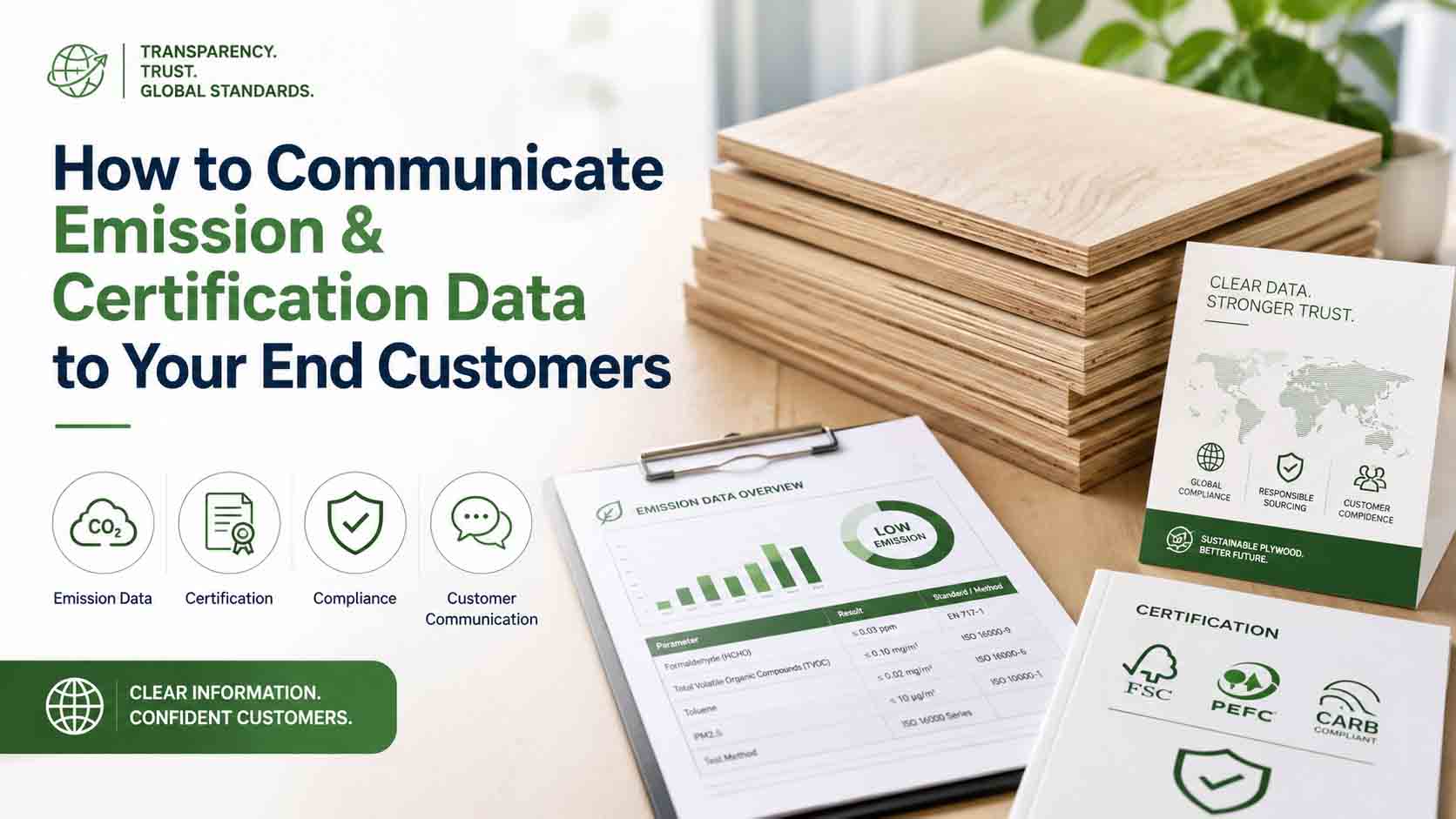
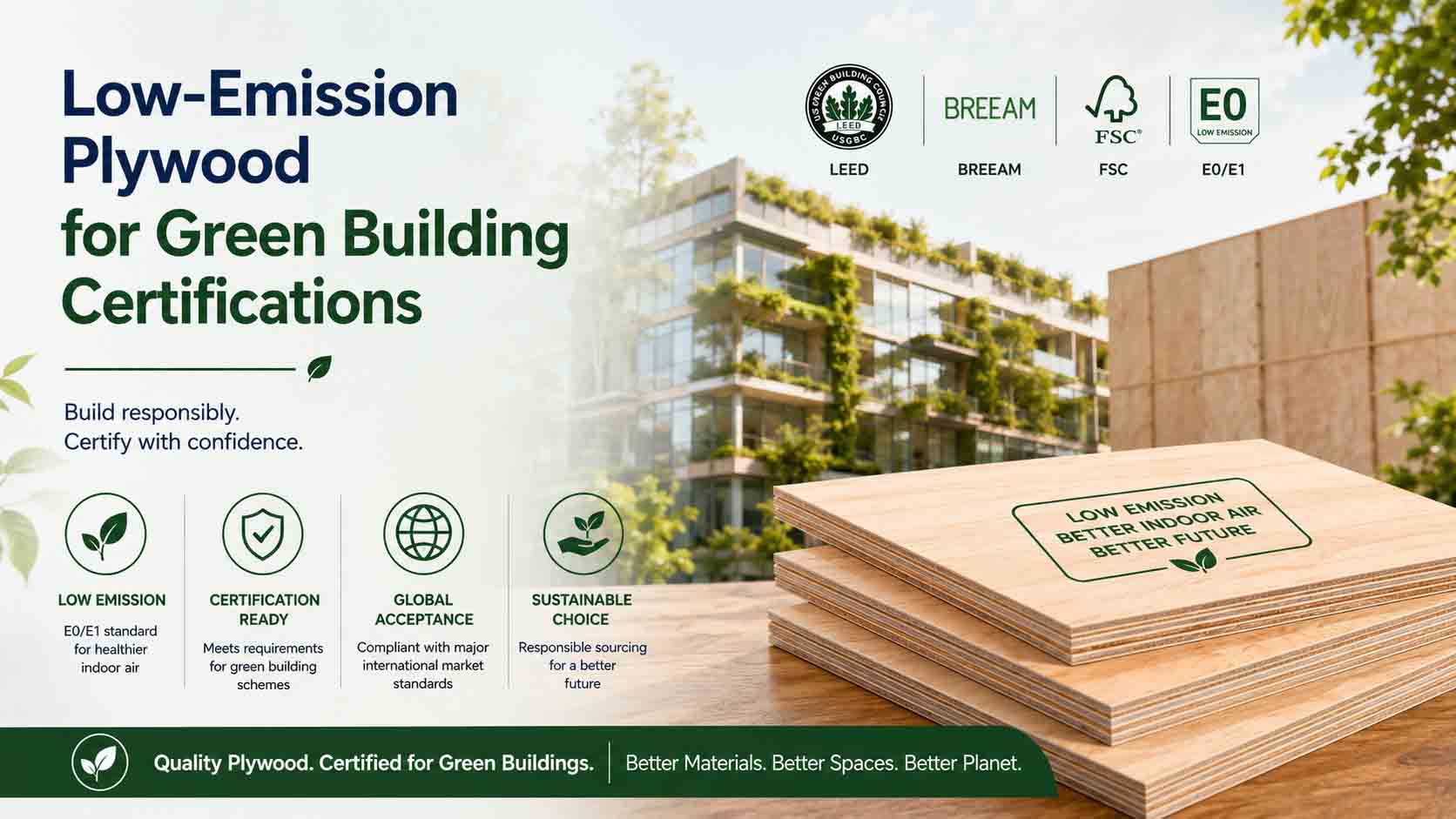
Sustainable plywood refers to plywood made from legally sourced, traceable, and low-emitting wood with verified certifications (FSC 2, EUDR, CARB-P2). FOMEX GREENWOOD provides sustainable Vietnamese plywood that helps global constructors reduce carbon footprint, achieve green building standards, and minimize long-term project costs.

  • ✅ FSC-CoC, EUDR-prepared, CARB-P2 certified
  • 🌿 15–20% lower embodied carbon vs. conventional plywood
  • ♻️ Designed for 20+ reuse cycles
  • 🌍 Trusted by importers in 30+ countries

🔗 Read how FOMEX GREENWOOD satisfies 2025 Green Building Needs

The Reason Sustainability Has Become a Purchase Decision

Global regulations and clients are under increasing pressure to prove sustainability performance:

  • EUDR and EU Green Deal demand deforestation-free, legal supply chains.
  • LEED, GBCA, HQE projects require low-emission certified wood.
  • Corporate buyers face stricter ESG reporting expectations.

Choosing sustainable plywood enables contractors to:

  • 🌱 Minimize carbon footprint of the project.
  • 🏗 Win green building certifications.
  • 💼 Strengthen brand as a responsible supplier.

How FOMEX GREENWOOD Reduces Waste and Increases Yields

FOMEX integrates sustainability into every stage of production:

Process Sustainable Action Benefit
Log Sourcing FSC®-certified plantations, legal harvest permits Traceable origin, low risk
Production Optimized veneer cutting, low waste yield 5–8% higher material efficiency
Emissions Control Low-formaldehyde glue (E0/E1 options) Healthier interiors, compliance
Packaging & Logistics Recyclable packaging, optimized container loading Lower CO₂ per m³ shipped

📌 Result: ~15% CO₂ reduction per container compared to traditional plywood suppliers.

Certifications and Carbon Measures

FOMEX GREENWOOD provides:

  • 📄 Chain-of-Custody certificate (FSC 2 optional)
  • 🌐 EUDR geolocation + risk assessment dossier
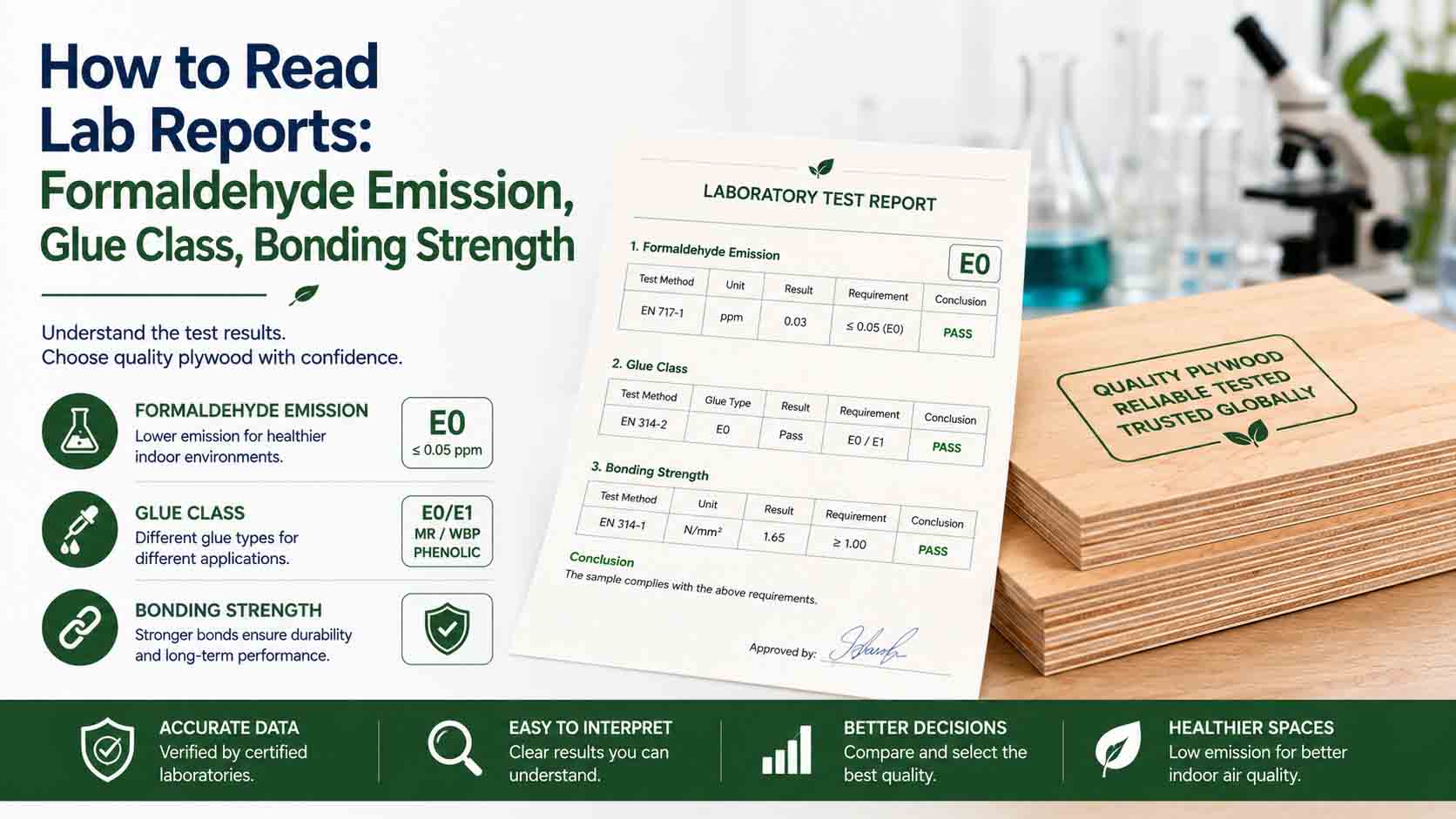
  • 🧪 CARB-P2 / E0 test reports

These documents help EU buyers qualify for green tax incentives and meet ESG audit requirements.

Product Specs — Sustainable Plywood Lines

Spec Options
Product Types Film Faced, Commercial, Furniture, LVL
Size 1220×2440mm, custom sizes on request
Thickness 9 / 12 / 15 / 18mm/custom sizes on request
Core Poplar / Eucalyptus / Mixed hardwood
Glue  E0/E1/E2/ WBP phenolic (low-VOC), WBP
Certifications FSC®, CARB-P2, E0/E1, EUDR-ready
Reuse Cycles 20+ under proper handling (Film Faced)

Film-faced

Glossary for Buyers

Term Meaning
Sustainable Plywood Plywood from legal, renewable, traceable sources
FSC® CoC Chain-of-Custody certification for forest-to-product traceability
EUDR EU Deforestation Regulation — traceability requirement
ESG Environmental, Social, and Governance — corporate sustainability standard

FAQ

Q1: Is sustainable plywood more expensive?
A1: Only 3–7% higher, but offset longer reuse cycles.

Q2: Is FSC2 required for EU exports?
A3: Not mandatory, but strongly advised to meet EUDR + ESG compliance.

📩 Your Next Project: Green and Cost-Effective

Reduce your carbon footprint and stay ahead of global regulations with FOMEX GREENWOOD Sustainable Plywood.

📧 Request a Quote

Contact Us: qc@fomexgroup.vn · ☎ +84 877 034 666

Internal Reading Links

by admin admin No Comments

CARB-P2 & E0/E1 Plywood: Safe Choices for Interior Applications

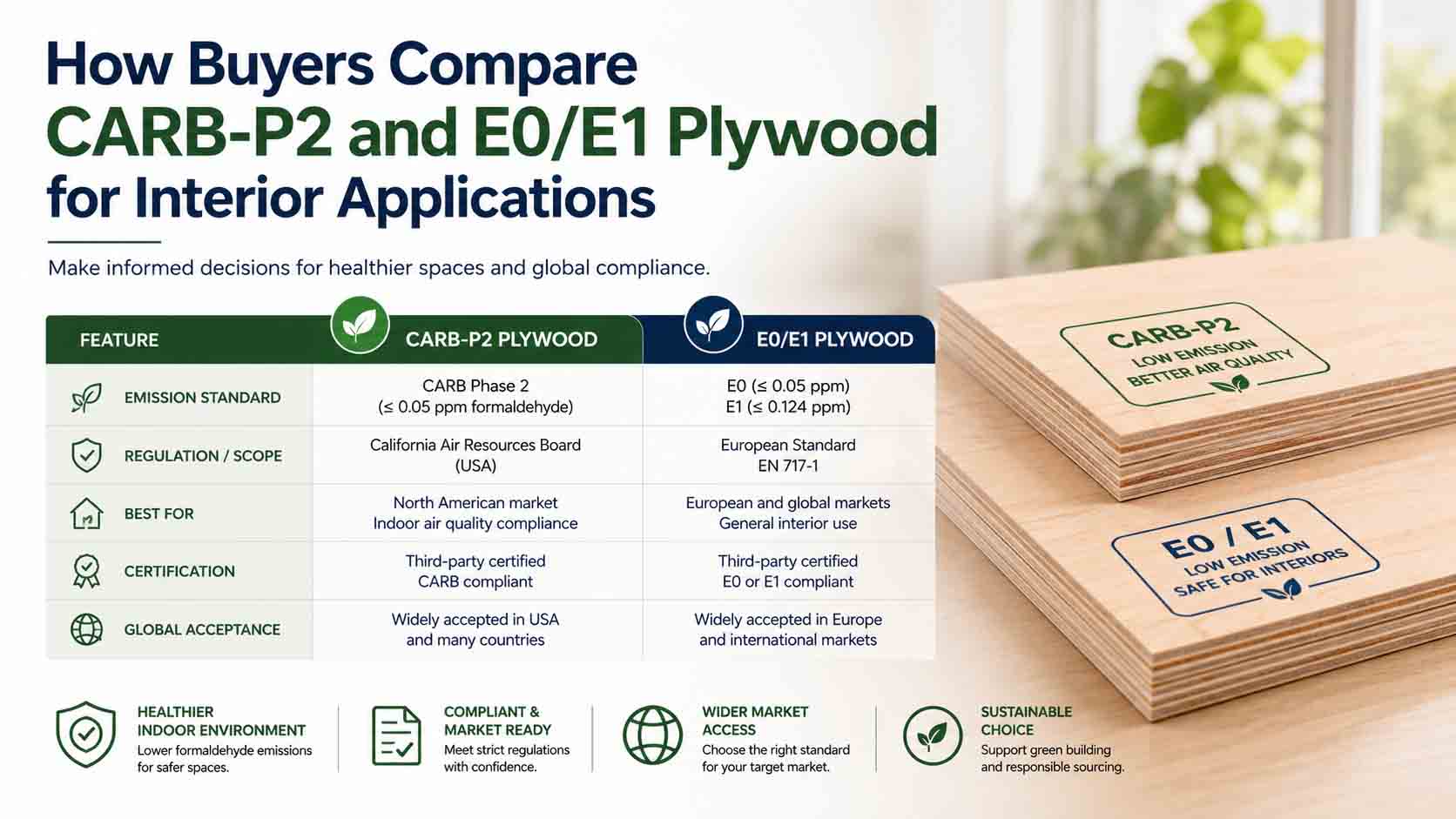
CARB-P2 is a U.S. standard regulating formaldehyde emissions in wood products to ≤0.05 ppm, protecting indoor air quality. E0/E1 are EU standards with limits at ≤0.05 ppm (E0) and ≤0.10 ppm (E1). FOMEX GREENWOOD plywood meets both CARB-P2 and E0/E1, ensuring low-emission, safe, and durable panels for furniture and interior applications.

  •  CARB-P2 limit: ≤0.05 ppm formaldehyde
  •  E0/E1 limits: E0 ≤0.05 ppm | E1 ≤0.10 ppm
  •  Certified by FSC®, CARB, and ISO 9001:2015
  •  Exported to 30+ countries worldwide

See Low-Emission Plywood Products

The meaning of CARB-P2 Certification.

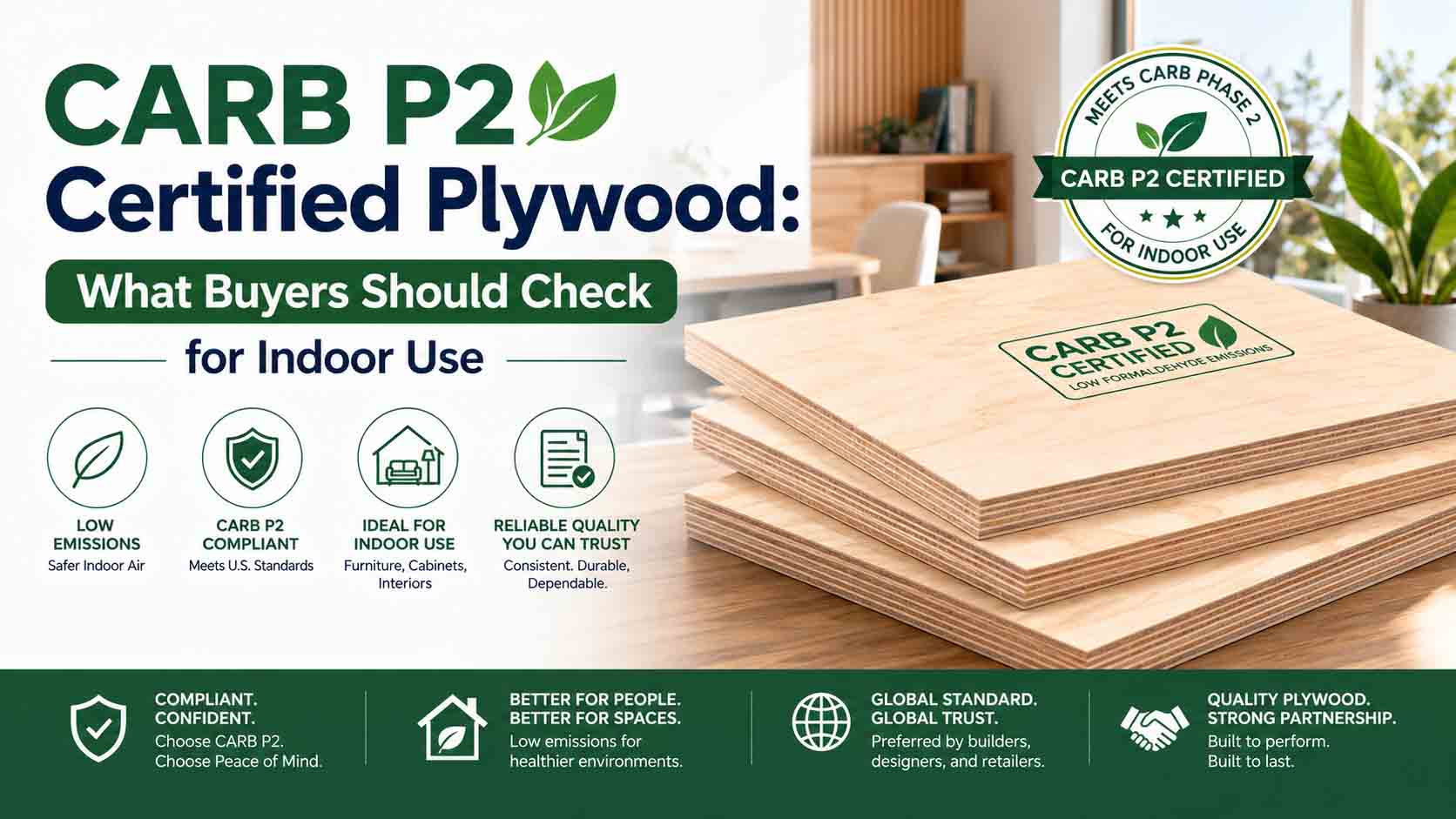
The California Air Resources Board has issued a regulation known as the CARB Phase 2 (CARB-P2) regulation which provides one of the limiting global on-air formdehyde emission rates in composite wood panels. This standard guarantees the safety of the indoor environments especially on furniture and cabinetry.

To plywood consumers, CARB-P2 implies that the products are tested, verified, and passed to be at lower levels of emissions than 0.05ppm. CARB-P2 is a necessary document to do due diligence by many international purchasers in importing to the U.S. market and the EU market.

Checking the Compliance of CARB-P2.

  • Request Certificates – The supplier should always be requested to provide CARB-P2 or EPA TSCA Title VI test reports.
  • Check Labels – Every panel should have a CARB/EPA compliance label, which tells of the class of emissions.
  • Confirm with Third Parties – Authenticate using accredited laboratories or independent inspections.
  • Compare with E0/E1 – Equals emission data with EU requirements (E0 0.05 ppm, E1 0.10 ppm) out of precaution.

FOMEX GREENWOOD Low-Emission Plywood Specs

Product Core Thickness Size (mm) Glue Certifications Emission Class
Furniture Plywood Acacia / Eucalyptus / Mixed Hardwood 3–35mm 1220×2440 / custom E0 / CARB-P2 / WBP FSC®, CARB-P2, ISO 9001 E0 / E1 / P2
Commercial Plywood Acacia / Styrax / Poplar/ Mixed Hardwood 4–30mm 910×1820 / 1220×2440 / custom E1 / WBP FSC®, CE, CARB E1 / P2

Case Study: Birch Plywood Customer of the U.S. preferred Birch Plywood in a Healthy Home.

A customer of the U.S., in 2024, used Birch plywood of FOMEX GREENWOOD to finish an interior housing project. The material was certified as CARB-P2 and E0, thus making the house extremely low in emission, thus making the family live in a safe and healthy environment. The plywood pinned to the board was a great idea as Birch plywood was recognized to be durable, beautiful and safe to the indoor air of the house and so this project was recommended to all health-conscious people who have their homes.

birch

Frequently Asked Questions

What is the method of testing plywood to compliance with CARB-P2?

Panels are examined in the certified laboratories with chamber methods where formaldehyde emissions are tested under the controlled conditions. It should have below 0.05 ppm as results before being considered CARB-P2 certified.

What is the E0/E1 vs. CARB-P2 plywood?

E0/E1 are European standards of which E0 is the toughest (≤0.05 ppm). The U.S. standard is CARB-P2 which is also established at 0.05 ppm or less. The combination of both types of plywood guarantees the quality of both worldwide and indoor air safety.

Is CARB-P2 plywood suitable in VOC-sensitive environment?

Yes. CARB-P2 and E0 plywood releases minimal volatile organic compounds (VOCs) and will be suitable across the bedrooms, schools, and hospitals, among other VOC-sensitive areas.

Contact Us: qc@fomexgroup.vn · ☎ +84 877 034 666📌 Related Reading:

by admin admin No Comments

EUDR-Compliant Plywood from Vietnam: A Step-by-Step Buyer’s Guide

The EU Deforestation Regulation (EUDR) requires all wood products entering the EU to prove legal origin, zero deforestation after 2020, and full traceability. Buyers must collect geo-location data, perform risk assessments, and retain Chain of Custody (CoC) documentation. FOMEX GREENWOOD ensures all plywood is sourced from FSC®-certified plantations, tracked digitally, and verified through a two-step QC system.

  • 🌍 Geo-location data of every plot supplied
  • 📋 Risk assessment and mitigation record
  • 📑 FSC® & EUDR CoC documentation
  • 🏗️ Used in 30+ countries (EU, US, KR, ME)

Learn more about EUDR Due Diligence

What Is EUDR and Why It Matters for Importers

The European Union Deforestation Regulation (EUDR) — effective since 2025 — mandates that all wood products placed on the EU market must be proven to be deforestation-free and legally harvested. This impacts plywood importers, distributors, and construction firms across Europe.

Failing to comply can result in confiscated cargo, legal penalties, and reputational damage. Importers are responsible for performing due diligence, documenting their supply chains, and submitting compliance statements before customs clearance.
EUDR-Compliant Plywood from Vietnam: A Step-by-Step Buyer’s Guide

How to Verify EUDR Compliance in Purchase Orders

  1. Collect Geo-location Data – Request GPS coordinates of plantation plots for all supplied logs.
  2. Confirm Legal Harvesting – Verify logging permits, land titles, and harvest licenses from your supplier.
  3. Conduct Risk Assessment – Evaluate deforestation risk using EUDR country benchmarks and third-party audits.
  4. Ensure Chain of Custody (CoC) – Require FSC®/PEFC CoC documents linking each supply chain stage.
  5. Retain Evidence – Store all documents (geo-data, permits, CoC) for 5+ years to prove compliance.

How FOMEX GREENWOOD Builds Traceable Supply Chains

At FOMEX GREENWOOD by FOMEX GLOBAL, we engineer supply chains specifically for EUDR readiness:

  • Legally sourced timber: 100% plantation wood (Acacia, Eucalyptus) from FSC®-certified forests.
  • Integrated chain of custody: From log debarking to container loading, every batch is digitally tracked.
  • Third-party verified: Certified under FSC-CoC, CARB-P2, ISO 9001:2015, and audited for EUDR compliance.
  • Dedicated QC teams: Two-step inspections on moisture, thickness, and surface quality before shipment.
  • Customer-ready documentation: FSC®, EUDR, COO, CE test reports shipped with each order.

This system enables our buyers to pass EUDR due diligence smoothly and clear EU customs without delays or penalties.

EUDR-Ready Plywood Specifications

Product Core Thickness Size (mm) Glue Re-use Cycles
Film Faced Plywood Acacia / Eucalyptus/Mixed Hardwood


9–21mm 1220×2440 /

1250×2500

or as requested

WBP Melamine Up to 20
Furniture Plywood 3–35mm 1220×2440

or as requested

E0 / CARB-P2/ E1, WBP
Commercial Plywood 4–30mm 910×1820 /

1220×2440

or as requested

WBP / E1/E2

Frequently Asked Questions

Do I need species declarations for EUDR?

Yes. All EUDR submissions must include declared species names (e.g., Acacia, Eucalyptus) and their volumes per shipment.

What plantation documents are required?

Buyers must collect geo-coordinates, land titles, logging permits, and harvest licenses for each supply lot, typically provided by the exporter.

How is risk level assessed under EUDR?

The EU provides a benchmarking system classifying countries into low, standard, or high risk. Vietnam is currently standard risk, requiring full due diligence for all shipments.

📧 Contact Us: qc@fomexgroup.vn · ☎ +84 877 034 666
by admin admin No Comments

Film Faced Plywood from Vietnam — Durable, FSC®-Ready, Double-QC

Film faced plywood is a durable engineered plywood coated with phenolic film for concrete formwork. FOMEX GREENWOOD offers high-quality panels that are FSC®-ready, EUDR-compliant, and CARB-P2 certified, manufactured with Double QC to ensure flatness, tight tolerance, and 25+ reuse cycles to save cost for global contractors.

  • Size: 1220×2440mm | Thickness: 12 / 15 / 18mm
  • Core: Poplar / Eucalyptus | Glue: WBP phenolic
  • Compliance: FSC® (on request), EUDR, CARB-P2
  • Lead time: 21–25 days (EU/US)
  • Trusted by contractors in 30+ countries

📖 See our EUDR-Compliant Plywood Guide

What Is Film Faced Plywood and Why Quality Counts

Film faced plywood is plywood covered with a waterproof phenolic film. It’s widely used for concrete formwork thanks to its smooth surface, strength, and high reusability.

However, low-grade panels often face swelling, warping, and surface defects due to inconsistent thickness, weak bonding, or poor cores — causing delays and high costs.

How FOMEX Ensures Quality

  • Selected low-moisture core veneers (poplar/eucalyptus)
  • WBP phenolic glue under controlled temperature & pressure
  • Two-stage QC (incoming veneer QC + finished panel inspection)
FOMEX double-QC process for film faced plywood
18mm | FSC® option | 20+ reuse cycles — Film Faced Plywood. © FOMEX GREENWOOD

The Impact of the FOMEX Double-QC Process

QC Stage Key Checkpoints Result
Stage 1 — Veneer QC Moisture ≤ 12%; thickness tolerance ≤ 0.3 mm; core gap ≤ 1 mm Stable bonding; no delamination
Stage 2 — Final QC Thickness, flatness, edge sealing, film adhesion 20+ reuse cycles in formwork

Our Double QC system has lowered the rate of surface defects by 38% compared to industry average (internal QC data 2024).

 FOMEX GREENWOOD Manufacturing Network

All panels are manufactured under our Double QC system across six factories in Vietnam:

  • 🏭 Film Faced Plywood Factory 1 — Hoa Binh Province
  • 🏭 Film Faced Plywood Factory 2 — Bac Giang Province
  • 🏭 Commercial Plywood Factory — Phu Tho Province
  • 🏭 Packing Plywood Factory — Soc Son District, Hanoi
  • 🏭 LVL Factory — Hung Yen Province
  • 🏭 Birch Plywood Factory — Thanh Hoa Province

Global Compliance: FSC®, EUDR, CARB-P2

  • FSC® CoC (on request): verified chain of custody traceability
  • EUDR preparedness: species & geolocation data, risk assessment, legality statements
  • CARB-P2 & E0/E1: certified low-formaldehyde emission for US/EU interiors

📖 Key Certifications for Sustainable Plywood

Product Specifications — FOMEX GREENWOOD Film Faced Plywood

Size 1220×2440mm (custom available)
Thickness 12 / 15 / 18mm
Core Poplar / Eucalyptus / Mixed hardwood
Glue WBP phenolic / MR
Film Brown/Black phenolic, 120–220 g/m²
Certifications FSC® (on request), CARB-P2, E0/E1
Lead Time 21–25 days (EU), 25–30 days (US/ME)
Market Focus EU, US, Korea, Middle East

FAQ

How many times can FOMEX film faced plywood be reused?

Usually 25–30 pours with proper cleaning, oiling, and correct stripping.

Is the plywood FSC® certified?

Yes. FSC® Chain of Custody is provided on demand to suit your purchase order.

Is it CARB-P2 compliant?

Yes. Each batch is supplied with CARB-P2 or E0/E1 emission reports to the customs.

 Prepared to Buy Stable-Quality Film Faced Plywood?

FSC® certified • Double-QC manufactured • Timely delivery • Trusted globally

Internal reading:
Maximizing Value with CARB-P2 Plywood ·
Strength & Durability of Film Faced Plywood in 2025 ·
FOMEX Global: Top Plywood Supplier in Vietnam

© FOMEX GREENWOOD

by admin admin No Comments

Veneer Drying For Plywood Sheets

Drying Veneers will make the size of the wood stable, free from pests, easy storage, and the finishing and processing process of the plywood sheets will also achieve higher quality. Good veneer drying practice is essential for making good quality plywood sheets. In particular, the drying of veneers will reduce its weight, thereby reducing transportation costs.

Problems with Wet Veneers

The over amount of moisture in the veneer can affect the spread of glue on the veneer surface of plywood sheets. Wrong material can cause blister, glue penetration, glue peeling, etc.

High moisture veneer is not suitable for hot-press process of plywood manufacturing. It will prolong the hot press time and discount the quality of wood panels.

There are two popular veneer drying methods: air-drying and forced drying.

1. Air-drying

Air-drying is a natural way of drying veneers. The sun provides energy (heat) for the evaporation of water in the veneers.

Using the air-drying method, veneers can be dried to a moisture content of 12 – 20% depending on weather conditions. The drying time can vary greatly from 10-30 days. This depends on the species and the size of the veneers.

2. Forced drying

Veneers, before being used for making plywood sheets or for some other use … it is usually dried to the required moisture content. In order to achieve this goal quickly and accurately, the veneers are dried in a kiln. Unlike the drying process, the temperature, relative humidity, and air circulation in the kiln are controlled during the drying process.

The temperature in the drying process can be up to 100 degrees Celsius. However, drying with high temperature is not common because it is difficult to limit defects that araise in the drying process.

 Advantages And Disadvantages Of Two Method

1. Air-dying

Compared to drying by forced drying, air-drying requires little investment and no energy costs. However, air-drying has the following disadvantages:

  • Long drying time.
  • Veneers cannot be dried to moisture below 12%. Lower humidity is often required for products exported to countries with mild climates.
  • Need a large area for stacking and drying.

2. Forced drying

The advantages of drying wood by forced drying method:

  • The drying process is controlled, and defects are limited
  • Achieve lower humidity compared to air-drying
  • The drying time is shorter than that of air-drying
  • The kiln is used for many different types of wood
  • Achieve the exact humidity required
  • The veneers fungus pests are destroyed during the drying process

Disadvantages of wood drying by forced drying:

  • Requires bigger investment than air-drying
  • Required cost for energy
  • It is required that the operator must have skills in oven operation and maintenance.

Currently, most factories in developed countries are usually natural methods (air-drying) to dry in order to save energy costs.

Understanding these limitations, FOMEX’s factories have invested in machinery and equipment for forced drying. We aim to have a long-term business strategy, ensuring stable quality in plywood sheets. We hope we can contribute to bringing Vietnam’s plywood to reach extreme quality.

Rosie

FOMEX GROUP

by Emmy Nguyen Emmy Nguyen No Comments

Fomexer’s first working day in the new year of Tan Suu 2021

We have officially entered the new year of Tan Suu 2021 – the year that everyone looks forward to with a lot of hope for better things
Fomex has returned to work with a spirit of excitement and enthusiasm, always ready to accompany and serve our beloved customers.

Open a new bottle of wine to welcome a new beginning

Wine glass to welcome the new year

Luckiy money symbol for luck

Fomex has returned to work with a spirit of excitement and enthusiasm, always ready to accompany and serve our beloved customers.
On the occasion of the New Year’s Day, Fomex would like to wish you and your loved ones a wonderful year

Happy New Year! 2021


by Emmy Nguyen Emmy Nguyen No Comments

South Korean container lines join forces in regional alliance

South Korean container lines join forces in regional alliance
Five South Korean liner operators will codeshare on services to Southeast Asia in Q2 2021, after acceding to a request by the Ministry of Oceans and Fisheries (MOF).

Tentatively called the K-Alliance, the codesharing arrangement was signed on 23 December 2020, between the ministry, HMM, SM Line Corporation, Pan Ocean, Sinokor Merchant Marine, and the latter’s subsidiary, Heung-A Line. Read more

by Emmy Nguyen Emmy Nguyen No Comments

Tips for Peaking shipping season 2020 from the experts

In the world of freight, as usual, “Peak season”  is one of the most things importers always a concern. There’re many speculations about what peak season, but definitely this will happen and importers need to be prepared. Below are tips for Peaking shipping season from the experts that may useful for you.

When is Peak Shipping Season happen?

shipping-updates-for-peak-seasonAugust to October is historically shipping time annually. At the end of the year, holiday shopping propelling consumer demand higher. By 2020, the “Container Shortage” problem happen so seriously. Viewed from different angles, Read more

by Emmy Nguyen Emmy Nguyen No Comments

Relevant Problems in Fumigation of Plywood

Relevant Problems in Fumigation of Plywood

What’s Fumigation ?

Related: What is fumigation in Exports and Imports?

Fumigation is a pesticide treatment using poisonous gases to kill pests and insects within the wood. Solid timber and logs probably have harmful living pests and insects inside. These pests (wood borers, dry wood termites, etc) are harmful and will damage plants or ecosystems in importing countries. It’s necessary for importing countries to stop the invasion of these harmful pests and insects. Read more