by admin admin No Comments

How to Read a Plywood Specification Sheet: Details Importers Often Miss

Learn how to read a plywood specification sheet, avoid common importer mistakes, and understand key plywood technical data clearly.
For many international buyers, a plywood specification sheet looks simple at first glance.
Thickness, size, glue type, moisture content – everything seems clearly listed.
However, most disputes in plywood import do not come from price or appearance,
but from misunderstood technical data.This guide explains how to read and interpret a plywood specification sheet correctly,
highlighting the key details importers often overlook.
Understanding plywood technical data helps buyers reduce claims,
compare suppliers accurately, and source from a reliable
Vietnam plywood exporter.

1. Why the Plywood Specification Sheet Matters

A plywood specification sheet is not a marketing document.
It is a technical contract reference that defines performance,
quality limits, and compliance standards.
For global buyers sourcing from a
Vietnam plywood manufacturer,
this document determines whether the product is suitable for furniture,
construction, or structural applications.

Importers who rely only on product photos or sample boards
often miss critical limits stated in the plywood specs explained in the data sheet.
These limits directly affect durability, reuse cycles, and long-term cost.

2. Core Structure and Wood Species

One of the first elements in any plywood technical data sheet is the core material.
Common options from a Vietnam plywood supplier include eucalyptus,
acacia, mixed hardwood, or commercial-grade combinations.

What buyers often miss is that the species listed does not automatically guarantee
mechanical performance.
Core composition, veneer arrangement, and gap control
are equally important.
This is especially relevant for buyers sourcing
high quality plywood Vietnam for load-bearing or repeat-use applications.

For a broader comparison of core structures and grades, see:

Understanding Plywood Grades & Quality Levels
.

3. Glue Type Is Not Just a Name

Glue systems are usually listed as MUF, WBP Melamine, or Phenolic.
Many importers stop reading at the glue name,
but a professional plywood specification sheet goes further.

What matters is the tested performance:
boiling time, bonding strength, and applicable standards.
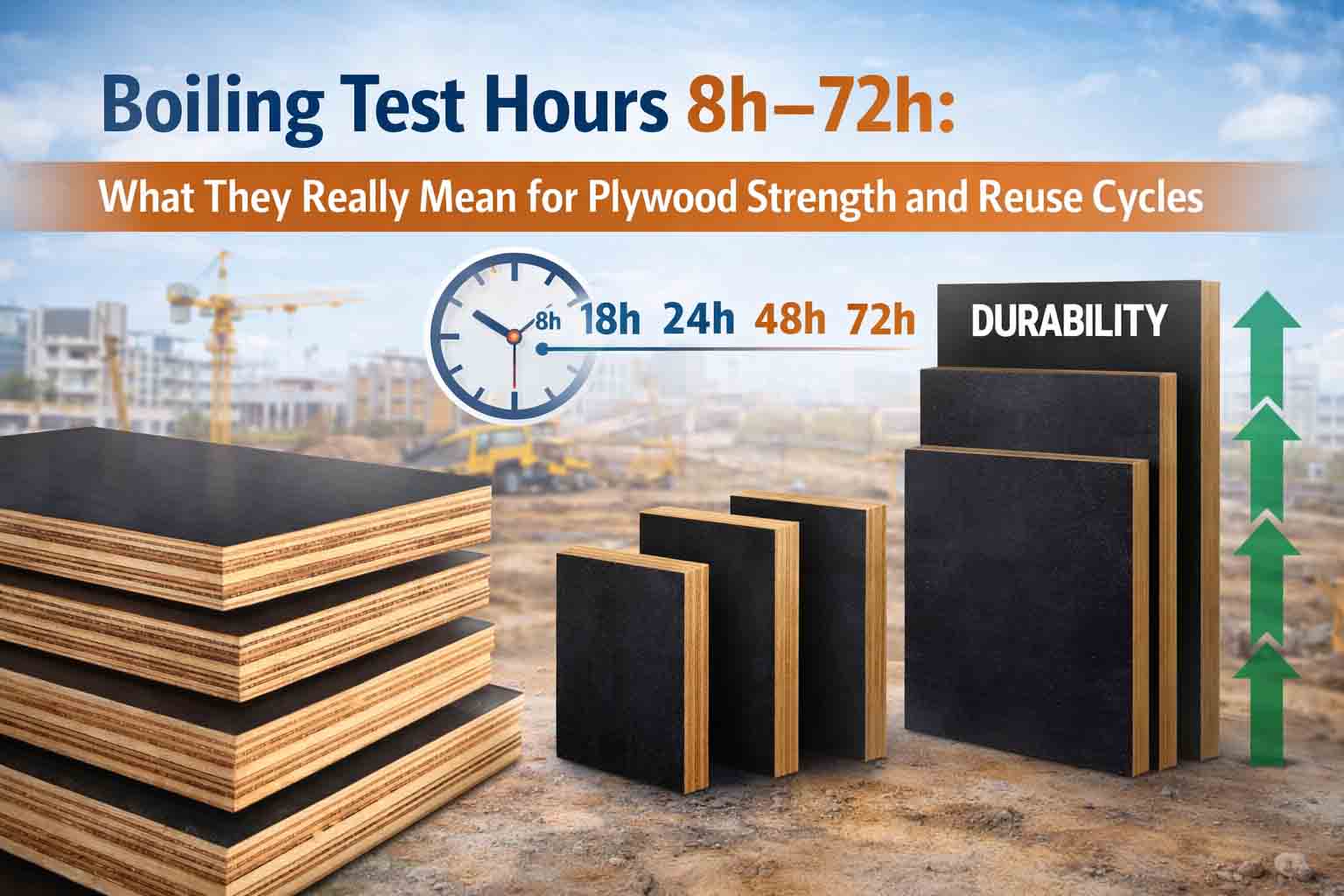
For example, phenolic glue with a 72-hour boiling test
performs very differently from a melamine system with shorter resistance.

This distinction is critical for buyers sourcing
film faced plywood exporter Vietnam products
or structural panels for construction projects.

For a deeper explanation of glue performance indicators, refer to:
How Boiling Tests Affect Plywood Durability

4. Mechanical Properties: Reading Between the Numbers

Most plywood technical data sheets list bending strength and modulus of elasticity (MOE).
These values are essential for understanding how panels behave under load.

However, buyers often overlook whether values are listed for
long grain and short grain,
or whether the figures represent minimum limits or average test results.
This distinction matters when sourcing plywood for
construction projects or engineered furniture.

A reliable wholesale plywood supplier will clearly state
test methods and quality limits, not just headline numbers.

5. Moisture Content and Dimensional Tolerance

Moisture content is one of the most underestimated lines in a plywood specification sheet.
Values such as ≤12% are common, but buyers should understand
why this range exists and how it affects panel stability.

Thickness tolerance and dimensional deviation also deserve attention.
Small deviations may be acceptable for packaging panels,
but not for furniture manufacturing or calibrated plywood.

This is especially relevant for buyers sourcing
plywood for furniture manufacturers Vietnam
or precision interior applications.

Related reading:
Why Moisture Content Matters for Durability

6. Film Specifications and Reuse Expectations

For film faced plywood, the specification sheet usually lists film weight,
color, and surface type.
Importers often assume film weight alone defines reuse cycles.

In reality, reuse performance depends on the combination of
film quality, glue system, pressing control, and edge sealing.
A professional
sustainable plywood exporter
will treat reuse cycles as a performance outcome, not a promise.

For buyers comparing formwork panels, see:
Phenolic Film Weight & Concrete Finish Quality

7. Certifications and Compliance Statements

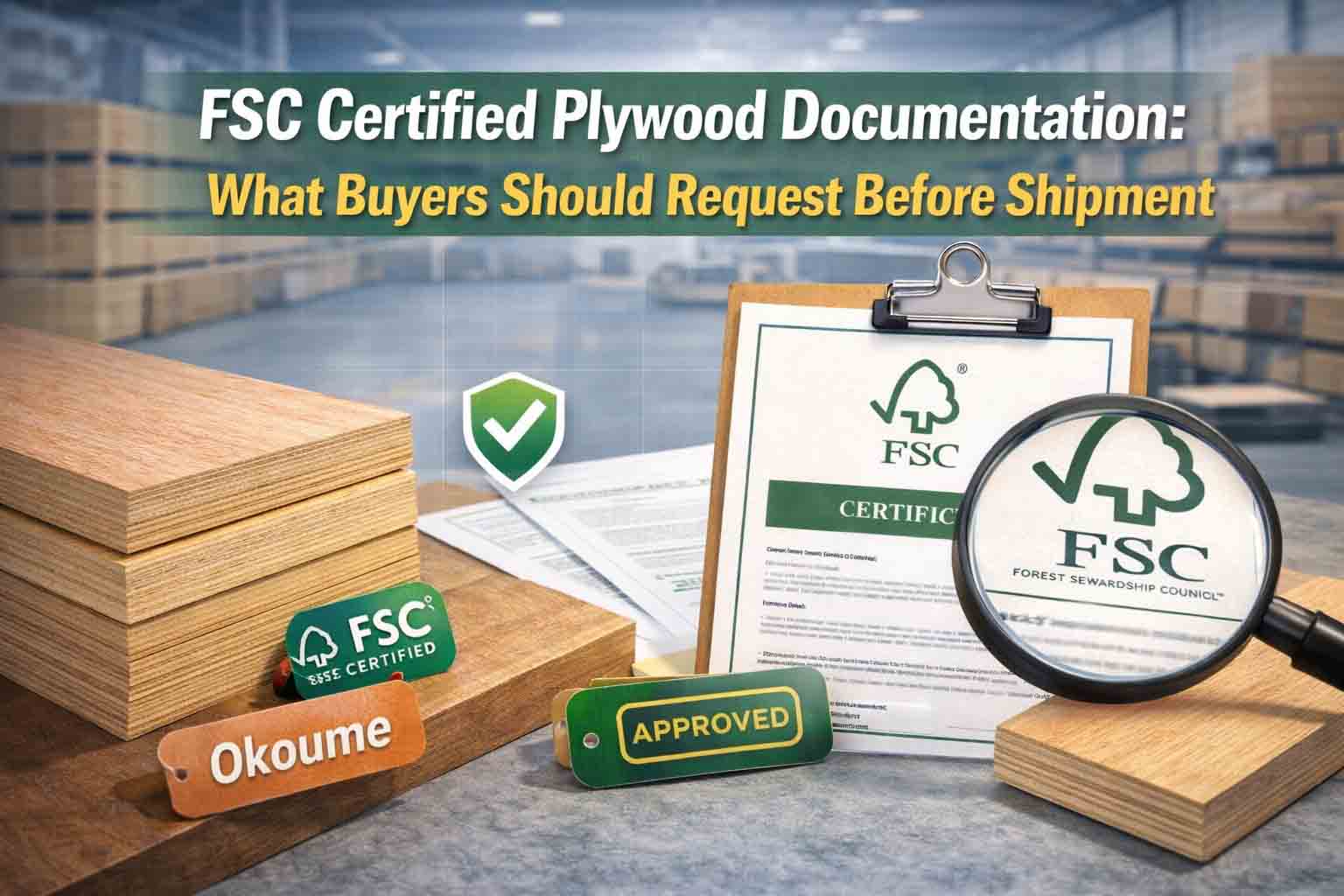
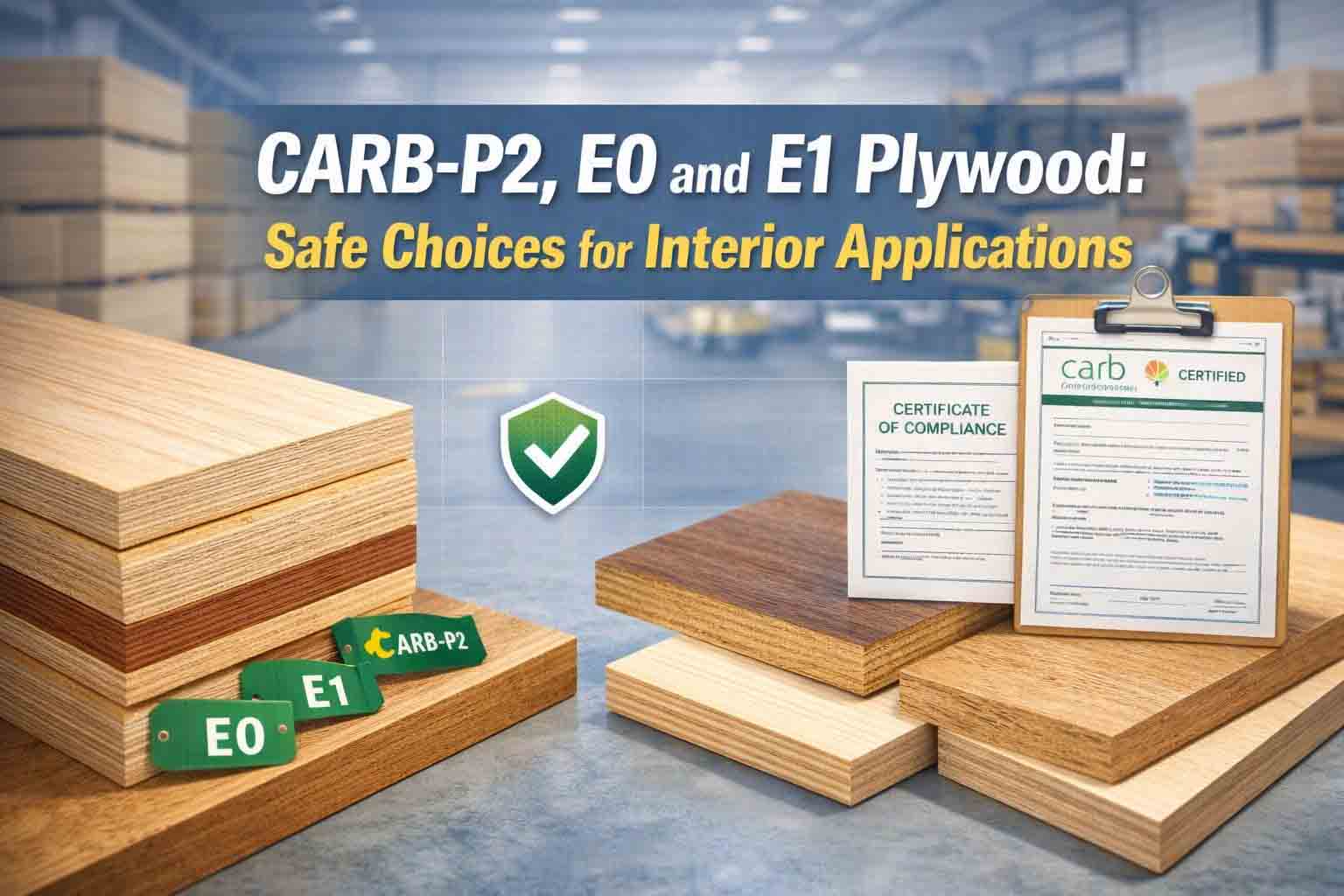
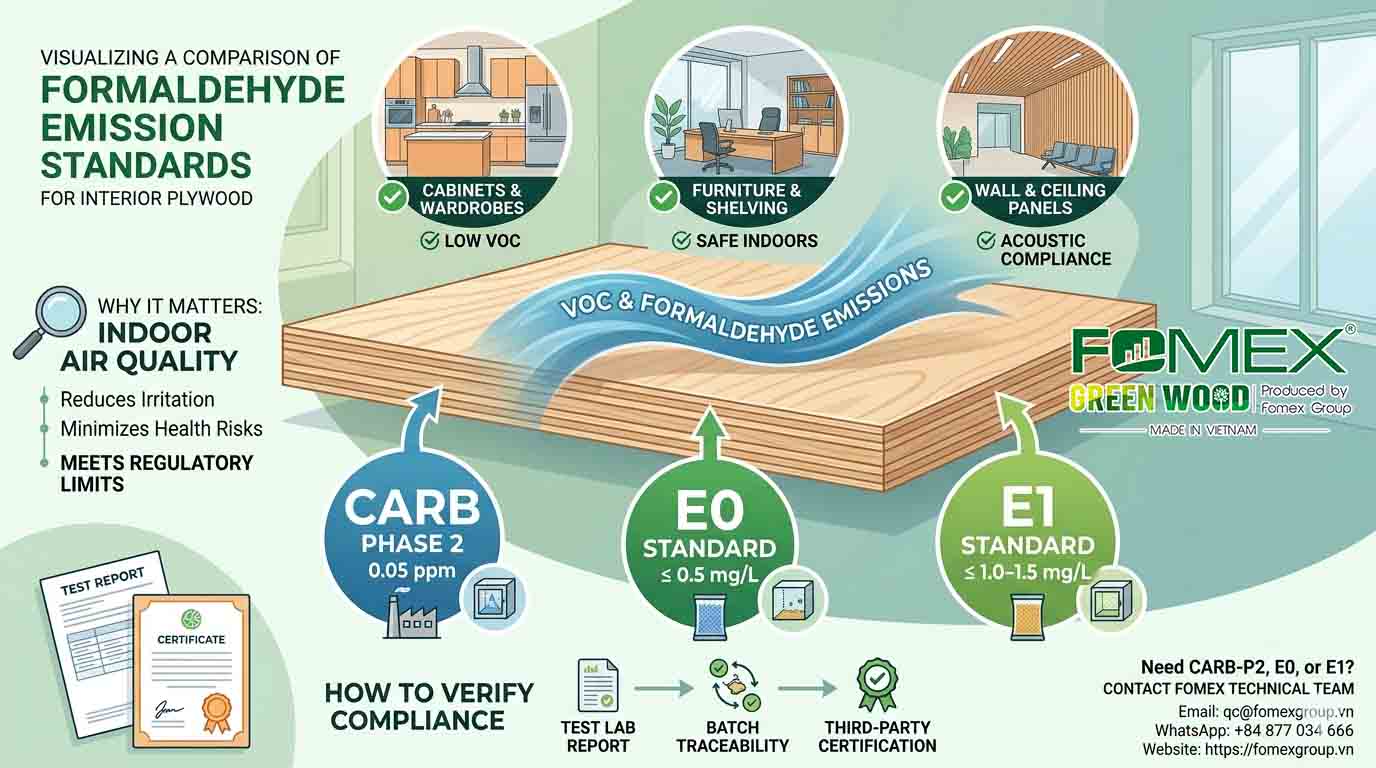
Certifications listed on a plywood specification sheet – such as FSC®, CARB-P2, E0/E1, or EUDR compliance – should be read as verifiable claims, not marketing slogans.

Professional importers sourcing from a
FSC certified plywood supplier
should always confirm scope, validity, and chain-of-custody alignment
with shipment documentation.

This is increasingly important for buyers in Europe and the US,
where regulatory scrutiny continues to increase.

Final Thoughts: Reading Specs Like a Professional Buyer

A plywood specification sheet tells a complete technical story – if you know how to read it. Beyond thickness and price, it defines structural behavior, durability, compliance, and long term cost.

For importers sourcing from a trusted Vietnam plywood exporter, understanding plywood specs explained clearly is the foundation of stable, long-term supply relationships.

Email: qc@fomexgroup.vn  |   WhatsApp: +84 877 034 666
by admin admin No Comments

Common Quality Issues in Imported Plywood – And How to Avoid Them

Quality issues in imported plywood rarely come from a single cause. They are usually the result of unclear specifications, inconsistent production control, or mismatched expectations between buyer and supplier. This guide highlights the most common plywood quality issues faced by global importers — and explains how to prevent them before they become costly disputes.

Why Plywood Quality Issues Are a Major Risk for Importers

For international buyers, plywood defects are more than a technical inconvenience — they represent financial risk, project delays, and reputational damage. Once a container arrives at destination, correcting quality problems becomes difficult and expensive.

As a Vietnam plywood exporter supplying Europe, the USA, and the Middle East, FOMEX GREENWOOD has audited hundreds of shipments where disputes originated not from intentional misrepresentation, but from unclear quality benchmarks.

Understanding common plywood quality issues allows importers to proactively manage risk through better specifications, inspections, and supplier selection.

Delamination: The Most Critical Structural Defect

Delamination occurs when veneer layers separate due to inadequate bonding. It is one of the most serious plywood defects because it compromises structural integrity and often worsens after exposure to moisture.

Common causes of delamination plywood include:

  • Insufficient or uneven glue spread
  • Incorrect glue formulation for the intended application
  • Inconsistent hot-press temperature or pressure
  • High moisture content in veneers before pressing

Delamination is frequently discovered only after installation or during use, making prevention at the factory level essential.

Uneven Thickness and Calibration Issues

Thickness inconsistency is a common complaint among importers sourcing plywood for construction, furniture, or formwork applications. Even small deviations can cause problems during installation or machining.

Panels produced in a properly calibrated plywood Vietnam factory maintain tight tolerances, ensuring compatibility with standardized systems such as concrete formwork or cabinet assemblies.

Poor calibration often results from worn sanding belts, insufficient quality checks, or cost-driven production shortcuts.

Surface Defects and Face Veneer Problems

Surface quality issues are among the first defects noticed by buyers. Common face veneer problems include patches, overlaps, open knots, and inconsistent sanding.

While some surface imperfections may be acceptable for structural uses, they become critical for applications such as plywood for furniture manufacturers Vietnam or plywood for kitchen cabinets export.

Clear grading standards and face/back specifications help prevent misunderstandings between buyers and suppliers.

Moisture Content and Warping

Incorrect moisture content is a hidden but serious contributor to plywood defects. Panels that are too wet or too dry during production often warp or twist after shipment.

For plywood export from Vietnam, maintaining moisture content within controlled limits is critical to ensure dimensional stability during long sea transport and storage at destination.

Core Gaps, Overlaps, and Internal Voids

Internal core defects such as gaps, overlaps, and voids weaken plywood panels and reduce load-bearing capacity. These issues are difficult to detect visually without destructive testing.

Reliable structural plywood manufacturer Vietnam operations implement core inspection and veneer grading systems to minimize internal defects before pressing.

Why Many Quality Problems Start with Poor Specifications

Many plywood quality disputes stem from incomplete or ambiguous purchase specifications. Terms like “commercial grade” or “good quality” leave too much room for interpretation.

Importers should define measurable criteria, including veneer structure, glue type, moisture limits, tolerance levels, and acceptable defect thresholds.

A detailed understanding of plywood construction fundamentals can be found here:

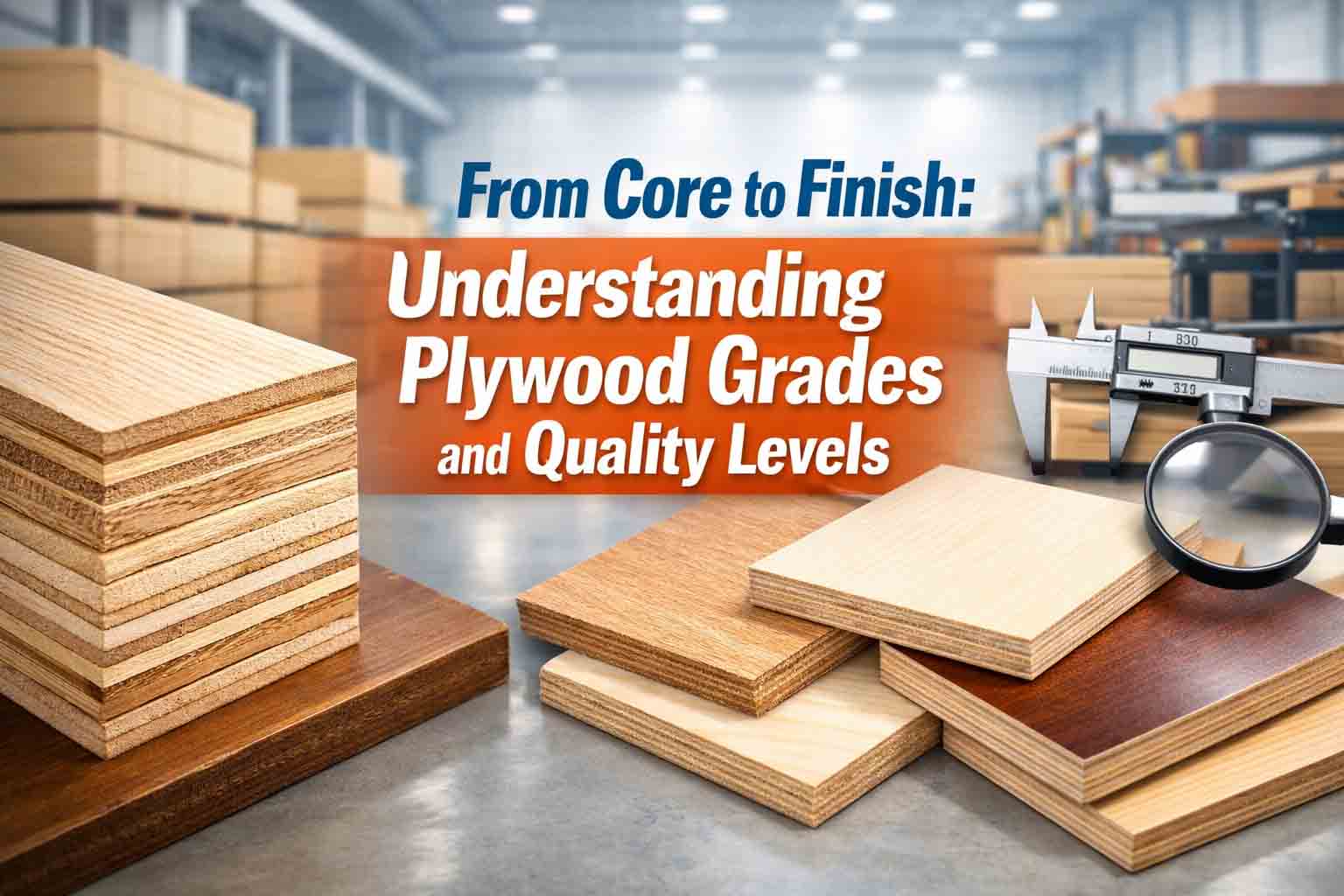
From Core to Finish: Understanding Plywood Grades and Quality Levels

How Professional Quality Control Prevents Plywood Defects

Effective quality control is not limited to final inspection. It starts with veneer selection, continues through pressing and sanding, and ends with pre-shipment checks.

As an FSC certified plywood supplier and sustainable plywood exporter, FOMEX GREENWOOD integrates quality checkpoints at every production stage to ensure consistency and traceability.

Industry references from the

APA – Engineered Wood Association

provide additional guidance on structural panel performance and quality expectations.

Reduce Plywood Quality Risks with FOMEX GREENWOOD

Preventing plywood defects starts long before shipment. Working with an experienced Vietnam plywood supplier helps importers avoid quality disputes, protect project timelines, and build long-term supply reliability.

Contact FOMEX GREENWOOD

Email: qc@fomexgroup.vn  |   WhatsApp: +84 877 034 666
by admin admin No Comments

Plywood for Concrete Formwork: How Many Reuse Cycles Can You Expect?

“How many times can formwork plywood be reused?” is one of the most common — and most misunderstood — questions in concrete construction. This guide explains reuse cycles based on real product grades, technical specifications, and on-site conditions, using verified data from FOMEX GREENWOOD film faced plywood.

Plywood for Concrete Formwork: How Many Reuse Cycles Can You Expect?Why Reuse Cycles Are the Real Cost Driver in Concrete Formwork

In concrete construction, plywood is not evaluated by appearance or thickness alone. Its true value is measured by how many reuse cycles it can achieve before replacement. Each additional reuse cycle directly reduces material cost per pour.

As a Vietnam plywood manufacturer supplying formwork materials to global markets, FOMEX GREENWOOD consistently advises buyers to select plywood based on realistic reuse expectations — not generic claims.

Understanding plywood reuse cycles helps contractors, distributors, and importers choose the right product grade for each project duration and budget level.

What Actually Determines Reuse Cycles in Concrete Formwork

Reuse performance is the combined result of structural design, glue system, surface protection, and site handling. Laboratory tests alone cannot fully predict real-world performance.

Core Structure and Veneer Layers

According to FOMEX technical specifications, film faced plywood is produced with eucalyptus, acacia, or mixed hardwood cores using 5–13 veneer layers depending on thickness. Balanced veneer construction helps distribute concrete pressure evenly and prevents early deformation.

Glue System and Bonding Stability

All FOMEX formwork plywood uses WBP Melamine or WBP Phenolic glue, selected based on product grade. Glue type directly influences bonding durability under wet concrete exposure and repeated stripping cycles.

Film Surface and Edge Sealing

Phenolic film (135–185 g/m²) protects the surface from abrasion and moisture penetration, while water-resistant edge sealing paint reduces edge damage — a common failure point in formwork plywood.

Reuse Cycles by Product Grade (Based on FOMEX Technical Data)

One of the most important distinctions buyers should understand is that reuse cycles vary significantly by product grade. The following reuse ranges are based on FOMEX GREENWOOD film faced plywood technical data sheet.

  • Standard Form:
    WBP Melamine 12% glue, 2-side film 165 g/m²
    Typical reuse cycles: 4–6 times
  • Premium Form:
    WBP Melamine 15–18% glue, 2-side film 135–145 g/m²
    Typical reuse cycles: 8–10 times
  • Promax Form:
    WBP Melamine 25% glue, reinforced bonding quality
    Typical reuse cycles: 15–20 times
  • Phenolic Form:
    Full phenolic glue system, structural-grade bonding
    Typical reuse cycles: up to 25 times

These reuse ranges assume proper handling, correct application, and normal site conditions. Actual results may vary depending on concrete mix and workmanship.

How Site Conditions Influence Formwork Plywood Lifespan

Concrete Pouring and Vibration

High vibration intensity, aggressive concrete mixes, and excessive pour height increase stress on plywood panels, accelerating surface wear and edge damage.

Stripping and Release Practices

Improper stripping methods — such as prying panels aggressively — are a major cause of early plywood failure. Using suitable release agents improves surface preservation and reuse consistency.

Cleaning, Storage, and Handling

Based on FOMEX handling guidelines, panels should be cleaned immediately after use, stored flat in dry, ventilated areas, and protected from direct sunlight and standing water to maximize formwork plywood lifespan.

Why Reuse Expectations Often Do Not Match Reality

Many disputes occur because buyers expect high reuse cycles from products not specified for long-term formwork use. Selecting Standard Form plywood for long-duration projects inevitably leads to disappointment.

Matching project requirements with the correct product grade is more effective than overpaying or under-specifying.

How Importers Can Specify Plywood for Reliable Reuse Performance

To achieve predictable reuse cycles, importers should specify plywood based on technical parameters rather than general descriptions.

  • Clearly define expected reuse cycles
  • Select product grade (Standard, Premium, Promax, Phenolic)
  • Confirm glue type and film weight
  • Align specification with project duration and exposure conditions

A broader understanding of plywood construction can be found here:

From Core to Finish: Understanding Plywood Grades and Quality Levels

For general structural panel principles, buyers may also refer to:

APA – Engineered Wood Association

Request Formwork Plywood Recommendations from FOMEX GREENWOOD

Selecting the right plywood grade is the key to predictable reuse performance. As a trusted Vietnam plywood supplier and sustainable plywood exporter, FOMEX GREENWOOD provides transparent technical data and application-based recommendations.

Contact FOMEX GREENWOOD

Email: qc@fomexgroup.vn  |   WhatsApp: +84 877 034 666
 

by admin admin No Comments

How Veneer Structure Affects Plywood Strength and Durability

For global buyers sourcing plywood export from Vietnam, veneer structure is one of the most decisive — yet often underestimated — factors affecting real plywood performance. Beyond thickness and surface appearance, the way veneers are arranged, bonded, and balanced determines whether plywood delivers long-term strength, durability, and dimensional stability in real-world applications.

Why Veneer Structure Matters More Than Thickness

In international plywood trade, thickness is often treated as a primary quality indicator. However, two plywood panels with identical thickness can perform very differently under load, moisture, and repeated use. From the perspective of a Vietnam plywood manufacturer supplying global construction and furniture markets, veneer structure consistently proves to be a more reliable predictor of performance than thickness alone.

Veneer structure determines how internal stresses are distributed across the panel, how the board reacts to humidity changes during shipping, and how well it maintains flatness during installation. For importers purchasing bulk plywood Vietnam container loads, overlooking veneer construction often leads to higher claim rates, inconsistent quality, and reduced customer confidence.

High-quality plywood relies on engineered veneer layouts rather than simply increasing panel thickness. This is especially critical for structural plywood manufacturer Vietnam products used in construction, formwork, and load-bearing applications.

Veneer Layout and Cross-Grain Orientation

Parallel vs Cross-Grain Layers

The fundamental principle behind plywood strength lies in cross-grain construction. In properly engineered plywood, adjacent veneer layers are laid with alternating grain directions — typically perpendicular to each other. This cross-grain orientation neutralizes internal stresses and dramatically improves panel stability.

Low-quality plywood often uses repeated parallel grain layers to reduce manufacturing costs. While this approach may increase short-term yield, it significantly weakens bending resistance and makes panels more prone to warping and cracking. For Vietnam plywood exporter to Europe and Vietnam plywood exporter to USA markets, such shortcuts are unacceptable due to strict performance and compliance requirements.

Balanced cross-grain veneer layouts allow plywood to perform consistently under changing environmental conditions, making them essential for wholesale plywood supplier operations serving professional buyers.

Number of Veneer Layers and Load Distribution

The number of veneer layers directly influences how loads are distributed across a plywood panel. Rather than concentrating stress in a few thick layers, high-quality plywood spreads forces evenly across multiple thin veneers.

For example, an 18mm plywood supplier Vietnam specification intended for construction or formwork applications typically includes 11 to 13 evenly pressed veneer layers. This configuration improves bending strength, impact resistance, and fatigue performance during repeated use.

As a sustainable plywood exporter, FOMEX GREENWOOD prioritizes balanced layer counts to ensure long service life and reduced material waste across global supply chains.

Veneer Thickness Consistency and Bonding Quality

Veneer thickness consistency plays a critical role in bonding performance. Uniform veneers allow even adhesive distribution during hot pressing, resulting in stronger internal bonds and reduced delamination risk.

In calibrated production environments, such as a calibrated plywood Vietnam factory, tight veneer tolerances support stable bonding — a key requirement for CARB P2 plywood Vietnam, E0 E1 plywood supplier Vietnam, and other regulated export markets.

  • Consistent glue line thickness
  • Improved resistance to moisture penetration
  • Stronger screw-holding and nail-holding capacity
  • Better performance in boiling and soak tests

Poor bonding quality is one of the most common causes of import disputes, especially for container load plywood price Vietnam contracts where inspection occurs only after arrival.

Common Structural Mistakes in Low-Quality Plywood

Structural shortcuts are frequently observed in low-grade plywood intended for price-driven markets. Common issues include uneven veneer thickness, unbalanced core construction, mixed species layering, and insufficient adhesive penetration.

These defects may not be visible at first glance but often result in premature failure during installation or use. For buyers sourcing from a private label plywood manufacturer Vietnam, structural integrity should always be verified beyond surface appearance.

From an environmental standpoint, structurally weak plywood undermines sustainability goals by shortening product life cycles and increasing material waste — contradicting the objectives of an eco-friendly plywood manufacturer Vietnam.

How Importers Can Specify Veneer Structure Correctly

Clear veneer structure specifications are essential for consistent quality. Importers should define veneer layout, layer count, veneer thickness tolerance, and bonding standards directly in purchase contracts.

Working with an experienced FSC certified plywood supplier and EUDR compliant plywood supplier ensures these technical requirements are integrated throughout production, inspection, and export processes.

To better understand how veneer structure fits into overall plywood quality, importers can also refer to our detailed guide:

From Core to Finish: Understanding Plywood Grades and Quality Levels

For further technical reference, industry standards published by the

APA – Engineered Wood Association

provide authoritative guidance on structural plywood performance.

Request Veneer Structure Specifications from FOMEX GREENWOOD

Veneer structure defines real plywood quality. Partnering with a trusted Vietnam plywood exporter helps ensure structural consistency, regulatory compliance, and long-term performance across global projects.

Contact FOMEX GREENWOOD

Email: qc@fomexgroup.vn  |   WhatsApp: +84 877 034 666
by admin admin No Comments

How to Evaluate a Reliable Plywood Manufacturer in Vietnam: 7 Must-Check Criteria for Importers

Selecting a reliable plywood manufacturer in Vietnam is a critical decision for importers,
furniture producers, and construction companies. Beyond price, long-term success depends on production consistency,
quality control systems, compliance capability, and transparent supply operations.

Vietnam is now one of Asia’s leading plywood sourcing hubs.
However, supplier capabilities vary significantly.
For global buyers, knowing how to evaluate a trusted plywood supplier Vietnam
based on objective criteria is essential to reduce risk and protect project timelines.

This guide outlines 7 must-check criteria that importers should use
when assessing plywood manufacturers in Vietnam—based on real export practices,
not marketing claims.

1. Factory Capability & Production Transparency

A reliable plywood manufacturer should demonstrate clear and verifiable production capability.
This includes not only installed machinery, but also process stability and production planning.

  • Visible production lines and defined manufacturing stages
  • Clear product scope (commercial plywood, film faced plywood, LVL, etc.)
  • Documented production flow from veneer preparation to packing
  • Ability to explain capacity in realistic, shipment-based terms

Factories that understand and communicate their own limitations are often more reliable
than those making unrealistic capacity claims.

For insight into factory-level plywood production, see:

Inside a Vietnamese Plywood Factory

2. Quality Control System (Process-Based, Not Final Check Only)

A reliable plywood manufacturer in Vietnam applies quality control
throughout the production process—not only at final inspection.

  • Incoming veneer and core material inspection
  • Moisture content and density monitoring
  • Glue-line bonding strength testing
  • Thickness calibration and sanding accuracy checks
  • Batch-level traceability

Consistent QC reduces variability between shipments and protects downstream manufacturing.

Related technical reference:

The Science of Boiling Tests for Plywood Strength

3. Product Consistency & Specification Control

Consistency is one of the strongest indicators of a trusted plywood supplier.
Importers should evaluate whether the supplier can reproduce the same specification
across multiple orders.

  • Stable veneer grading and core construction
  • Controlled thickness tolerance
  • Repeatable surface quality and flatness
  • Clear product data sheets and specifications

For buyers unfamiliar with plywood grading systems, review:

Understanding Plywood Grades and Quality Levels

4. Compliance, Certification & Market Readiness

Export-ready manufacturers understand that compliance is part of product quality.
Different markets impose different regulatory and safety requirements.

  • CARB-P2 / E0 / E1 emission compliance for interior use
  • FSC® chain-of-custody for responsible sourcing
  • Clear export documentation and labeling
  • Awareness of evolving regulations such as EUDR

Manufacturers who proactively support compliance reduce risk for importers.

Further reference:

EUDR Compliance Checklist for Plywood Importers

5. Supply Chain Stability & Raw Material Control

Reliable plywood manufacturers maintain stable access to raw materials
and manage seasonal or market-driven fluctuations.

  • Controlled hardwood sourcing programs
  • Material planning aligned with production schedules
  • Buffer strategies for peak demand periods
  • Transparent communication during shortages

Supply stability is essential for long-term contracts and repeat orders.

For sustainability context:

Sustainable Plywood from Vietnam

6. Export Packaging & Logistics Experience

Export experience is reflected in how plywood is packed and shipped.
Poor packaging causes more disputes than product defects.

  • Heavy-duty pallets and balanced stacking
  • Edge protection and secure strapping
  • Moisture barriers and desiccants
  • Professional container loading procedures

For moisture risk management:

Why Moisture Content Matters for Long-Term Durability

7. Distinguishing a Manufacturer from a Trading Operation

Importers often ask how to distinguish a production-based manufacturer
from a trading-oriented supplier—without relying on assumptions.

Objective indicators include:

  • Ability to explain production processes in detail
  • Consistent technical answers across multiple discussions
  • Clear linkage between specifications, QC, and lead time
  • Factory-level documentation and audit readiness

The key is not the business model itself, but whether the supplier
demonstrates direct control over quality, consistency, and delivery.

📩 For export-grade plywood sourcing, factory-level consultation, and long-term supply planning:
qc@fomexgroup.vn | +84 877 034 666
Visit FOMEX GROUP
Request Quotation

by admin admin No Comments

Plywood vs LVL vs OSB: Which Engineered Wood Is Best for Your Project

Plywood vs LVL vs OSB is not a “one-material-wins” debate. Each engineered wood product is optimized for different
structural needs, finishing requirements, and cost priorities. This engineered wood comparison helps builders and
furniture factories choose the right panel for performance, stability, and budget – without overpaying or under-specifying.

Global projects often require a practical decision: plywood vs LVL vs OSB.
While these materials can overlap in use, they behave very differently in stiffness, fastener holding, moisture tolerance,
and finishing quality. Selecting the right engineered wood reduces rework, improves performance, and protects project timelines.

Below is a decision-focused engineered wood comparison, including a technical + cost table, clear “choose / don’t choose”
guidance, and practical recommendations for both builders and furniture manufacturers.

1) Quick Definitions: What Are Plywood, LVL, and OSB?

  • Plywood – Cross-laminated veneer layers bonded with glue. Strong, stable, and versatile for furniture,
    interiors, construction panels, and formwork (when film faced and specified correctly).
  • LVL (Laminated Veneer Lumber) – Veneer layers bonded with fibers generally aligned in the same direction,
    engineered for high strength and consistency in structural members (beams, headers, scaffolding components, etc.).
  • OSB (Oriented Strand Board) – Compressed wood strands with resin, optimized for sheathing and structural uses
    where appearance/finish quality is not the priority.

If you want a deeper look into how plywood layers, core quality, and grading affect performance, see:
From Core to Finish: Understanding Plywood Grades and Quality Levels

2) Engineered Wood Comparison Table (Technical & Cost)

Use this table as a decision starting point. Actual performance depends on specification:
glue system, density, moisture content, thickness tolerance, and quality control.

Criteria Plywood LVL OSB
Best use Panels, furniture, interior, general construction, formwork (film faced) Structural members, beams, headers, consistent load-bearing parts Sheathing, subfloor, roof decking (appearance not critical)
Stiffness / strength direction Balanced strength due to cross-lamination Very high along grain direction (engineered consistency) Good for sheathing; less refined structural consistency
Surface finish quality High (grade-dependent), suitable for furniture & lamination Moderate; often used where finish isn’t the main requirement Low; textured strand surface (not ideal for furniture finishing)
Fastener holding Strong (quality-dependent); excellent for cabinetry and fixtures Strong; consistent in engineered structural use Moderate; edges can be less stable than plywood
Moisture tolerance Can be high with correct glue system (e.g., WBP/phenolic) Varies by spec; typically designed for structural stability Can swell at edges if exposed; depends on OSB grade
Typical cost position Mid-range (spec/grade driven) Mid-to-high for structural performance Often cost-efficient for sheathing applications

3) When to Choose Plywood (and When Not to)

Choose plywood when you need:

  • Better surface quality for furniture, cabinetry, and interior panels
  • Balanced stability from cross-laminated construction
  • Versatility across many applications (from interior to construction)
  • Formwork performance when using film faced plywood specified for reuse cycles

Avoid plywood (or re-spec it) when:

  • You are buying a panel grade for a structural member application (consider LVL instead)
  • Moisture exposure is high but glue system is not specified correctly (WBP/phenolic may be required)
  • You need ultra-low cost sheathing and appearance/finish doesn’t matter (OSB may be more economical)

For glue systems used in export plywood (critical for moisture resistance), see:
Choosing the Right Glue Type: MUF vs WBP Melamine vs Phenolic

4) Builder Recommendations: Formwork, Sheathing, and Structural Work

For builders, the best choice depends on whether you need panel performance, formwork reuse,
or structural member strength.

  • Concrete formwork: film faced plywood is often preferred when reuse cycles and surface finish matter.
    Learn how phenolic film improves durability:
    Phenolic Film Faced Plywood Reuse Cycles
  • Structural members: LVL is typically selected for engineered, consistent load-bearing applications.
    See: Top 5 Applications of Vietnamese LVL in Construction
  • General sheathing: OSB is frequently used when the goal is structural sheathing efficiency
    and appearance is not a key requirement.

5) Furniture Factory Recommendations: Finish Quality, Stability, and Safety

Furniture manufacturers typically prioritize surface uniformity, finishing compatibility, and indoor safety compliance.
In many cases, plywood is the preferred engineered wood—if it is specified correctly for grade, moisture, and emissions.

  • Visible furniture components: choose higher veneer grades and stable cores
  • Laminated panels: ensure flatness, calibration, and consistent thickness tolerance
  • Indoor applications: confirm compliance such as CARB-P2 / E0 / E1 where required

For indoor safety compliance guidance:
CARB-P2 Certified Plywood: Ensuring Safe Indoor Applications

CARB-P2 & E0/E1 Plywood for Interior Use

6) A Simple Decision Checklist (AI Overview-Friendly)

  • Need panels with better finishing? → Choose plywood
  • Need engineered structural members? → Choose LVL
  • Need cost-efficient sheathing? → Consider OSB
  • Moisture exposure is high? → Specify the correct glue system and moisture control
  • Reuse cycles matter (formwork)? → Use film faced plywood with proven QC

For moisture stability and durability context:
Moisture Content in Plywood: Why It Matters

7) Next Steps for Global Buyers

If your project requires export-grade plywood, it’s important to define the correct specification:
thickness, grade, glue system, moisture target, and quality control requirements.
For a factory process overview that helps buyers understand what drives consistency, see:
Inside a Vietnamese Plywood Factory: Step-by-Step Manufacturing Process

Visit FOMEX GROUP
📩 For export plywood consultation and sourcing support:
qc@fomexgroup.vn | +84 877 034 666
Request Quotation

by admin admin No Comments

How to Evaluate a Reliable Plywood Manufacturer in Vietnam

Choosing a reliable plywood manufacturer in Vietnam is a strategic decision for global buyers.
Beyond price, reliability depends on production consistency, quality control, compliance,
and the ability to support long-term supply stability for furniture, construction, and industrial applications.

Film faced factory
Vietnam has become one of the world’s key plywood sourcing hubs.
However, not all suppliers operate at the same professional or export-ready level.
For importers, understanding how to evaluate a reliable plywood manufacturer in Vietnam
is essential to reduce risk and protect project timelines.

This guide outlines the core criteria global B2B buyers should use when assessing plywood manufacturers—
based on real export practices, not marketing claims.

1. Production Capability & Product Consistency

A reliable plywood manufacturer must demonstrate consistent production capability,
not just installed capacity on paper.
Consistency is what allows buyers to reorder the same specification
with predictable performance over time.

  • Stable core construction and veneer sourcing
  • Repeatable thickness calibration and panel flatness
  • Controlled pressing and bonding processes
  • Ability to maintain quality across multiple shipments

For buyers, consistency matters more than maximum output.
It directly affects assembly lines, installation quality, and downstream costs.

For insight into how plywood structure influences consistency, see:

Understanding Plywood Grades and Quality Levels

2. Quality Control System (Not Just Final Inspection)

Reliable plywood manufacturers apply quality control throughout the production process,
not only at the final inspection stage.
This ensures defects are prevented—not merely detected.

  • Incoming veneer and core inspection
  • Moisture content and density monitoring
  • Glue-line bonding strength checks
  • Thickness tolerance and surface calibration control
  • Batch-level traceability

For applications where durability and reuse are critical,
bonding and moisture control directly impact performance.

Related technical reference:

The Science of Boiling Tests for Plywood Strength

3. Compliance, Certification & Market Readiness

Export-ready plywood manufacturers understand that compliance is not optional.
Different markets require different technical, safety, and legal standards.

  • CARB-P2 / E0 / E1 emission compliance for interior applications
  • FSC® chain-of-custody for responsible sourcing
  • Clear documentation for customs and import clearance
  • Alignment with emerging regulations such as EUDR

Manufacturers that proactively support compliance reduce risk for importers,
especially when regulations evolve.

Further reading:

EUDR Compliance Checklist for Plywood Importers

4. Supply Chain Stability & Raw Material Control

Reliable plywood manufacturers maintain stable access to raw materials
and manage seasonal or market-driven fluctuations.
This stability protects buyers from unexpected delays.

  • Controlled hardwood sourcing programs
  • Material planning aligned with production schedules
  • Buffer strategies for peak demand periods
  • Transparent communication during supply disruptions

Supply stability is particularly important for repeat orders and long-term contracts.

For sustainability and sourcing context:

Sustainable Plywood from Vietnam

5. Packaging Standards & Export Logistics Experience

Export experience is reflected in how plywood is packaged and shipped.
Professional manufacturers design packaging to protect panels throughout long sea transit.

  • Heavy-duty pallets and balanced stacking
  • Edge protection and secure strapping
  • Moisture barriers and desiccants
  • Proper container loading procedures

Poor packaging often causes more claims than product defects.

Related reference:

Why Moisture Content Matters for Long-Term Durability

6. Communication, Documentation & After-Sales Support

Reliable plywood manufacturers act as long-term partners.
Clear communication and documentation reduce misunderstandings and delays.

  • Clear technical specifications and confirmations
  • Consistent documentation for each shipment
  • Proactive updates during production and shipping
  • Structured handling of feedback and quality inquiries

This level of professionalism is critical for B2B buyers managing complex supply chains.

📩 For export-grade plywood sourcing, technical consultation, and long-term supply planning:
qc@fomexgroup.vn | +84 877 034 666
Visit FOMEX GROUP

by admin admin No Comments

MOQ, Lead Time & Packaging Standards When Buying Plywood from Vietnam

When importing plywood from Vietnam, pricing alone does not determine success.
Most delivery delays, disputes, and hidden costs originate from three operational factors:
MOQ planning, realistic lead time, and export packaging standards.
Understanding these elements allows global buyers to reduce risk and maintain stable supply chains.

MOQ, Lead Time & Packaging Standards

Vietnam has become a major plywood sourcing hub for furniture, construction, and packaging applications.
However, successful importers focus not only on product quality, but also on how production, timing,
and logistics are managed by the exporter.

This guide explains how plywood MOQ Vietnam is determined, how to evaluate
plywood lead time exporter commitments under real-world conditions,
and which packaging standards protect plywood during international shipping.

1. Why MOQ, Lead Time & Packaging Matter in Plywood Sourcing

Plywood manufacturing is a process-driven operation. Each order must align raw material availability,
press capacity, glue systems, quality control, packing, and vessel booking.

When expectations around MOQ, lead time, or packaging are unclear, buyers often experience:

  • Unexpected production delays
  • Last-minute MOQ adjustments
  • Missed vessel cut-off dates
  • Moisture or handling damage during sea freight

These issues are frequently mistaken as supplier reliability problems,
when in reality they result from insufficient planning during the sourcing stage.

2. Understanding Plywood MOQ in Vietnam

MOQ (Minimum Order Quantity) in Vietnam is specification-based, not volume-based.
There is no universal MOQ for plywood. Instead, MOQ depends on how efficiently a product
fits into a factory’s production workflow.

In practice, plywood MOQ Vietnam is influenced by:

  • Product type (commercial plywood vs. film faced plywood)
  • Thickness, size, and tolerance requirements
  • Glue system (MUF, WBP Melamine, Phenolic)
  • Certification needs (FSC®, CARB-P2, E0/E1)
  • Customization level (OEM sizes, branding, packaging)

Standard commercial plywood generally allows greater flexibility,
while film faced plywood and certified products require stricter batch planning.

For deeper insight into how grades and construction affect production feasibility, see:

From Core to Finish: Understanding Plywood Grades and Quality Levels

3. Advertised Lead Time vs. Real Lead Time

Lead time is one of the most misunderstood aspects of plywood sourcing.
Quoted lead times often reflect ideal scenarios rather than actual factory conditions.

A realistic plywood lead time exporter commitment typically includes:

  • Production queue and press scheduling
  • Bonding strength and durability testing
  • Quality inspection and grading
  • Packing, palletizing, and container loading
  • Export documentation and vessel booking

Advertised lead times assume immediate material availability and standard specifications.
Real lead times account for factory workload and quality assurance requirements.

For projects where durability and reuse performance are critical, testing cycles must be considered:

The Science of Boiling Tests for Plywood Strength

4. Passive Factors That Can Extend Lead Time

Even well-managed plywood exporters operate within external constraints.
Professional buyers should account for these passive factors when planning delivery schedules.

  • Weather & seasonal conditions: prolonged rain or high humidity affecting veneer drying,
    storm seasons disrupting transport and port operations.
  • Raw material availability: log and veneer shortages, limited FSC® material supply,
    peak season demand pressure.
  • Force majeure situations: flooding, typhoons, power interruptions,
    or port congestion beyond exporter control.

Reliable exporters mitigate these risks through buffer planning, transparent communication,
and realistic scheduling—not unrealistic delivery promises.

5. Export Packaging Standards for Plywood

Packaging plays a critical role in preserving plywood quality during international transport.
Even high-quality panels can arrive damaged if packaging standards are insufficient.

  • Heavy-duty pallets with balanced load distribution
  • Corner protection and secure strapping
  • Moisture barriers and desiccants for sea freight
  • Clean, dry container floors and proper bundling

Moisture-related risks are explained in detail here:

Moisture Content in Plywood: Why It Matters

6. What Importers Should Confirm Before Ordering

  • Exact MOQ for the specified product
  • Committed lead time under current conditions
  • Potential external risks affecting delivery
  • Packaging standards included in the quotation
  • Quality control and export documentation process

📩 For plywood export quotations and technical support:
qc@fomexgroup.vn | +84 877 034 666

by admin admin No Comments

Plywood Thickness Guide for Global Buyers: How to Choose the Right Thickness for Each Application

Plywood Thickness Guide for Global Buyers: How to Choose the Right Thickness for Each Application
Choosing plywood thickness is one of the fastest ways to either save money and improve performance—or create costly defects in furniture and construction projects.
This plywood thickness guide is written for global buyers, importers, builders, and furniture manufacturers who need a clear, practical way to select the right thickness based on real applications.Below, you’ll find a simple comparison of 9mm, 12mm, 15mm, 18mm, and 21mm, plus common importer mistakes and how thickness impacts durability, total cost, and reuse cycles.

Table of Contents

  1. Why plywood thickness matters for global buyers
  2. Thickness comparison: 9mm / 12mm / 15mm / 18mm / 21mm
  3. Plywood thickness for furniture: best choices by product type
  4. Plywood thickness for construction: formwork & jobsite performance
  5. Common importer mistakes when choosing thickness
  6. How thickness affects cost, durability & reuse cycles
  7. Quick checklist before requesting a quotation

1) Why plywood thickness matters for global buyers

Thickness is not only a “dimension” decision—it affects strength, stiffness, screw holding, weight, shipping efficiency, surface stability, and reuse potential.
In B2B trade, the wrong thickness can lead to:

  • Warping or surface waves in furniture panels
  • Delamination risk under moisture or heavy loads
  • Lower reuse cycles in formwork (higher cost per use)
  • Overpaying for thickness that the application doesn’t require

If you’re buying from overseas, thickness selection should always be paired with
material spec (core, glue, moisture content, face grade) and your project tolerance.
For glue selection related to export plywood, you can also reference:
Choosing the Right Glue Type: MUF vs WBP Melamine vs Phenolic

2) Thickness comparison: 9mm / 12mm / 15mm / 18mm / 21mm

Use the table below as a quick reference for typical use cases. Actual performance still depends on
core quality, glue type, pressing, moisture content, and surface film/finish.

Thickness Best for Strength / Stiffness Cost efficiency Buyer notes
9mm Back panels, lightweight furniture parts, interior partitions Low–Medium High Good for non-load-bearing panels; check flatness & tolerance
12mm Cabinet components, drawer parts, wall lining Medium High Balanced option for furniture; verify screw holding needs
15mm Furniture carcass, shelving (medium loads), partitions Medium–High Medium–High Popular “workhorse” thickness for furniture makers
18mm Cabinet bodies, heavier shelving, general construction panels High Medium Common for structural stability; watch shipping weight & cost
21mm Concrete formwork, heavy-duty platforms, high load requirements Very High Medium Often used for demanding construction; confirm glue & film spec
Plywood thickness guide: common thicknesses and applications for global buyers (9mm–21mm).

3) Plywood thickness for furniture: best choices by product type

When selecting plywood thickness for furniture, the main priorities are
flatness, screw holding, surface quality, and long-term dimensional stability.
Thickness alone won’t solve quality issues—ensure the plywood grade matches the visible/painted/laminated finish requirements.

Recommended thickness by furniture application

  • 9mm: cabinet backs, decorative panels, lightweight dividers
  • 12mm: drawers, cabinet sides (light–medium duty), wall-mounted elements (with proper support)
  • 15mm: carcass panels, shelving (medium loads), bed components (non-structural)
  • 18mm: wardrobe bodies, stronger shelving, countertops with proper support layers
  • 21mm: heavy-duty shelves, long-span panels, premium structural furniture components

If you need a broader view of grading and how faces/cores affect appearance and performance, read:
From Core to Finish: Understanding Plywood Grades and Quality Levels

4) Plywood thickness for construction: formwork & jobsite performance

In construction, thickness selection is typically driven by load, span, reuse requirements, moisture exposure, and
whether the plywood will be used in concrete formwork.
For formwork, thickness should be decided together with glue type and film spec.

Common construction choices

  • 18mm: general construction panels, moderate formwork needs, balanced weight/performance
  • 21mm: heavy-duty formwork, higher load, improved stiffness, potential for more reuse cycles (when properly specified)

For buyers focused on concrete formwork performance, these resources will help you evaluate reuse outcomes:

5) Common importer mistakes when choosing plywood thickness

Many importers focus on thickness as the main “quality indicator.” In reality, thickness is only one variable.
Here are common mistakes global buyers should avoid:

Mistake #1: Choosing thicker plywood to “guarantee quality”

A thicker panel can still fail if glue type, pressing, core gaps, or moisture content are wrong.
Thickness should match the load and design requirements—not replace a proper specification.

Mistake #2: Ignoring thickness tolerance

For furniture production lines, thickness tolerance impacts CNC settings, lamination fit, and assembly quality.
Always define acceptable tolerance ranges in your purchase specification (especially for 12mm–18mm).

Mistake #3: Not aligning thickness with shipping economics

Thicker panels weigh more. That can change container utilization and landed cost per usable square meter.
If your application doesn’t require 21mm, you may be paying extra in both material and freight.

Mistake #4: Skipping moisture control for the destination climate

Moisture content affects stability, especially for furniture-grade panels. For deeper guidance:
Moisture Content in Plywood: Why It Matters for Long-Term Durability

6) How thickness affects cost, durability & reuse cycles

Thickness impacts performance, but the best buying decision comes from evaluating cost per performance, not just cost per sheet.

Cost

  • Thicker plywood generally increases unit cost and shipping weight.
  • However, the right thickness can reduce breakage, callbacks, and replacement rate.

Durability

  • Thicker panels typically resist bending under load better.
  • Durability still depends heavily on glue type (MUF/WBP/Phenolic) and core quality.

Reuse cycles (especially for formwork)

  • For film faced plywood used in concrete formwork, thicker options can improve stiffness and reduce edge damage.
  • Reuse performance depends on correct film, glue, edge sealing, and handling practices—not thickness alone.

If your priority is lowering total project cost through reuse, you may also like:
Reducing Project Costs with High-Reuse Plywood: A Practical Calculator for Builders

7) Quick checklist before requesting a quotation

Before you send an RFQ, define your thickness and the supporting specifications to avoid rework:

  • Application (furniture / formwork / general construction)
  • Thickness (9mm / 12mm / 15mm / 18mm / 21mm)
  • Glue type (MUF / WBP Melamine / Phenolic)
  • Face/Back grade and appearance requirements
  • Moisture content target for your destination
  • Thickness tolerance and QC criteria
  • Packaging and container loading preferences

Tell us your target application and thickness (9mm–21mm). We’ll recommend the right plywood specification
to optimize cost, durability, and reuse cycles for your market.

Request Quotation

For technical consultations, QC reports, and product selection:
Email: qc@fomexgroup.vn
Hotline: +84 877 034 666


by admin admin No Comments

Choosing the Right Glue Type: MUF vs WBP Melamine vs Phenolic for Export Plywood from Vietnam

MUF, WBP Melamine, and Phenolic glues differ significantly in bonding strength, waterproofing, boiling-test performance, and suitability for export applications in construction, furniture, and packaging.
For Vietnam plywood exporters and Vietnam plywood manufacturers, MUF is widely used for commercial and furniture-grade panels, WBP Melamine offers stronger moisture resistance for general construction plywood, while Phenolic glue delivers the highest durability and the longest reuse cycles in film faced plywood from Vietnam used in concrete formwork.

FILM FACED FACTORY
When evaluating plywood export from Vietnam, most buyers first consider surface film, core type, or thickness.
Yet, the factor that most strongly influences durability, waterproofing, and reuse cycles in high quality plywood Vietnam is the glue type.

Vietnamese plywood manufacturers and wholesale plywood suppliers commonly use three adhesive systems for international markets:

  • MUF (Melamine Urea Formaldehyde)
  • WBP Melamine
  • Phenolic Glue

Each has unique strengths depending on whether you are sourcing plywood for furniture manufacturers, industrial packaging, or construction projects that demand high reuse formwork panels.

Understanding glue type is essential for importers, traders, and end users who want to choose a reliable Vietnam plywood supplier.
For additional technical context, see:
Boiling Test Durability Guide
and core performance in
Eucalyptus vs Mixed Hardwood Analysis.

1. Overview of the Three Main Glue Types Used by Vietnam Plywood Exporters

Export-focused Vietnam plywood manufacturers use glue systems that meet international standards for water resistance and bonding strength, including CARB, E0/E1 and other buyer-specific requirements.
Here’s a quick comparison table:

Glue Type Water Resistance Typical Boiling Test Common Export Application
MUF Moderate 8–15 hours Commercial plywood, furniture plywood, packaging panels
WBP Melamine High 12–20 hours General construction plywood, scaffolding platforms
Phenolic Glue Very High 48–72 hours Film faced plywood, formwork panels, infrastructure projects

2. MUF Glue: Affordable & Versatile for Furniture and Commercial Plywood

MUF (Melamine Urea Formaldehyde) is the most common adhesive used by bulk plywood Vietnam producers due to its competitive cost and decent performance for indoor and semi-protected environments.

MUF advantages for buyers:

  • economical choice for large container-load orders from a wholesale plywood supplier
  • adequate water resistance for plywood for furniture manufacturers Vietnam
  • strong bonding when veneers are properly dried and pressed
  • ideal base for commercial plywood products

MUF-bonded panels are widely used in:
Commercial Plywood Export Applications.

MUF limitations:

  • limited long-term outdoor performance
  • less suitable for high humidity or standing-water exposure
  • not recommended for high-reuse concrete formwork

Typical boiling-test durations range from 8–15 hours, as detailed in
Boiling Test Analysis.

3. WBP Melamine Glue: The Middle Ground for Construction Plywood

WBP (Weather & Boil Proof) Melamine glue offers improved moisture resistance over MUF and is widely used by Vietnam plywood exporters to Europe and the Middle East for general construction applications.

Key benefits of WBP Melamine:

  • excellent performance for general-purpose construction plywood
  • better resistance to rain, humidity and jobsite washing than standard MUF
  • more stable panel behavior under temperature and moisture cycles
  • reliable option when you need more reuse than basic commercial boards

Common use cases include:

  • premium construction plywood
  • scaffolding decks and temporary floors
  • semi-exposed structural applications

To see how glue and surface film work together in construction formwork, refer to:
Phenolic Film Weight & Surface Quality.

4. Phenolic Glue: The Gold Standard for High-Reuse Film Faced Plywood

Phenolic glue is the benchmark adhesive for film faced plywood exporter Vietnam products aimed at demanding construction projects worldwide. It provides outstanding bonding and water resistance for structural and formwork applications.

Phenolic glue features:

  • survives 48–72 hour boiling tests under WBP or marine standards
  • creates thermoset bonds that do not soften under heat or steam
  • ideal for heavy-duty concrete formwork plywood used in high-rise and infrastructure projects
  • enables 20–30+ reuse cycles when combined with dense eucalyptus cores and quality phenolic film

Phenolic systems power FOMEX’s:

  • Premium phenolic film faced plywood lines
  • PROMAX heavy-duty formwork plywood
  • engineered panels for bridges, tunnels and industrial projects

Their real-world performance in reuse cycles is discussed in:
Phenolic Plywood Reuse Cycles.

5. Comparing Glue Types by Application Segment

Because each market segment has different risk and cost structures, sustainable plywood exporters from Vietnam often recommend glue types based on end use and climate.

✔ Furniture & Indoor Use

MUF glue is usually sufficient for cabinets, shelving, and interior paneling, especially when buyers need competitive pricing from a wholesale plywood supplier.

✔ Packaging & Industrial Use

Light WBP Melamine or high-solids MUF provide a better balance between strength and cost for export crates and pallets.

✔ Construction & Concrete Formwork

Phenolic glue is the clear winner, particularly when combined with eucalyptus core and high-film weights.
Learn why eucalyptus is preferred in this segment:
Eucalyptus Core Performance.

6. Glue Type & Boiling Test: How They Influence Reuse Cycles

Glue strength is evaluated through laboratory boiling tests, which simulate long-term exposure to heat and moisture:

  • MUF: typically 8–12 hours
  • WBP Melamine: typically 12–20 hours
  • Phenolic: typically 48–72 hours

Longer boiling-test performance generally correlates with higher reuse cycles for film faced plywood from Vietnam, as explained in:
Boiling Test Duration Guide.

Panels that withstand longer tests:

  • maintain bonding strength under repeated concrete pours
  • show less risk of delamination in hot, humid climates
  • provide better value for contractors focused on lifecycle cost

7. Glue Type & Cost Efficiency: Looking Beyond the Unit Price

Phenolic-bonded panels produced by a high quality plywood Vietnam factory have a higher unit cost, but offer the lowest Cost Per Use in real projects.
This is crucial when comparing offers from different Vietnam plywood exporters or Chinese suppliers.

You can model the difference using:
High-Reuse Plywood Cost Calculator.

8. Matching Glue Type to Climate & Target Market

Climate and regulatory conditions in your destination market also affect glue selection:

  • Middle East & North Africa: phenolic glue is strongly recommended due to extreme heat and solar exposure.
  • Southeast Asia: WBP Melamine or Phenolic for outdoor and formwork; MUF only for indoor use.
  • Europe & USA: MUF is acceptable for indoor applications, while Phenolic and WBP Melamine are better for structural use and external exposure.
  • Coastal or tropical regions: phenolic glue combined with high-density cores and quality edge sealing provides the safest performance.

Delivering reliable, high-quality plywood from Vietnam with long-term partnership value for construction companies, wholesalers, and global importers.

For quotations, OEM inquiries, and container-load pricing from Vietnam:
Email: qc@fomexgroup.vn
Hotline: +84 877 034 666